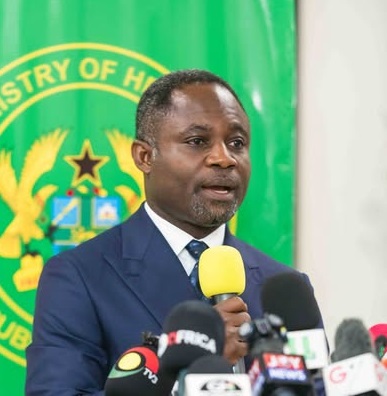
ACCRA, GHANA — Ghana’s newly expanded public health initiative has officially launched across 135 districts in all 16 regions, marking a major operational shift toward preventive, community-level medical services. Health Minister Kwabena Mintah Akandoh confirmed on Monday that 4,574 primary healthcare facilities—including 3,781 CHPS compounds, 746 health centres, and 48 polyclinics—are currently delivering non-fee care as part of President John Dramani Mahama’s broader health sector reforms.
The government plans to reach 150 deprived districts by the end of 2026 before expanding to full nationwide coverage in 2027.
Core Infrastructure & Equipment Deployment under Ghana Free Primary Healthcare
To support widespread outreach, the Ministry of Health has distributed over 24,500 equipment items and 5,000 health worker outreach bags. Additionally, over 7,000 motorbikes and tricycles are being deployed to assist health personnel in conducting house-to-house screening and preventive consultations.
Operational Metric / Pillar
Target Scale & Allocation
Implementation Framework
Participating Facilities
4,574 (CHPS, Health Centres, Polyclinics)
Direct community-level service points
Logistics & Transport
7,000+ motorbikes and tricycles
Mobile outreach and home visits
District Expansion Target
135 active; 150 by end of 2026
Priority on deprived rural districts
Access Requirement
No NHIS Card Required
Universal walk-in registration at primary care
Decoupling Primary Coverage From the National Health Insurance Scheme
Ministry guidelines establish explicit boundaries: the policy covers primary-level care rather than specialized hospital admissions. Importantly, Ghana free primary healthcare operates alongside the National Health Insurance Scheme (NHIS) rather than replacing it. Residents in participating districts can receive care without producing an active NHIS card.
Minister Akandoh explicitly warned facility managers against demanding unauthorized payments from patients, cautioning that health staff caught issuing illegal fees would face severe disciplinary sanctions. Addressing primary risks early remains vital, especially as Ministry data indicates one in five Ghanaians suffers from elevated blood pressure.
Why It Matters: Ghana is testing whether decentralized primary healthcare can be sustainably financed alongside a national health insurance scheme, relieving pressure on referral hospitals while catching chronic conditions early.
5 Critical Steps in Ghana Free Primary Healthcare Plan ACCRA, GHANA — In a major public health milestone, the Ghana free primary healthcare programme has officially launched across 135 districts in all 16 regions, initiating the first phase of a nationwide policy scheduled for…
Newly Diagnosed With Breast Cancer? Your First 30 Days Guide If you have just been newly diagnosed with breast cancer, start here. You do not need to understand everything today. You need to know what to do next, and in what order. This guide breaks…
Healthy Monday Habits: Setting the Tone for the Entire Week Monday, the start of a new week, holds great potential for setting the tone for a successful and fulfilling week ahead. By incorporating healthy habits into our Mondays, we can create a positive and balanced…
Strategies to strengthen infrastructural development… Across the continent, health infrastructure is unevenly distributed, with major gaps in the coverage of rural areas and often of poor quality. A third of Africans live more than two hours away from health services,…