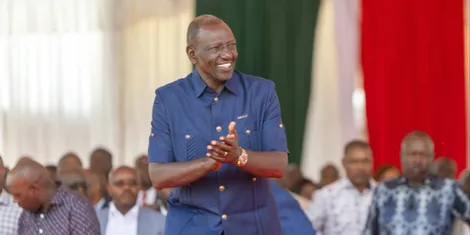
KAPSABET, KENYA — President William Ruto has declared that all public facilities receiving health insurance money in kenya must allocate their disbursements to purchasing essential medicines before funding physical infrastructure upgrades. Speaking during a service at ACK Kapsabet Church, President Ruto criticized hospital administrators who diverted Social Health Authority (SHA) payments toward non-essential projects like security gates and cabro paving blocks while patient dispensaries faced severe drug stockouts.
To enforce fiscal discipline, President Ruto announced plans to restructure hospital governance models by introducing public and community representatives onto management boards. Drawing parallels to school oversight under the Basic Education Act, the proposed reforms aim to ensure transparent monitoring of facility improvement financing.
Financial Benchmarks and Health Insurance Money in Kenya
Disclosures from the Executive Office and the Ministry of Health outline the new financing framework for public health institutions:
Governance Category
Reform Parameters & Operational Guidelines
Primary Funding Source
Social Health Authority (SHA) direct facility disbursements
Contracting Deadline Context
October 14, 2026 deadline for 2026–2029 county SHA contracts
Financial Account Structure
Funds deposited directly into Facility Improvement Financing accounts
Proposed Oversight Model
School-style management boards combining clinicians and community members
Technical Mechanics of Direct Facility Financing and Stockouts
Understanding the operational breakdown behind how health insurance money in kenya is utilized illustrates why primary care dispensaries experience persistent drug shortages:
Direct Facility Account Allocation: Bypassing centralized county bureaucracies, SHA payments deposit directly into individual clinic Facility Improvement Financing accounts, giving local managers financial autonomy.
Misallocation to Capital Upgrades: Facility administrators frequently prioritize visible capital projects—such as paving, perimeter fencing, and administrative block repairs—over recurring pharmaceutical procurement.
Out-of-Pocket Prescription Offloading: When public dispensaries run out of essential chronic disease medications, patients are turned away and forced to purchase drugs at high retail rates from private pharmacies.
Community Oversight, School Board Models, and Operational Governance
President Ruto emphasized that health centers should be supervised by joint boards comprising senior clinicians, local government officers, county health directors, and elected public representatives. Emulating public school boards of management, these health committees will hold direct approval power over facility budgets and pharmaceutical purchase orders.
In urban centers like Nairobi, legislative frameworks such as the County Health Services and Management Act, 2026, already grant Level Five hospitals operational autonomy tied to mandatory board oversight. Expanding this decentralization model nationwide is designed to eliminate financial opacity, ensure prompt claims auditing, and restore public trust in the transition from the National Hospital Insurance Fund (NHIF) to the SHA.
Chronic Disease Protection, Public Audits, and Healthcare Equity
Ensuring that insurance funds prioritize medicine procurement is critical for patients living with chronic conditions like diabetes, hypertension, HIV, and epilepsy. For these individuals, missing routine drug refills leads to disease progression, acute organ complications, and emergency hospitalizations that strain the national healthcare system.
Public health advocates recommend that health centers publish their monthly SHA receipts and stock inventories on public noticeboards. Empowering citizens to verify available services and report facilities that inappropriately redirect funds or force patients to buy covered drugs privately will ensure that health insurance money directly protects Kenya’s most vulnerable populations.
Why It Matters: Insurance funds used for physical paving instead of essential drugs force low-income patients to pay out-of-pocket at private pharmacies; community board oversight ensures primary care facilities put medicine access first.
Kenya’s SHA Gives Hospitals 14 More Days to Sign New… NAIROBI, KENYA — Resolving an immediate standoff with county leaders, kenya sha gives hospitals 14 additional days to execute new healthcare provider contracts for the 2026–2029 cycle. The Social Health Authority (SHA) extended the formal…
Kenya Resumes NHIF Debt Checks as Digital Agency… NAIROBI, KENYA — Kenya has resumed verification of unpaid claims inherited from the defunct National Hospital Insurance Fund (NHIF), as the country’s Digital Health Agency (DHA) outlined plans to generate Social Health Authority claims directly…
Gates Cambridge Scholarship 2027 2028 Applications… Securing postgraduate funding for advanced health research or global health policy at the University of Cambridge is one of the most impactful milestones for international medical, clinical, and public health scholars. The Gates Cambridge Scholarship…
Health Insurance Coverage in Nigeria: 23 Million… For almost two decades, health insurance coverage in Nigeria barely moved. It hovered around a few percent of the population, almost all of them federal workers and employees of large companies. Since the National Health…