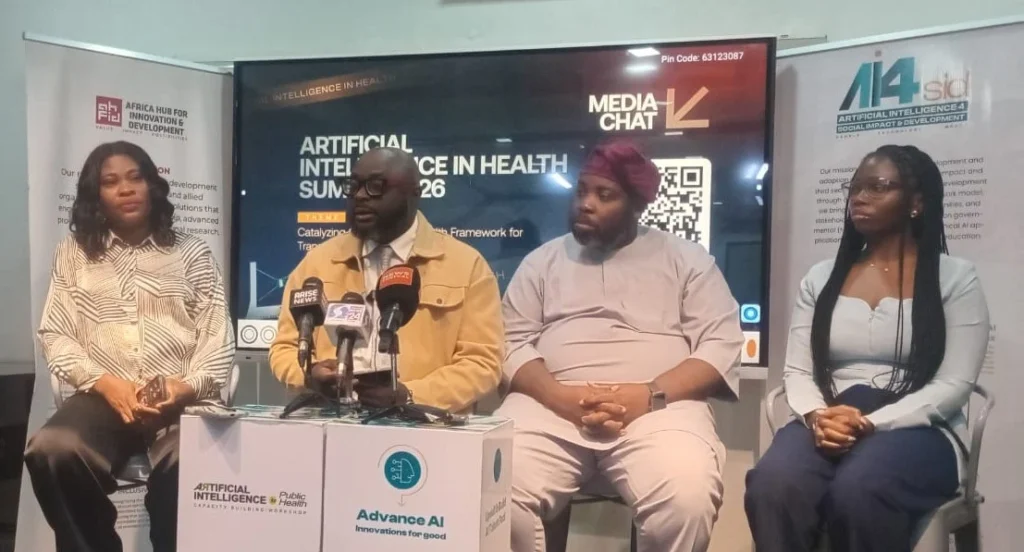
ABUJA, NIGERIA — Integrating artificial intelligence into clinical and administrative workflows could significantly lower out-of-pocket health spending in nigeria, according to health innovation experts preparing for the upcoming Artificial Intelligence in Health Summit in Abuja. With over 70 percent of Nigerians paying directly for medical services, digital diagnostic tools and automated administrative systems could reduce patient costs by streamlining clinical consultations and accelerating insurance claims processing.
Speaking at a press briefing ahead of the October 19–20 summit, Dr. Kunle Kakanfo, Founder and Chief Executive of the Africa Hub for Innovation and Development (AHFID), emphasized that AI tools can increase primary care doctor capacity from 40 to 60 patients daily, though he cautioned that technology cannot replace Nigeria’s shortage of human medical personnel.
Digital Innovations Impacting Health Spending in Nigeria
Data presented by AHFID and public health partners highlights key localized technology models and policy updates:
Innovation Focus Area
Operational Metrics & Policy Integration
Out-of-Pocket Burden
>70% of Nigerians pay for medical treatment directly out of pocket
Tuberculosis AI Screening
Local cough-sound collection in FCT hospitals to build regional diagnostic models
Cervical Cancer Tool
Locally trained AI achieves ~80% accuracy vs 30% for visual inspection
Legislative Proposals
Experts advocate inserting AI provisions into the national e-health bill
Strategic System Mechanics for Health Innovation
To maximize clinical efficiency while safeguarding patient safety, health tech stakeholders are advancing targeted deployment strategies:
Automated Insurance Claims: Accelerating health maintenance organization (HMO) documentation to expand national insurance coverage and lower retail care fees.
Clinical Decision Support: Utilizing generative tools and diagnostic algorithms to support primary care consultations and image evaluation without replacing physician oversight.
Localized Model Training: Developing AI algorithms using demographic and epidemiological data collected directly within African populations to avoid diagnostic bias.
Regulatory Frameworks and Household Financial Relief
For millions of Nigerians managing chronic conditions like diabetes and hypertension, monthly expenditures on diagnostics and medications represent a heavy financial burden. Streamlining administrative overhead through digital triage and diagnostic automation promises to reduce the overall cost of care passed on to families.
However, public health officials stress that clinical validation, data privacy regulations, and governance policies must keep pace with technological adoption to ensure digital health innovations deliver equitable care across both urban and rural communities.
Why It Matters: Lowering administrative and diagnostic costs through artificial intelligence can provide crucial financial relief to the seven in ten Nigerians paying for medical care out of pocket.
Kenya Resumes NHIF Debt Checks as Digital Agency… NAIROBI, KENYA — Kenya has resumed verification of unpaid claims inherited from the defunct National Hospital Insurance Fund (NHIF), as the country’s Digital Health Agency (DHA) outlined plans to generate Social Health Authority claims directly…
Obasanjo, Abdulsalami, Others to Unveil Health Hub in Abuja Abuja, Nigeria – Former Nigerian presidents, including Olusegun Obasanjo and Abdulsalami Abubakar, alongside leading health experts, are set to unveil a state-of-the-art Health Hub in Abuja on September 2, 2025. The new facility, known as…
AI in Healthcare: A Strategic Guide for African… How should healthcare organizations in Africa approach emerging artificial intelligence solutions? In an era where artificial intelligence (AI) is rapidly advancing in the realm of healthcare, African health organizations are presented with the challenge of…
Gatefield Survey Finds Many Nigerians Borrow or Skip… ABUJA, NIGERIA — As the gatefield survey finds many Nigerian households taking on debt or foregoing essential medical treatment, public health advocates and lawmakers at the Gatefield Health Summit in Abuja have called for urgent…