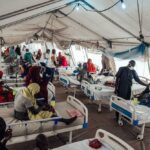
SOKOTO, NIGERIA — International medical humanitarian organization Médecins Sans Frontières (MSF) has issued an urgent call for the Federal Government of Nigeria to integrate prevention, early detection, treatment, and surveillance of noma care in nigeria into primary healthcare facilities.Speaking from the MSF-supported Noma Hospital in Sokoto, nursing manager Ajamah Samuel warned that without immediate clinical care, between 70 and 90 percent of affected children die within weeks of disease onset.
Noma is a non-contagious bacterial infection that begins as minor gum inflammation before rapidly destroying the soft tissue and facial bones of young children living in extreme poverty.Samuel emphasized that integrating routine oral screenings and nutritional rehabilitation at local clinics can halt disease progression before irreversible facial destruction occurs.
Epidemiological Burden and Noma Care in Nigeria
Data disclosed by clinical teams and international health agencies outlines the severe impact of untreated gangrenous stomatitis across vulnerable populations:
Indicator Category
Clinical Benchmarks & Epidemiological Metrics
Untreated Mortality Rate
70% to 90% fatality rate among untreated paediatric cases
Primary Target Demographic
Children under 7 years living in extreme poverty and underserved areas
Surgical Output (2014–2025)
1,645 reconstructive operations performed on 1,078 Sokoto patients
Annual Care Scope (2025)
1,034 patients received care and nutritional support in Sokoto
Clinical Mechanics and Interventions for Noma Care in Nigeria
To prevent severe facial disfigurement and reduce paediatric mortality, public health advocates are prioritizing primary healthcare mechanics for noma care in nigeria:
Early Antibiotic Triage: Equipping frontline healthcare workers to administer immediate broad-spectrum antibiotics, antiseptic mouthwashes, and therapeutic nutrition at the first sign of gum swelling or oral ulcers.
Integrated Disease Surveillance: Embedding noma case reporting into routine national epidemiological tracking alongside measles, diphtheria, and severe acute malnutrition.
Specialized Referral Pathways: Establishing formal diagnostic and referral protocols connecting rural primary health centers to specialized reconstructive surgical units like the Noma Hospital in Sokoto.
Malnutrition Interventions, Vaccine Coverage, and Primary Care
The rapid progression of noma is directly tied to underlying severe acute malnutrition and low routine childhood immunization rates across northern Nigeria. Recurrent viral infections such as measles weaken mucosal immune defenses, allowing commensal oral bacteria to penetrate deep tissue planes. Recent aid funding reductions have restricted feeding programs across northern states, exacerbating vulnerability among children under seven who face chronic food insecurity and poor oral hygiene.
Although the World Health Organization officially designated noma as a Neglected Tropical Disease in 2023, formal recognition has not yet translated into routine primary care services. Survivors of advanced noma face severe lifelong complications, including functional impairment in eating, breathing, and speaking, alongside profound social stigma and psychological trauma.
Community Action, Surgical Capacity, and Long-Term Rehabilitation
Rebuilding primary care capacity represents the most cost-effective solution to eliminate preventable deaths from noma. While specialized surgical teams continue executing multi-stage facial reconstructions—including a 2026 surgical campaign in Sokoto covering nearly 100 complex cases—reconstructive surgery remains scarce, technically demanding, and unaffordable for rural families.
Public health experts urge parents, community health extension workers, and teachers to monitor young children for early warning signs, including bleeding gums, persistent mouth sores, foul breath, and localized facial swelling. By pairing community awareness campaigns with routine immunizations and therapeutic food distribution at village health posts, Nigeria can stop noma before surgical intervention becomes the only remaining choice.
Why It Matters: Noma claims the lives of up to 90 percent of untreated children within weeks; training primary health workers to provide early antibiotics and therapeutic nutrition can prevent facial disfigurement and save lives.
Diphtheria Outbreak Escalates in Nigeria: Over 6,000… An alarming diphtheria outbreak is relentlessly sweeping through Nigeria, leaving thousands infected and hundreds of lives lost, according to Médecins Sans Frontières (MSF), commonly known as Doctors Without Borders. The international medical humanitarian organization issued…
Nigeria's Struggle to Contain Severe Diphtheria Outbreak Northern Nigeria grapples with a harrowing diphtheria outbreak, the most devastating in the nation's history, as hundreds of lives succumb to this perilous disease since the year began. Among the afflicted, a 10-year-old girl lies…
MSF Treated 425,634 Nigerian Children for Acute… ABUJA, NIGERIA — Medical humanitarian organization msf treats child acute malnutrition cases across northern communities as Médecins Sans Frontières (MSF) treated 425,634 children for acute malnutrition in Nigeria in 2025. Marking 30 years of medical…
Aid Cuts Push Millions Into Hunger in Northeast Nigeria Northeast Nigeria is facing a worsening humanitarian crisis as aid cuts by international donors intensify hunger and malnutrition across conflict-affected states like Borno, Adamawa, and Yobe. With over 4.4 million people projected to face acute…