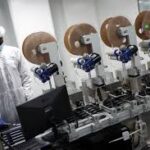
LAGOS, NIGERIA — The founder of Emzor Pharmaceutical Industries, Dr. Stella Okoli, has called on the Federal Government to strengthen support for domestic drug producers and invest in young pharmacy talent to reduce Nigeria’s dependence on imported essential medicines. Speaking at the 8th Nigeria Pharma Manufacturers Expo in Lagos, Okoli emphasized that expanding pharmaceutical manufacturing in nigeria is vital for securing national life-science sovereignty and stabilizing domestic healthcare delivery.
Okoli confirmed that Emzor is preparing to commence local production of Active Pharmaceutical Ingredients (APIs)—the essential raw chemical building blocks that Nigerian drug makers currently import. The announcement coincided with leadership updates as Pharm. Uzoma Ezeoke assumes day-to-day operations as Managing Director, while Okoli continues as Founder and Chief Executive Officer.
Expo Metrics and Pharmaceutical Manufacturing in Nigeria Status
Data presented by the Pharmaceutical Manufacturers Group of the Manufacturers Association of Nigeria (PMG-MAN) outlines structural cost dynamics and national local production targets:
Industry Parameter
Sector Benchmarks & Government Policy Targets
Import Dependence
~70% of essential medicines currently imported into Nigeria
Local Production Goal
Government target to produce 70% of essential drugs locally
Energy Overhead
PMG-MAN members spend >40% of revenue on power (vs <10% in China/India)
Facility Standards
37 domestic drug plants currently undergoing WHO-standard quality upgrades
Policy Interventions and Local Production Mechanics
To overcome high capital costs and build sustainable domestic capacity, industry leaders and regulatory authorities are advocating targeted policy measures for pharmaceutical manufacturing in nigeria:
Tax & Tariff Waivers: Expanding import duty exemptions on pharmaceutical machinery, laboratory equipment, and raw chemical excipients.
Executive Order Extension: Extending the Presidential Executive Order supporting local preference in drug procurement beyond its March 2027 expiration.
Workforce Pipeline Development: Partnering with academic institutions through industrial visits and graduate training programs to retain young pharmacists and quality control engineers.
Supply Chain Security, Currency Shocks, and Patient Access
Heavy reliance on foreign pharmaceutical supplies leaves Nigerian patients vulnerable to severe exchange rate fluctuations, international shipping delays, and global drug shortages. For individuals managing chronic conditions like hypertension, diabetes, and HIV, sudden price hikes or supply stockouts force dangerous treatment interruptions and dose-rationing.
Establishing domestic active pharmaceutical ingredient (API) synthesis represents a crucial step toward supply chain independence. While formulation plants are common across the region, producing raw chemical ingredients requires advanced technical expertise, substantial capital investment, and reliable energy infrastructure. Sustained government support and workforce investments remain critical to making essential medicines predictable and affordable for every Nigerian household.
Why It Matters: Expanding domestic medicine and API manufacturing protects chronic disease patients from currency shocks and supply chain disruptions that threaten daily treatment.
Nigeria’s 70% Local Medicine Target Will Be Won or… What is Nigeria’s 70% local medicine production target for 2030? As industry analysts examine how the nigeria local medicine target power bills dilemma impacts national healthcare, the Federal Government has set an ambitious goal to…
Nigeria Targets Local Medicine Production LAGOS, NIGERIA — Under a new public health industrial strategy, nigeria targets local medicine production of 70 percent for essential healthcare items by 2030, supported by $2 billion in financing commitments at single-digit interest rates.…
Nigerian Drug Makers Seek Two-Year Extension of… LAGOS, NIGERIA — Seeking a pharma executive order extension to secure multi-year investments, Nigeria’s pharmaceutical manufacturers have formally asked the Federal Government to extend by two years the Presidential Executive Order granting tax and tariff…
Nigerian firm to produce HIV/malaria test kits. Abuja, Nigeria – In a groundbreaking development for Nigeria’s healthcare sector, a local biotechnology firm has announced plans to commence the production of HIV and malaria test kits. This initiative is expected to strengthen Nigeria’s…