PIETERMARITZBURG, SOUTH AFRICA — As qualified doctors jobless as public healthcare facilities remain severely understaffed, scores of medical graduates across KwaZulu-Natal (KZN) are unable to secure public sector appointments due to fiscal austerity constraints.Reports published by the health journalism outlet Spotlight reveal that between 100 and 200 fully trained medical officers are currently seeking employment within KZN’s public health system, even as frontline hospitals and rural health centers face acute clinician shortages.
Despite completing mandatory two-year internships and community service commitments, young physicians report waiting up to three years for vacant posts to be advertised, forcing many into locum shifts or private practices while public hospital workloads escalate.
Operational Benchmarks for Qualified Doctors Jobless As
Data compiled from KZN Department of Health disclosures, District Health Barometer metrics, and parliamentary filings detail the workforce deficit:
Health Workforce Metric
National Public Health Benchmarks
Unemployed KZN Doctor Estimate
100 to 200 qualified doctors actively seeking public sector posts
KZN Doctor-to-Patient Ratio
~0.38 to 0.40 doctors per 1,000 people (Benchmark target: 1.0 per 1,000)
Department Committed Posts
50 medical officer posts advertised following July 2026 union talks
Primary Structural Constraint
Budgetary cuts & compensation for employees (CoE) funding caps
Technical Mechanics: Qualified Doctors Jobless As
Understanding the systemic paradox behind why qualified doctors jobless as regional public hospitals suffer severe staffing shortages involves examining public health economics and workforce dynamics:
Budgetary Compensation Caps versus Training Output: South Africa’s public medical universities continue to output qualified medical graduates, yet provincial health departments operate under severe Compensation for Employees (CoE) budget freezes. Because public sector medical officer posts require dedicated state treasury funding, fiscal austerity measures leave vacant positions unfunded regardless of clinical demand.
Clinical Burden and Doctor-to-Patient Deficits: With KZN operating at approximately 0.38 doctors per 1,000 citizens—far below the recommended public health benchmark of 1 doctor per 1,000 population—existing hospital personnel face severe burnout, mandatory overtime, and unmanaged patient ratios. hiring all currently unemployed physicians in KZN would still leave the province below optimal staffing standards.
Loss of Public Sector Skills and Brain Drain: Long delays in securing public appointments push young physicians toward private sector locum work or international migration. Extended periods outside structured clinical environments risk skill erosion and contribute to severe psychological stress among young healthcare professionals.
Protests, Labor Union Negotiations, and Departmental Budget Constraints
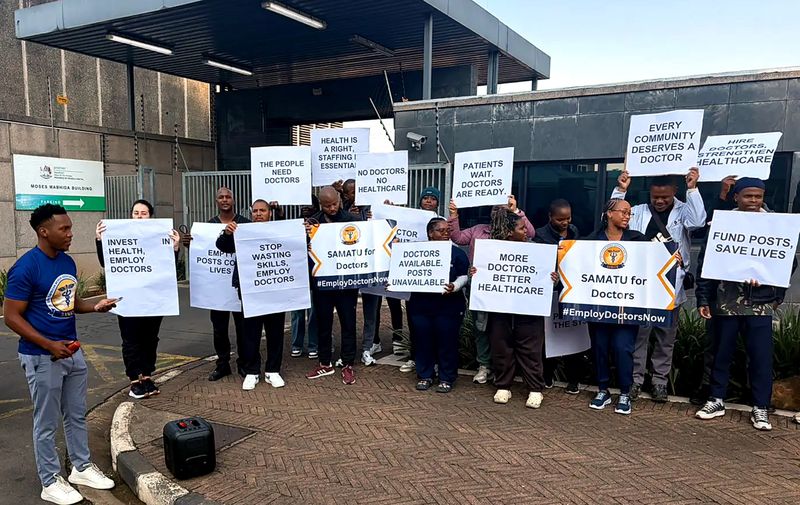
On June 17, 2026, unemployed medical graduates staged public demonstrations outside the Natalia building in Pietermaritzburg, housing the KZN Department of Health and the Office of the Premier. Delivering a memorandum to Premier Thami Ntuli and Health MEC Nomagugu Simelane, the group demanded the immediate advertisement of all vacant medical officer positions and the establishment of a long-term annual workforce creation plan.
Following subsequent negotiations involving the South African Medical Association Trade Union (Samatu), the department committed to advertising 50 medical officer posts. However, in formal responses, health administrators clarified that filling vacant posts remains entirely dependent on available employee compensation funds, acknowledging that the department remains significantly underfunded for the 2026/2027 financial year.
Health System Resilience, Governance, and Workforce Outlook
The medical unemployment crisis in KwaZulu-Natal reflects a broader structural challenge observed across multiple African health systems, where severe physician shortages stem from public finance bottlenecks rather than a lack of trained professionals. Employed clinicians report escalating pressure, unreplaced resignations, and deteriorating working conditions across regional facilities.
Resolving the healthcare staffing crisis requires aligning medical school training outputs with sustainable provincial health budget allocations to ensure qualified doctors jobless as public health demands continue to grow across Southern Africa.
Why It Matters: Unfunded public posts leave hundreds of fully qualified doctors unemployed while public hospital wards face severe overcrowding, proving that health workforce shortages are frequently driven by budget policy failures rather than training deficits.
UBTH Pioneers Nigeria’s First Elder Care Aides The University of Benin Teaching Hospital (UBTH) has made history by graduating Nigeria's first set of Elder Care Aides (ECAs). These ECAs are a group of non-medical professionals who have been trained to provide assistance…
Rising Emergency Visits Highlight Mental Health Care… CAPE TOWN, SOUTH AFRICA — Official parliamentary disclosures have revealed a steady increase in psychiatric emergency room visits across South Africa, underscoring growing pressure on mental health care in south africa regional health facilities. Replying…
South Africa Sugar Tax Debate Intensifies Ahead of… CAPE TOWN, SOUTH AFRICA — Civil society groups and industrial agricultural lobbies have intensified their policy standoff regarding South Africa’s sugary drinks tax, clashing publicly as south africa sugar tax adjustments dominate pre-budget economic discussions.…
Rwanda Graduates 1,331 Health Workers as Workforce… KIGALI, RWANDA — Marking a major milestone in human resources for health, rwanda graduates 1331 health professionals from the University of Rwanda, including the country's first two locally trained kidney transplant surgeons. The health graduates…