NAIROBI, KENYA — Kenya has intensified its health response across multiple viral threats as confirmed Mpox cases reached 1,298 with 19 deaths across 40 of its 47 counties. Establishing a comprehensive kenya infectious disease surveillance framework, public health authorities are monitoring high-burden areas like Mombasa (452 cases), Nairobi (320 cases), and Busia (115 cases), alongside Makueni, Kiambu, Kilifi, and Nakuru.
Concurrently, Kenya activated its National Ebola Virus Disease Incident Management System to prepare for potential cross-border transmission from neighboring countries, though all suspected Ebola cases tested negative. Healthcare agencies are also tracking 469 measles cases, vaccine-derived poliovirus in Garissa County’s Dadaab refugee camp, and localized dengue fever outbreaks. Weather conditions driven by El Niño threaten to worsen vector-borne disease risks through late 2026.
Outbreak Distribution & Surveillance Architecture
Kenya’s multi-pathogen monitoring system balances geographic burdens with specialized testing facilities:
Threat / Facility Type
Incident Metric & Operational Focus
Geographical Coverage
Mpox Outbreak
1,298 confirmed cases & 19 deaths
40 of 47 counties (Mombasa epicenter)
Ebola Preparedness
Incident Management System activated (0 confirmed)
Cross-border entry points & high-risk zones
Concurrent Outbreaks
469 measles cases, poliovirus & dengue fever
Garissa, Wajir & coastal urban hubs
Diagnostic Network
4 designated national labs + mobile testing unit
NPHL, KEMRI (Nairobi & Kisumu), Mobile
Expanding Kenya Infectious Disease Surveillance to Control Regional Outbreaks
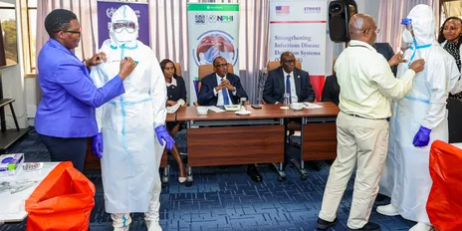
Maintaining effective kenya infectious disease surveillance requires strong diagnostic capacity, workforce training, and emergency isolation infrastructure. The Ministry of Health designated four primary testing centers—the National Public Health Laboratory, KEMRI facilities in Nairobi and Kisumu, and a mobile laboratory unit—to deliver rapid decentralized diagnostics. Healthcare workers are undergoing targeted training on sample collection, case identification, and infection control protocols.
Simulation exercises across hospitals continue to test emergency readiness and personal protective equipment distribution. County health departments have established isolation wards to ensure safe patient management and reduce facility-based transmission. Public Health Principal Secretary Mary Muthoni emphasized that sustained surveillance and coordinated response mechanisms remain vital to protecting public health against evolving regional epidemics.
Why It Matters: Kenya’s multi-threat infectious disease environment requires sophisticated surveillance and coordinated outbreak management, testing regional capacity for disease prevention and cross-border epidemic control.
Kenya Border Health Surveillance Heightened Across… NAIROBI, KENYA — Kenya has activated heightened Kenya border health surveillance at points of entry following the spread of Mpox across 40 of its 47 counties, with 1,298 confirmed cases and 19 deaths recorded…
Kenya Mpox Cases Surge Across Forty Counties NAIROBI, KENYA — Kenya has confirmed 1,298 Mpox cases with 19 deaths across 40 counties as of 6 September 2026. The Kenya Mpox cases surge has prompted the Ministry of Health to strengthen disease surveillance…
KEPHIC 2026 Focuses on Disease Prevention Amid… NAIROBI, KENYA — The Kenya Public Health International Conference (KEPHIC 2026) convenes October 27–29 at the Kenyatta International Convention Centre in Nairobi. The forum addresses kephic 2026 disease prevention priorities alongside pandemic preparedness and climate-related…
Kenya Tracks 1,309 Mpox Cases Across 40 Counties NAIROBI, KENYA — Kenya is actively tracking 1,309 confirmed Mpox cases with 19 associated deaths across 40 counties as of September 12, 2026, driving a comprehensive mpox outbreak response alongside simultaneous surveillance of 469 measles…