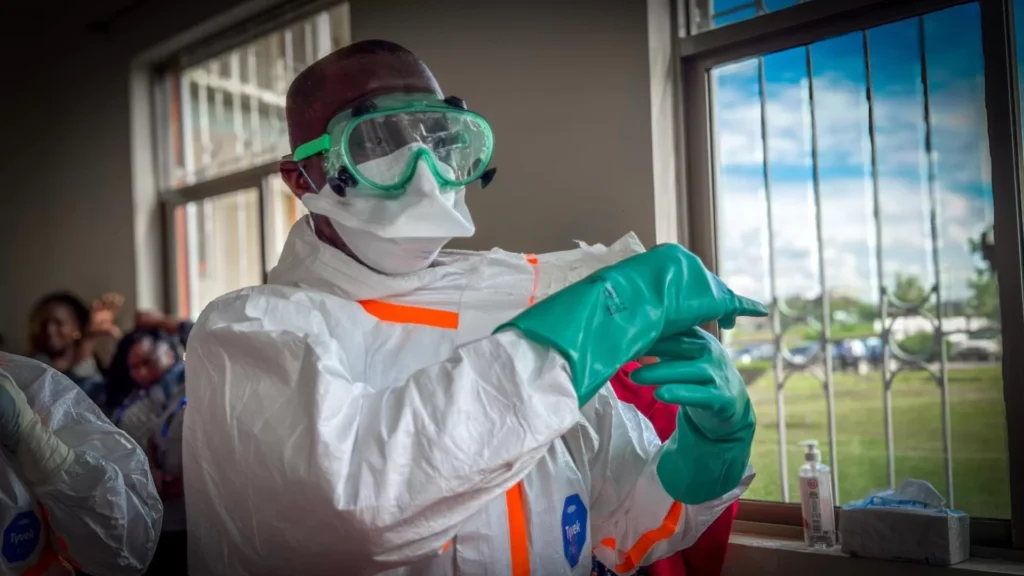
NAIROBI, KENYA — Health authorities in Kenya have activated emergency containment protocols after confirming the country’s first imported case of Ebola, involving a Kenyan citizen who died shortly after arriving in Nairobi from the Democratic Republic of the Congo (DRC). The death has triggered aggressive contact tracing and heightened screening measures to prevent further community transmission across East Africa.
The patient traveled overland through Beni to Kampala, Uganda, before flying into Nairobi’s Jomo Kenyatta International Airport (JKIA). Despite passing initial port health temperature checks, the individual presented with acute severe symptoms at Nairobi Hospital, where isolation procedures were initiated prior to the patient’s death.
Regional Outbreak Context and Ebola Response in Kenya
Laboratory tests conducted by the Kenya Medical Research Institute confirmed the presence of the rare Bundibugyo Ebola virus strain:
Operational Parameter
Epidemic Status & Clinical Metrics
Confirmed Pathogen
Bundibugyo Ebola Virus (No approved vaccines or targeted antivirals available)
Contact Tracing Target
28 close contacts in quarantine (8 family members, 21 health workers) plus 27 flight passengers
Air Travel Gate Routing
Gate 16 at JKIA dedicated exclusively to screening arrivals from 10 high-risk African nations
Emergency Emergency Funding
2.6 billion KSh allocated by National Treasury for immediate containment operations
Strategic Containment Protocols for Ebola Response in Kenya
To limit secondary spread and strengthen public health safeguards, the government has instituted target interventions for the ebola response in kenya:
Consolidated Airport Screening: Redirecting passengers arriving from the DRC, Uganda, Rwanda, Burundi, South Sudan, and five other regional nations to a single dedicated terminal gate for mandatory secondary screening.
Dedicated Isolation Facilities: Establishing treatment and isolation capacity across major medical centers—including Kenyatta National Hospital and Nairobi Hospital—alongside border point isolation units in Busia and Malaba.
Rigorous Contact Monitoring: Following up with health personnel, domestic contacts, and airline passengers for the full 21-day incubation window to intercept potential symptoms early.
Addressing Screening Limitations and Clinical Vigilance
The case highlights standard border screening challenges, as infected individuals during the early incubation period or under symptom-masking medication can clear thermal checks without displaying fever. Consequently, public health leaders emphasize that early clinical isolation by alert hospital staff serves as the primary firewall against widespread outbreaks.
World Health Organization (WHO) officials have advised against international trade or travel bans, advocating instead for disciplined contact tracing, active community engagement, and reinforced infection control in all clinical facilities.
Why It Matters: Ebola reaching a major East African transit hub tests regional surveillance systems; rapid isolation and contact tracing in Nairobi are critical to preventing further regional transmission.
Ghana Steps Up Airport Ebola Screening After Kenya,… ACCRA, GHANA — The Ministry of Health (MoH) has activated heightened biosecurity surveillance, declaring that ghana steps up airport ebola screening across all ports of entry following confirmed viral importations in Kenya and Nigeria. Disclosing…
Nigeria Activates Ebola Incident Plan as Uganda… ABUJA, NIGERIA — The Nigeria Centre for Disease Control and Prevention (NCDC) has officially activated an Incident Management System (IMS) and convened its first Incident Management Meeting after nigeria activates ebola incident plan protocols to…
Gene Sequencing Links Nigeria’s Ebola Virus Closely… ABUJA, NIGERIA — As gene sequencing links nigeria’s confirmed Ebola case directly to the viral strain identified in Kenya’s index patient, federal health authorities are intensifying cross-border epidemiological investigations to reconstruct regional transmission routes. Announcing…
Ghana Orders 21-Day Monitoring for Travellers From… ACCRA, GHANA — Ghana’s Ministry of Health has introduced Ghana Ebola traveller monitoring for up to 21 days for passengers arriving from countries with ongoing transmission of the Bundibugyo strain of Ebola, Citi Newsroom reported…