A new baby is expected to bring joy, so many mothers hide how they really feel. Yet studies in Nigeria have found depression in anywhere from about 15% to 45% of women after childbirth, depending on the community. Knowing the signs of postpartum depression helps families act early, because this is a medical condition that responds well to treatment. It is not weakness, ingratitude or a spiritual attack.
Baby blues or something more?
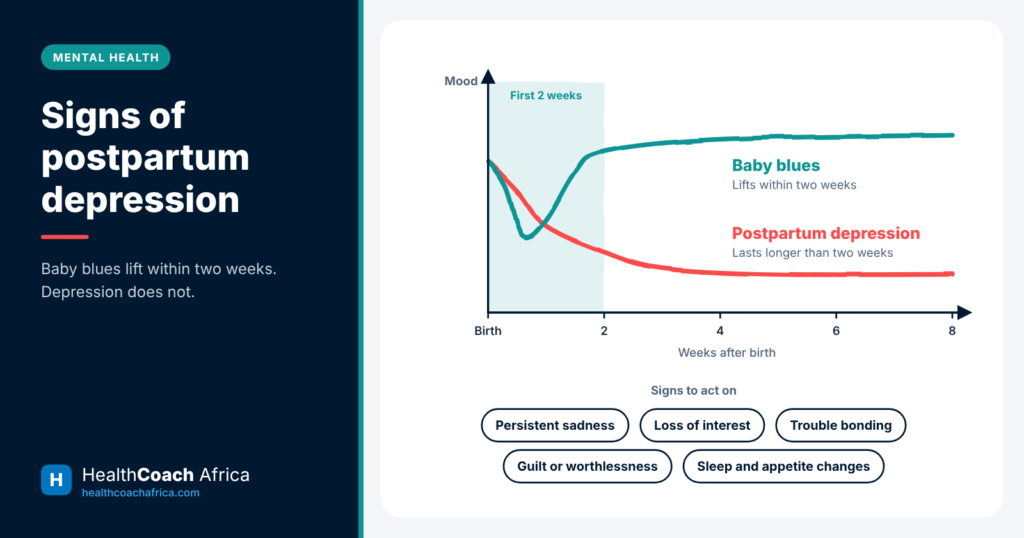
Up to eight in ten mothers experience “baby blues” in the first days after delivery. They feel tearful, irritable and overwhelmed, and the feeling usually passes within two weeks without treatment.
Postpartum depression is different. The low mood is deeper, lasts longer than two weeks and makes it hard to care for yourself or your baby. It often begins in the first few weeks, although it can start at any time in the first year. In short, baby blues are common and brief, while depression is persistent and disabling.
Common signs of postpartum depression
Sadness, emptiness or crying for most of the day
Losing interest in things you used to enjoy
Feeling guilty, worthless or like a bad mother
Difficulty bonding with the baby
Sleeping too little or too much, even when the baby sleeps
Poor appetite or overeating
Constant worry, panic or irritability
Trouble concentrating or making decisions
Thoughts of harming yourself or your baby
If several of these last more than two weeks, speak to a health professional.
Signs that are easy to miss
Not every mother with depression looks sad. In fact, some of the signs of postpartum depression are mistaken for stubbornness, laziness or a bad temper. Watch for:
Anger and irritability over small things
Feeling numb or empty, as if going through the motions
Body complaints such as headaches, chest tightness and aches with no clear cause
Excessive worry about the baby’s health, or constant checking
Frightening, unwanted thoughts that something bad will happen to the baby
Withdrawing from visitors, phone calls and church or mosque
In Nigeria, many women describe this as “thinking too much” or a heavy heart. Whatever words are used, the feelings deserve attention. Unwanted thoughts are common and do not mean a mother will harm her child. However, she should share them with a health worker.
Why it happens
There is no single cause. Instead, several pressures arrive at once. Hormone levels fall sharply within days of delivery. Sleep is broken night after night. The body is healing from birth, and sometimes from surgery. Meanwhile, a woman’s role, routine and sense of self all change.
Depression can also begin during pregnancy, so it is worth mentioning low mood at antenatal visits. It is not caused by anything the mother did wrong. Likewise, it is not a punishment or a sign that she does not love her baby.
Who is at higher risk
Any mother can be affected. However, the risk is higher with a previous history of depression or anxiety, little support from a partner or family, a difficult birth or a sick baby, money worries, and violence or conflict at home. In some families, pressure over the baby’s sex adds to the strain. Teenage mothers and women with an unplanned pregnancy also face a higher risk. Fathers can develop depression after a birth too.
How it is treated
First, a doctor, nurse or midwife may ask a short set of screening questions. Treatment then depends on how severe the symptoms are:
Talking therapy, such as counselling or cognitive behavioural therapy
Antidepressant medicine, several of which can be used while breastfeeding under a doctor’s guidance
Practical support, including protected sleep, help with night feeds and time to rest
In addition, your doctor should check for physical causes of exhaustion and low mood, such as anaemia and thyroid problems, which are common after delivery. With treatment, most women recover fully. Do not stop any prescribed medicine suddenly, even when you feel better. Instead, agree a plan with your doctor.
Looking after yourself while you recover
Small, steady steps support medical treatment:
Protect sleep. Rest when the baby sleeps, and let someone else handle one night feed if possible.
Eat regular meals. Skipping food worsens tiredness and low mood.
Move a little each day. A short walk in daylight lifts energy.
Talk to one trusted person daily. Isolation feeds depression.
Lower the standard at home. The house does not need to be perfect.
Avoid alcohol, and limit time spent comparing yourself with others online.
The tradition of omugwo, in which a mother or mother-in-law stays to help after the birth, can be a great support. However, if advice at home starts to feel like criticism, say so kindly and ask for practical help instead.
Why early help matters for the baby
Untreated depression affects more than the mother. It can make feeding and bonding harder, and over time it may slow a baby’s emotional and language development. Fortunately, these effects are largely prevented when the mother gets better. Seeking treatment is therefore an act of good mothering, not a failure.
How families can help
Partners and relatives are often the first to notice the signs of postpartum depression, so their role matters. Ask her how she is feeling, not only how the baby is doing. Listen without judging or comparing her with other mothers. Take over practical tasks so that she can sleep, and go with her to the clinic.
Furthermore, avoid telling her to “be strong” or “just pray about it” as a substitute for care. Faith and medical treatment can work together.
Culture, faith and stigma
Many families notice the signs of postpartum depression but fear that a mental health diagnosis will bring shame or gossip. Others believe that prayer alone must be enough. As a result, women suffer quietly for months. Yet depression after childbirth is as real as high blood pressure in pregnancy, and no one hides that.
Religious leaders, older relatives and husbands have real influence here. When they encourage a mother to seek care, she usually goes. When they dismiss her feelings, she usually stays silent.
When it is an emergency
Rarely, a mother develops postpartum psychosis, usually within two weeks of delivery. Warning signs include confusion, hearing or seeing things that are not there, strange beliefs and severe restlessness. This is a medical emergency, so go to hospital at once.
Similarly, if a mother has thoughts of ending her life or harming her baby, do not leave her alone. In Nigeria, call 112, She Writes Woman on 0800 800 2000 or MANI on 0809 111 6264.
Frequently asked questions
How long does postpartum depression last?
Without treatment, it can continue for many months and sometimes more than a year. With treatment, most women begin to improve within a few weeks.
Can I breastfeed while taking antidepressants?
Usually, yes. Doctors choose medicines that pass into breast milk in very small amounts. Never start or stop one without medical advice.
Can it start months after the birth?
Yes. The signs of postpartum depression can appear at any time in the first year, including after a return to work or when breastfeeding stops.
Will it happen again with my next baby?
The risk is higher if you have had it before. However, planning ahead with your doctor, arranging support and watching for early signs all reduce that risk.
Can fathers be affected?
Yes. Some new fathers become depressed too, especially when their partner is unwell. They also deserve support.
The key message
Learn the signs of postpartum depression before the baby arrives, and share them with the people who will be around you. If the signs appear, act within two weeks. Early care shortens the illness and protects the whole family.
Postpartum Depression Warning Signs: More Than the… A new baby is supposed to bring joy. Family and friends visit, pray for the child and tell the mother how lucky she is. So when a new mother feels empty, anxious or unable to…
Thyroid Problems After Childbirth: What New Mothers… The months after giving birth bring huge changes. Tiredness, mood swings, weight changes and poor sleep are common, and most are normal. However, some new mothers develop thyroid problems after childbirth that cause similar symptoms.…
Heart Attack Warning Signs: Act Fast and Save a Life Heart disease is rising in Nigeria, driven by high blood pressure, diabetes, smoking and changing lifestyles. A heart attack is a medical emergency in which every minute counts. The faster treatment starts, the more heart…
Heart Attack in Women: Know the Signs That Are Easy to Miss Many people picture a heart attack as a man clutching his chest and collapsing. Women can have this classic chest pain too. But a heart attack in women often begins more quietly, with breathlessness, nausea,…