The months after giving birth bring huge changes. Tiredness, mood swings, weight changes and poor sleep are common, and most are normal. However, some new mothers develop thyroid problems after childbirth that cause similar symptoms. Because these symptoms are easily blamed on caring for a newborn, they are often missed. This guide explains postpartum thyroiditis and other thyroid problems after birth, how they are diagnosed and how they are treated.
What postpartum thyroiditis is
Postpartum thyroiditis is inflammation of the thyroid gland that develops within the first year after childbirth. It is caused by the immune system, which becomes more active again after pregnancy. The American Thyroid Association notes that it affects a significant minority of women after delivery, and also after miscarriage.
Why thyroid problems after childbirth are often missed
New mothers expect to feel tired, emotional and short of sleep. Health workers and families may assume these symptoms are normal. Racing heartbeat and anxiety may be blamed on stress. Weight loss in the first months may be welcomed. Weight gain later may be blamed on pregnancy. As a result, thyroid problems after childbirth often go unrecognised for months.
The key is to notice symptoms that are severe, persistent or unusual. A simple blood test can give clarity.
Who is at higher risk?
Thyroid problems after childbirth are more likely in women who:
Have thyroid antibodies, often found in blood tests before or during pregnancy
Had postpartum thyroiditis after a previous pregnancy
Have type 1 diabetes
Have a personal or family history of thyroid disease
Have other autoimmune conditions
Phase 1: the overactive phase
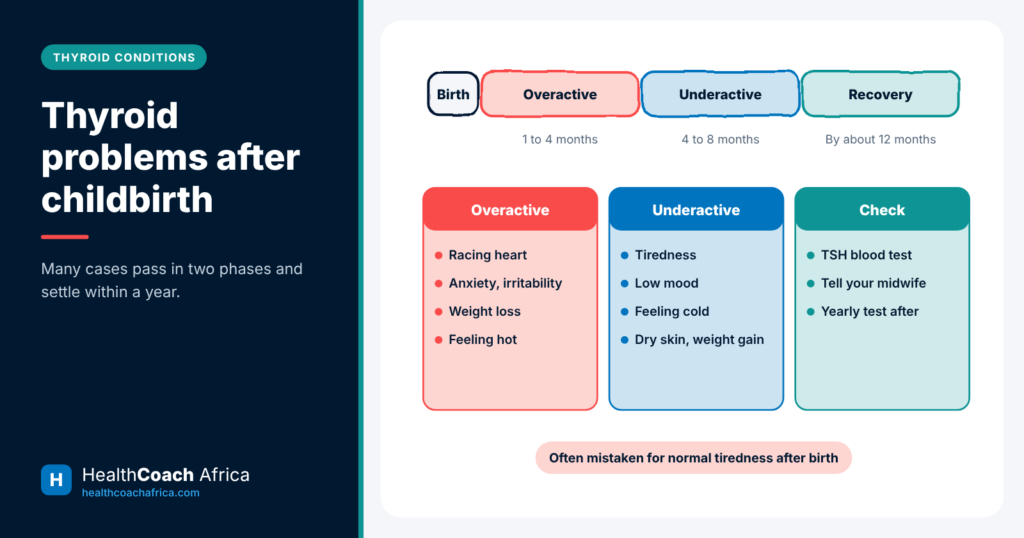
The inflamed thyroid releases stored hormone into the blood. This usually happens one to four months after birth. Symptoms can include:
Racing or pounding heartbeat
Anxiety, irritability or nervousness
Difficulty sleeping, even when the baby sleeps
Feeling hot and sweating
Weight loss
Tremor
This phase usually lasts one to three months. Many women have only mild symptoms or none at all.
Phase 2: the underactive phase
After the stored hormone is used up, the thyroid may become underactive. This usually happens four to eight months after birth. Symptoms can include:
Extreme tiredness
Feeling cold
Constipation
Dry skin and hair loss
Difficulty concentrating
Low mood or depression
Weight gain
Some women go through both phases, while others have only one.
Thyroid problems after childbirth and breastfeeding
Some mothers worry that thyroid problems or their treatment will affect breastfeeding. An underactive thyroid can sometimes reduce milk supply, and treatment may help. Levothyroxine passes into breast milk only in tiny amounts and is safe for the baby. Beta blockers used in the overactive phase are usually compatible with breastfeeding at normal doses. Always tell your doctor that you are breastfeeding, so that the safest options are chosen.
Recovery
Most women recover normal thyroid function within 12 to 18 months of delivery. However, some develop permanent hypothyroidism, either straight away or in later years. Learn more about this condition in our article on hypothyroidism.
Thyroid problems and postpartum depression
The symptoms of an underactive thyroid, such as tiredness and low mood, overlap with postpartum depression. Some women have both. Any new mother with depression should have a thyroid blood test, so that a thyroid problem is not missed.
Thyroid problems after childbirth: what to tell your midwife or doctor
At postnatal visits, describe your symptoms clearly. Mention:
Racing heartbeat, shaking or anxiety
Feeling unusually hot or cold
Extreme tiredness that does not improve with rest
Low mood, tearfulness or loss of interest
Unexpected weight loss or gain
Hair loss beyond the usual postnatal shedding
Any thyroid problems before or during pregnancy
Ask whether a thyroid test is needed. Clear information helps health workers find thyroid problems after childbirth sooner.
Graves’ disease after birth
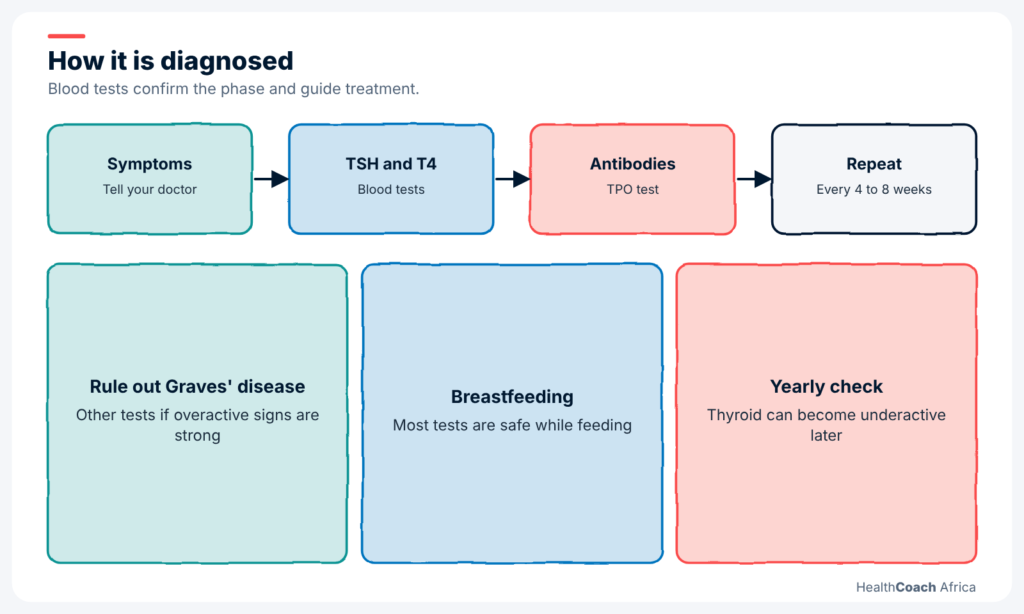
Some women develop Graves’ disease, a different cause of an overactive thyroid, in the year after childbirth. Unlike postpartum thyroiditis, Graves’ disease does not settle on its own and needs treatment. Eye symptoms, such as gritty or bulging eyes, suggest Graves’ disease. Blood tests and sometimes a scan help tell the two apart.
How thyroid problems after childbirth are diagnosed
A blood test measuring TSH and free T4 shows whether the thyroid is overactive or underactive. Thyroid antibody tests may also be done. Because symptoms can be subtle, mention any new tiredness, palpitations, anxiety, low mood or weight changes at postnatal visits.
Diagnosis steps for thyroid problems after childbirth, from symptoms to blood tests
Repeat tests are common, because the thyroid can change from month to month.
Treatment for the overactive phase
The overactive phase of postpartum thyroiditis usually does not need antithyroid medicines, because the thyroid is not overproducing hormone. Instead, a beta blocker such as propranolol 1 can ease symptoms like a racing heart and shaking. Propranolol is generally considered compatible with breastfeeding at usual doses, but discuss it with your doctor.
HUBPHARM PHARMACIST’S NOTE Many new mothers worry that any tablet will harm their breastfed baby. Levothyroxine and most beta blockers used in postpartum thyroiditis are compatible with breastfeeding. Message a HubPharm pharmacist with your prescription and your baby’s age. We will check each medicine and help you time doses around feeds.
Treatment for the underactive phase
If the underactive phase causes symptoms, or if you are planning another pregnancy, levothyroxine is used 2 . It is safe during breastfeeding. Your doctor may try reducing or stopping the medicine after 12 to 18 months to see whether the thyroid has recovered.
Planning your next pregnancy
If you have had postpartum thyroiditis, you have a higher chance of it happening again after future pregnancies. Have your thyroid checked before trying to conceive, early in pregnancy and in the months after birth. If you are taking levothyroxine and become pregnant, contact your doctor straight away, as the dose often needs to increase.
Myths about the thyroid and pregnancy
“Thyroid problems only affect older women.” They often start in the childbearing years, including after birth.
“If my thyroid was normal in pregnancy, I cannot have problems after.” Postpartum thyroiditis can develop in women whose thyroid was normal during pregnancy.
“Thyroid problems after childbirth always need lifelong treatment.” Many women recover fully. Others need treatment for months or years.
Looking after your own health
New mothers often put themselves last. Eat regular meals, drink enough water and rest when the baby sleeps. Keep your own postnatal appointments. Ask a relative to watch the baby so you can attend blood tests. Your health matters for your baby too.
When to seek urgent care
Seek urgent medical help for chest pain, a very fast or irregular heartbeat, fainting, severe breathlessness, or thoughts of harming yourself or your baby. These need immediate assessment.
Support for new mothers
Recovering from a thyroid problem while caring for a newborn can be exhausting. Accept help with night feeds, housework and older children. Rest when you can. Talk to your partner, family or a health worker about how you feel. With the right care, most women with thyroid problems after childbirth recover well.
Long-term follow-up
Women who have had postpartum thyroiditis have a higher risk of developing permanent hypothyroidism later in life. A yearly thyroid blood test is often recommended. Before a future pregnancy, have your thyroid checked, because thyroid hormone is important for the baby’s development.
Myths about thyroid problems after birth
“Feeling exhausted after birth is always normal.” Severe or worsening tiredness deserves a check.
“Thyroid medicine is not safe while breastfeeding.” Levothyroxine is safe while breastfeeding.
“It will always go away on its own.” Many women recover, but some need long-term treatment.
How partners and family can help
New mothers often hide exhaustion, low mood or a racing heart because they think it is normal. Partners and relatives can notice changes, share night feeds and encourage a check-up. Family support helps women seek care for thyroid problems after childbirth early.
Getting help
If you have recently given birth and feel unusually anxious, exhausted or low, ask for a thyroid test. Understanding thyroid problems after childbirth helps you get the right care. For help with medicines that are safe while breastfeeding, or advice on levothyroxine, message a HubPharm pharmacist or ask Afiya on WhatsApp.
Medicines and products in this article
#
Medicine or product
What to know
1
Propranolol
Prescription only
Eases racing heart and shaking in the overactive phase.
2
Levothyroxine
Prescription only
Treats the underactive phase. Safe while breastfeeding.
To order any of these, or to ask a pharmacist a question first, message HubPharm on WhatsApp or visit hubpharmafrica.com. Prescription medicines are supplied against a valid prescription.
Signs of Overactive Thyroid and How It Is Treated The thyroid is a small, butterfly-shaped gland in the front of the neck. It makes hormones that control how fast the body uses energy. When the gland makes too much hormone, everything speeds up: the…
Thyroid and Weight Gain: Separating Facts From Myths Many people who struggle with their weight wonder whether their thyroid is to blame. Others with a diagnosed thyroid problem find it hard to lose weight even on treatment. The link between thyroid and weight…
Goitre Causes and Treatment: A Clear Guide A goitre is an enlargement of the thyroid gland, which sits at the front of the neck below the Adam's apple. It may be a small, painless swelling noticed in a photograph, or a large…
Thyroid Nodules and Cancer: What a Neck Lump Means Finding a lump in your neck can be frightening. Many people immediately fear cancer. In fact, thyroid nodules are very common, and most of them are harmless. Only a small minority turn out to be…