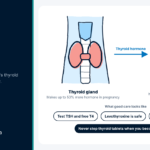
The thyroid is a small, butterfly-shaped gland in the front of the neck. It makes hormones that control how fast the body uses energy. When the gland makes too much hormone, everything speeds up: the heart, the bowels, the mind and the metabolism. This condition is called hyperthyroidism. Recognising the signs of overactive thyroid early prevents complications and leads to effective treatment. This guide explains the symptoms, causes, tests and treatment options.
What the thyroid does
The thyroid makes two main hormones, called T4 and T3. They affect almost every organ, including the heart, brain, muscles, gut and skin. The amount of hormone is controlled by the pituitary gland in the brain, which releases thyroid stimulating hormone, or TSH.
When thyroid hormone levels are too high, the pituitary lowers its TSH output. That is why a low TSH is usually the first clue to an overactive thyroid. Learn more about the gland in our article on what the thyroid does.
Common signs of overactive thyroid
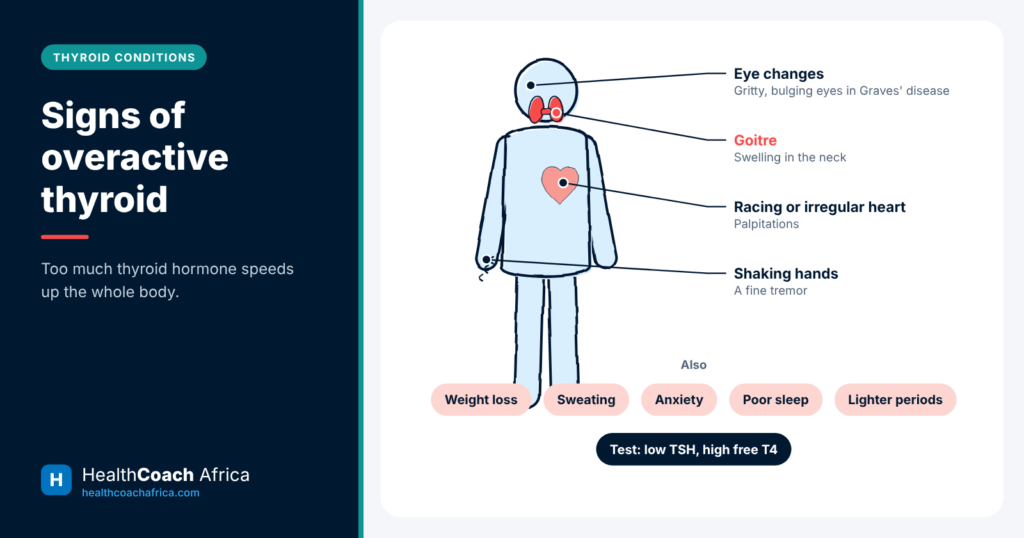
Symptoms often develop gradually over weeks or months. The most common signs of overactive thyroid include:
Weight loss despite eating well, or even eating more than usual
A fast, pounding or irregular heartbeat
Shaking of the hands, called a tremor
Feeling hot and sweating more than others
Nervousness, anxiety, irritability or mood swings
Difficulty sleeping
Tiredness and muscle weakness, especially in the thighs and upper arms
More frequent bowel movements or diarrhoea
Lighter or less frequent periods
Thinning hair and brittle nails
A swelling in the neck, called a goitre
Not everyone has all of these. Some people have only a few, which makes the condition easy to miss.
Eye changes in Graves’ disease
Some people with an overactive thyroid develop eye problems. These include gritty or watery eyes, redness, sensitivity to light, puffy eyelids, bulging eyes and double vision. Eye changes are a feature of Graves’ disease, the most common cause of an overactive thyroid.
Report any eye symptoms to your doctor promptly. Severe eye disease needs specialist care. Smoking makes thyroid eye disease much worse, so stopping is one of the most helpful things you can do.
Signs in older adults
Older people often have fewer of the classic symptoms. Instead, they may simply feel tired, low or weak, lose weight or develop an irregular heartbeat called atrial fibrillation. In some cases, an overactive thyroid first shows up as heart failure. Because of this, doctors often check thyroid function in older adults with new heart rhythm problems or unexplained weight loss.
What causes an overactive thyroid?
The main causes are:
Graves’ disease. The immune system makes antibodies that stimulate the thyroid to produce too much hormone. It is more common in women and often runs in families.
Toxic nodular goitre. One or more lumps in the thyroid start making hormone on their own. This is more common in older adults and in areas where iodine intake has been low.
Thyroiditis. Inflammation of the thyroid, sometimes after a viral infection or after pregnancy, releases stored hormone. This is usually temporary.
Too much thyroid medicine. Taking a higher dose of levothyroxine than you need can cause the same symptoms.
Signs of overactive thyroid that are often missed
Some signs of overactive thyroid are subtle and easily blamed on other causes. Anxiety and poor sleep may be put down to work stress. Weight loss may be welcomed rather than questioned. Frequent stools may be treated as a stomach upset, and a fast heartbeat as too much coffee. Women may notice only lighter periods or difficulty getting pregnant.
If you have several of these changes at the same time, especially with a family history of thyroid disease, ask for a thyroid blood test. Early diagnosis is simple and inexpensive.
Tests that confirm it
If your doctor suspects an overactive thyroid, they will order thyroid function tests. In most cases, TSH is low and free T4, free T3 or both are high. Additional tests help to find the cause:
Thyroid antibody tests to look for Graves’ disease
A thyroid ultrasound scan to look for nodules
A thyroid uptake scan to show how the gland is taking up iodine
An ECG may be done to check your heart rhythm.
Treatment option 1: antithyroid tablets
Antithyroid medicines reduce the amount of hormone the thyroid makes. Carbimazole 1 is the most common.Propylthiouracil 2 is used in early pregnancy and for some other people.
Most people feel better within four to eight weeks. Treatment usually continues for 12 to 18 months. After that, many people with Graves’ disease go into remission, although the condition can return.
Antithyroid tablets can rarely lower the white blood cell count. If you develop a sore throat, mouth ulcers, fever or flu-like symptoms while taking them, stop the tablets and get an urgent blood test the same day.
HUBPHARM PHARMACIST’S NOTE If you take carbimazole, keep a note on your phone that says: “Sore throat or fever: stop carbimazole and get a blood count today.” If you are unsure whether a symptom counts, message a HubPharm pharmacist at once. We would rather hear from you early than late.
Treatment option 2: radioactive iodine
Radioactive iodine is taken as a capsule or drink. The thyroid absorbs it, and the radiation gradually destroys overactive thyroid tissue. It is a common, effective treatment, particularly for nodular goitre and Graves’ disease that returns.
It cannot be used in pregnancy or while breastfeeding. Women should avoid pregnancy for at least six months afterwards, and men should avoid fathering a child for at least four months. Many people later develop an underactive thyroid and need lifelong levothyroxine.
Treatment option 3: surgery
Removing all or part of the thyroid is an option for people with a large goitre, suspicious nodules, severe eye disease or when other treatments are not suitable. After total thyroidectomy, lifelong levothyroxine is needed. Risks include changes to the voice and low calcium levels, which are uncommon in experienced hands.
Relieving symptoms quickly
While waiting for the main treatment to work, doctors often prescribe a beta blocker such as propranolol 3 . It slows the heart rate and reduces shaking, sweating and anxiety. It does not change hormone levels, but it can make you feel much better in the first weeks.
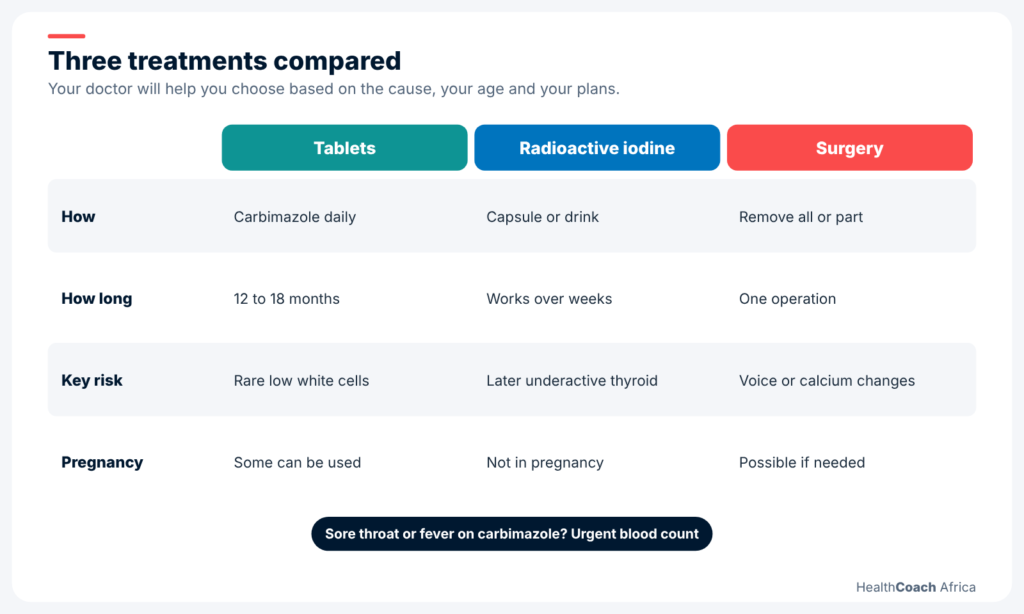
Table comparing tablets, radioactive iodine and surgery for people with signs of overactive thyroid
Many people start on tablets. Radioactive iodine or surgery are options if the condition returns.
Overactive thyroid in pregnancy
An untreated overactive thyroid in pregnancy raises the risk of miscarriage, premature birth and high blood pressure. If you have hyperthyroidism and are planning a pregnancy, talk to your doctor first. Your treatment may need to change, because some medicines are preferred at different stages of pregnancy.
Thyroid storm: a rare emergency
Very rarely, an untreated overactive thyroid causes a life-threatening crisis called thyroid storm. Signs include a very high fever, a very fast heartbeat, vomiting, confusion, agitation and collapse. It can be triggered by infection, surgery or stopping treatment suddenly. Go to hospital immediately if these signs appear.
Living well with hyperthyroidism
Most people with an overactive thyroid return to normal health with treatment. While your hormone levels settle, eat regular, balanced meals to regain weight, limit caffeine, which worsens palpitations and shaking, and rest when you need to. Weight-bearing exercise helps to protect bones, which can thin when thyroid hormone is high. Attend all follow-up blood tests, because doses often need adjusting. Keep a note of any new signs of overactive thyroid, or of an underactive thyroid, between visits and share them with your doctor. Knowing the signs of overactive thyroid also helps you spot a relapse early if the condition returns after treatment.
Getting help
If you notice several signs of overactive thyroid, ask your doctor for a thyroid function test. Early treatment protects your heart, bones and eyes. The NHS guide to overactive thyroid has more detail. If you take carbimazole, propranolol or levothyroxine and have questions about doses, side effects or interactions, message a HubPharm pharmacist or chat with Afiya on WhatsApp.
Medicines and products in this article
#
Medicine or product
What to know
1
Carbimazole
Prescription only
Reduces thyroid hormone production. A sore throat or fever needs an urgent blood count.
2
Propylthiouracil
Prescription only
Antithyroid medicine used in early pregnancy and for some other people.
3
Propranolol
Prescription only
Beta blocker that eases a racing heart, shaking and anxiety while other treatment takes effect.
To order any of these, or to ask a pharmacist a question first, message HubPharm on WhatsApp or visit hubpharmafrica.com. Prescription medicines are supplied against a valid prescription.
Goitre Causes and Treatment: A Clear Guide A goitre is an enlargement of the thyroid gland, which sits at the front of the neck below the Adam's apple. It may be a small, painless swelling noticed in a photograph, or a large…
Hyperthyroidism: Understanding Overactive Thyroid Hyperthyroidism, also known as an overactive thyroid, is a condition in which the thyroid gland produces too many hormones. This small butterfly-shaped gland in the neck controls metabolism, heart rate, digestion, and energy use. When…
Thyroid Function Test Results: What TSH, T3 and T4… You have collected your laboratory report, and it is full of abbreviations, numbers and arrows. Thyroid function test results are among the most commonly requested blood tests, and also among the most misunderstood. This guide…
Thyroid Disease in Pregnancy: Risks, Tests and Safe… The thyroid is a small gland in the neck, but during pregnancy it carries a heavy load. For the first three months, a baby depends entirely on the mother's thyroid hormone for brain development. Thyroid…