A goitre is an enlargement of the thyroid gland, which sits at the front of the neck below the Adam’s apple. It may be a small, painless swelling noticed in a photograph, or a large lump that presses on the windpipe. In many parts of Nigeria, goitre was once very common because diets lacked iodine. Today the causes are more varied. This guide explains goitre causes and treatment, the tests you may need and when to see a doctor.
What a goitre is
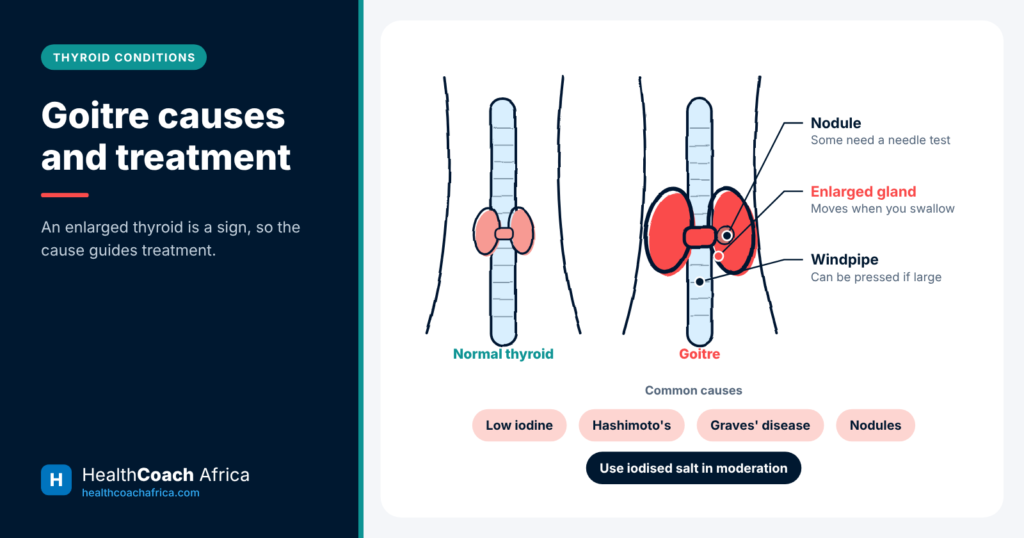
The thyroid normally cannot be seen or easily felt. When it grows larger, it forms a visible swelling. The whole gland may be enlarged evenly, which is called a diffuse goitre. Alternatively, it may contain one or more lumps, called nodules, which is called a nodular goitre.
A goitre itself is not a disease. It is a sign that something is affecting the thyroid. The gland may be making normal amounts of hormone, too much or too little.
Common goitre causes
The main goitre causes are:
Iodine deficiency. The thyroid needs iodine to make hormones. When iodine is scarce, the gland grows to trap more of it. This remains the most common cause worldwide.
Hashimoto’s thyroiditis. The immune system attacks the thyroid, often leading to an underactive gland.
Graves’ disease. The immune system stimulates the thyroid to grow and make too much hormone.
Multinodular goitre. Several nodules develop over many years, more often in women and older adults.
Single thyroid nodules or cysts. Most are harmless, but some need checking for cancer.
Pregnancy and puberty. Hormone changes can cause mild, temporary enlargement.
Certain medicines, such as lithium and amiodarone.
Thyroid cancer can cause a lump in the neck, but it is a much less common cause of goitre.
Iodine and goitre in Nigeria
Nigeria introduced universal salt iodisation in the 1990s, which greatly reduced goitre caused by iodine deficiency. However, gaps remain. Some households use non-iodised salt, and iodine can be lost if salt is stored poorly. Pregnant and breastfeeding women need more iodine than other adults, so they are particularly at risk.
Using iodised salt in moderation 1 , stored in a closed container away from heat and moisture, is the simplest way to prevent iodine deficiency. Seafood, eggs and dairy products are other good sources.
Symptoms of a goitre
Many goitres cause no symptoms apart from the swelling itself. A large goitre can cause:
A feeling of tightness in the throat
Difficulty swallowing
Coughing, noisy breathing or shortness of breath, especially when lying flat
A hoarse voice
You may also have symptoms of an underactive or overactive thyroid. An underactive thyroid causes tiredness, weight gain, feeling cold and constipation. An overactive thyroid causes weight loss, a racing heart, sweating and anxiety.
Warning signs that need prompt attention
See a doctor quickly if a neck lump:
Grows rapidly over weeks
Feels hard and fixed in place
Is accompanied by a hoarse voice that does not improve
Comes with swollen glands in the neck
Causes difficulty breathing or swallowing
These signs do not always mean cancer, but they need prompt investigation.
Tests doctors use
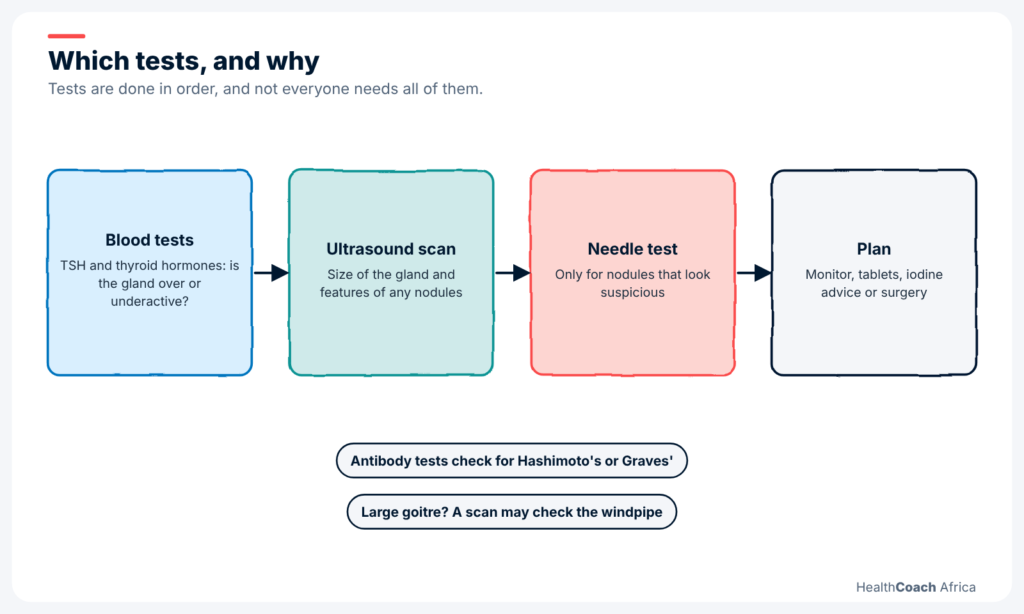
Understanding goitre causes and treatment starts with the right tests:
Thyroid function tests measure TSH and thyroid hormones to show whether the gland is underactive, overactive or normal.
Antibody tests look for Hashimoto’s thyroiditis or Graves’ disease.
An ultrasound scan shows the size of the gland and the features of any nodules.
Fine needle aspiration uses a thin needle to take cells from a suspicious nodule for testing.
A chest X-ray or CT scan may be needed for a large goitre that extends behind the breastbone.
Step diagram of the tests used to work out goitre causes and treatment
Most nodules turn out to be harmless, but a needle test is the only way to be sure.
Treatment depends on the cause
Goitre causes and treatment are closely linked. Your doctor will base treatment on what is driving the enlargement, the size of the goitre and your symptoms.
Small goitre with normal hormone levels and no symptoms: often just regular monitoring.
Iodine deficiency: using iodised salt and eating iodine-rich foods. Iodine supplements should only be taken on medical advice, because too much iodine can also harm the thyroid.
Underactive thyroid: levothyroxine tablets 2 to replace the missing hormone. This can also stop the goitre from growing.
Overactive thyroid: antithyroid tablets, radioactive iodine or surgery.
Large, symptomatic or suspicious goitre: surgery to remove part or all of the thyroid.
HUBPHARM PHARMACIST’S NOTE Some iodine supplements, kelp tablets and “thyroid support” products sold online contain far more iodine than the body needs. Too much iodine can make some goitres worse. Check any product with a HubPharm pharmacist before you take it. Send a clear photo of the label, and we will tell you how much iodine it contains.
What to expect from thyroid surgery
Thyroid surgery, called thyroidectomy, is a common and generally safe operation. You may spend one or two nights in hospital. Possible complications include temporary or permanent changes to the voice and low calcium levels, because the small glands that control calcium sit next to the thyroid.
After removal of the whole thyroid, you will need levothyroxine tablets every day for life. Regular blood tests make sure the dose is right. Many people return to normal activities within two weeks.
Goitre causes and treatment in pregnancy
Pregnancy increases the body’s need for iodine, and the thyroid may enlarge slightly as a result. A goitre found during pregnancy should still be checked with thyroid blood tests, because both underactive and overactive thyroid can affect the baby. Pregnant and breastfeeding women should use iodised salt and eat iodine-rich foods such as fish, eggs and milk. Some antenatal supplements contain iodine. Ask your doctor or pharmacist before taking any separate iodine product. Most treatments for thyroid conditions can be safely adjusted during pregnancy, but radioactive iodine must be avoided.
A mild goitre that appears in pregnancy often shrinks after the birth. Your doctor may repeat the blood tests and scan a few months later to confirm that it has settled.
Myths about goitre
“Goitre is caused by drinking a certain water or a curse.” Goitre has clear medical causes, including iodine deficiency and immune conditions.
“A cream or herbal mixture can melt the swelling.” No cream can shrink a goitre. Delaying proper treatment can allow a large goitre to cause breathing problems.
“All goitres need surgery.” Many small goitres need only monitoring or tablets.
Living with a goitre
If your goitre is being monitored, attend regular check-ups and report any changes. Measure your neck with a tape at the same point every few months if your doctor suggests it. Take any prescribed medicine at the same time each day. Learn more about the gland in our article on what the thyroid does.
Questions to ask your doctor
Bring these questions to your appointment to understand goitre causes and treatment in your own case:
What is causing my goitre?
Is my thyroid making too much, too little or the right amount of hormone?
Do any nodules need a biopsy?
Do I need treatment now, or can we monitor it?
If surgery is suggested, what are the risks and benefits for me?
How often should I have check-ups?
Write down the answers, and keep copies of your ultrasound and blood test reports. These records help any doctor you see in the future to compare results and decide on goitre causes and treatment quickly.
Getting help
Any new swelling in the neck deserves a medical check. Knowing goitre causes and treatment helps you ask the right questions. The NHS guide to goitre has more detail.For help with thyroid medicines, iodine questions or understanding your test results, message a HubPharm pharmacist or ask Afiya on WhatsApp.
Medicines and products in this article
#
Medicine or product
What to know
1
Iodised salt
Food product
The safest everyday source of iodine. Use in moderation and store covered.
2
Levothyroxine
Prescription only
Replaces thyroid hormone when the gland is underactive or has been removed.
To order any of these, or to ask a pharmacist a question first, message HubPharm on WhatsApp or visit hubpharmafrica.com. Prescription medicines are supplied against a valid prescription.
Signs of Overactive Thyroid and How It Is Treated The thyroid is a small, butterfly-shaped gland in the front of the neck. It makes hormones that control how fast the body uses energy. When the gland makes too much hormone, everything speeds up: the…
Thyroid Disease in Pregnancy: Risks, Tests and Safe… The thyroid is a small gland in the neck, but during pregnancy it carries a heavy load. For the first three months, a baby depends entirely on the mother's thyroid hormone for brain development. Thyroid…
Goiter: Why the Neck Swells and How it’s Treated Goiter is one of the most common thyroid conditions worldwide and remains a major public health concern in Nigeria. It refers to the abnormal enlargement of the thyroid gland, located at the base of the…
Common Thyroid Disorders Explained The thyroid gland is a small butterfly-shaped organ located in the neck, but despite its size, it plays a major role in regulating metabolism, growth, and overall health. When the thyroid doesn’t function properly, it…