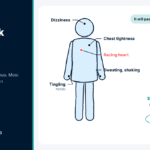
Many people picture a heart attack as a man clutching his chest and collapsing. Women can have this classic chest pain too. But a heart attack in women often begins more quietly, with breathlessness, nausea, back pain or unusual tiredness. Women, their families and even health workers may blame these symptoms on stress, ulcers or malaria. Precious time is lost. This guide explains how heart attacks can show up in women, who is at risk and what to do in an emergency.
What is a heart attack?
A heart attack happens when blood flow to part of the heart muscle is suddenly blocked. Most heart attacks are caused by a blood clot forming on a fatty plaque inside a coronary artery. Without oxygen, the affected heart muscle begins to die. The faster blood flow is restored, the more heart muscle can be saved.
Heart disease is one of the leading causes of death in women worldwide. It is not only a man’s disease.
Common symptoms in both men and women
The most common symptom in both sexes is chest discomfort. It may feel like:
Pressure, squeezing, tightness or heaviness in the centre of the chest
Pain that spreads to the arms, neck, jaw, back or stomach
Pain lasting more than a few minutes, or that goes away and comes back
Signs of heart attack in women that are often missed
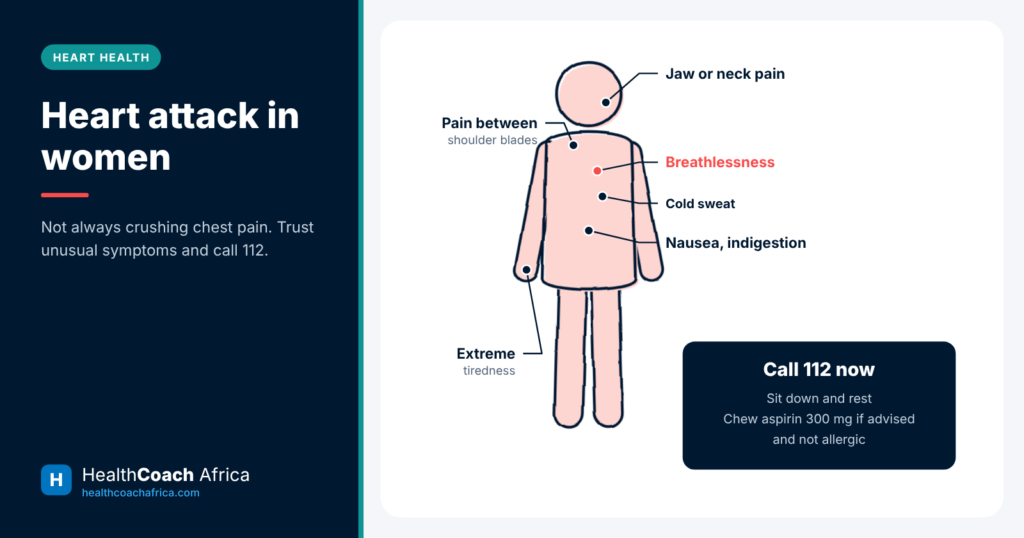
Women are more likely than men to have other symptoms, sometimes without obvious chest pain. Watch for:
Shortness of breath, with or without chest discomfort
Nausea, vomiting or indigestion-like pain
Pain in the back, shoulders, jaw or between the shoulder blades
Unusual, extreme tiredness, sometimes for days beforehand
Cold sweats
Light-headedness or dizziness
A sense of anxiety or doom
Because these symptoms are vague, a heart attack in women may be mistaken for a stomach upset, panic attack or the flu. If symptoms are sudden, unusual for you or severe, treat them as an emergency.
What to do in an emergency
If you think someone is having a heart attack:
Call for emergency help immediately. In Nigeria, dial 112, or go to the nearest hospital with emergency services.
Help the person sit down and rest in a comfortable position.
Give aspirin if they are not allergic and a health worker advises it. Chewing one 300 mg aspirin tablet1 can help reduce clotting while waiting for help.
Stay with them. If they collapse and stop breathing normally, start chest compressions if you are trained.
Do not drive yourself to hospital if you have symptoms. Do not wait to see if the pain passes.
Risk factors for women
Many risk factors are shared with men, but some affect women in particular:
High blood pressure, which is very common in Nigeria
Diabetes, which raises heart risk more in women than in men
High cholesterol
Smoking, including shisha
Being overweight, especially around the waist
Physical inactivity
Family history of early heart disease
Menopause, after which the protective effect of oestrogen falls
Pregnancy complications, such as pre-eclampsia and gestational diabetes
Autoimmune conditions, such as lupus and rheumatoid arthritis
Chronic stress and depression
Pregnancy and heart risk
Women who had high blood pressure, pre-eclampsia or diabetes during pregnancy have a higher risk of heart disease later in life. These pregnancy problems act as an early warning. If you had them, ask your doctor to check your blood pressure, blood sugar and cholesterol regularly, even years after the birth.
Heart attack in women at a younger age
Younger women can have heart attacks too, though they are less common. Smoking, diabetes, high blood pressure and a strong family history raise the risk. A rare cause called spontaneous coronary artery dissection, a tear in a heart artery, mainly affects women, including during or soon after pregnancy. Sudden chest pain or breathlessness in a young woman should never be dismissed as stress without proper tests.
Why women are often diagnosed late
Women tend to delay seeking help. They often put family duties first or worry about overreacting. Health workers may also overlook a heart attack in women when symptoms are not typical. Some tests, such as an ECG, may be less clearly abnormal in women.
If you feel something is seriously wrong, say so clearly. Ask directly: “Could this be my heart?”
How a heart attack is diagnosed and treated
At hospital, doctors use:
An ECG to check the heart’s electrical activity
Blood tests for troponin, a protein released when heart muscle is damaged
An echocardiogram to see how well the heart is pumping
A coronary angiogram to find blocked arteries
Treatment may include clot-busting medicines, procedures to open blocked arteries with a balloon and stent, and medicines such as aspirin, statins and beta blockers2. Cardiac rehabilitation helps people recover strength and confidence afterwards.
Know your numbers
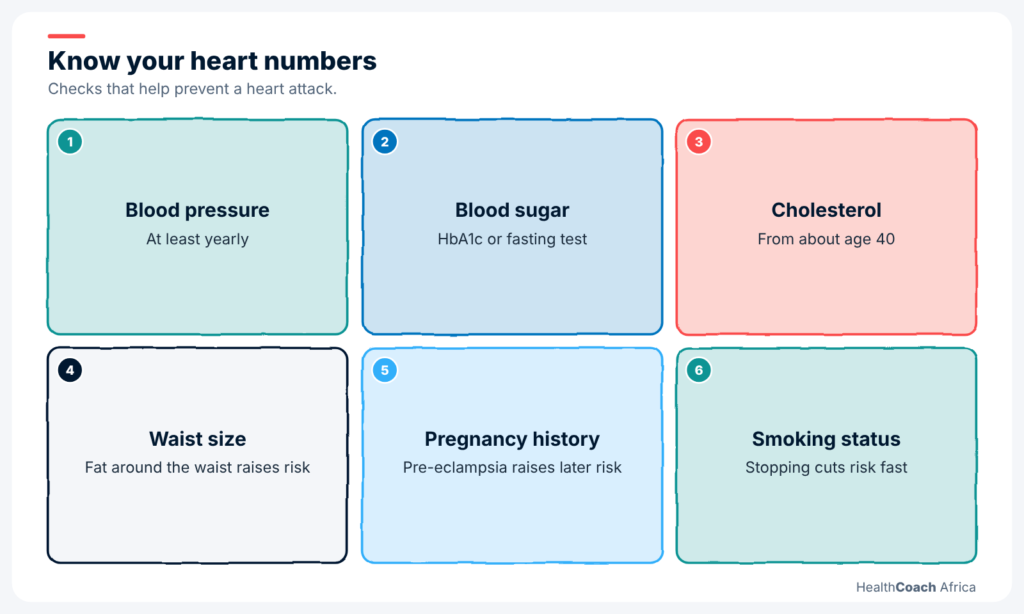
Six health checks that lower the risk of heart attack in women, from blood pressure to waist size
Write down your numbers and track them every year.
Knowing your health numbers is one of the simplest ways to prevent a heart attack in women. Ask for these checks:
Blood pressure at least once a year, and more often if it is raised
Blood sugar or HbA1c, especially if you are overweight or have a family history of diabetes
Cholesterol, from about the age of 40, or earlier if you have risk factors
Waist size, because fat around the waist raises heart risk
Write your numbers down and track them over time.
Recovering after a heart attack
Recovery takes time. Most women can return to normal activities within a few weeks to months. Take every prescribed medicine, even when you feel well. Join a cardiac rehabilitation programme if one is available. It combines supervised exercise, education and emotional support. Many women feel anxious or low after a heart attack. Talk about these feelings with your doctor, family or a counsellor. Gradually return to work, sex and exercise as your doctor advises.
Supporting women in your life
Encourage your mother, aunts and older female relatives to have their blood pressure and blood sugar checked. Offer to go with them. Remind them that tiredness, breathlessness and indigestion that are new or unusual deserve attention.
HUBPHARM PHARMACIST’S NOTE
Many women stop their blood pressure or cholesterol tablets when they feel well, run out between clinic visits or take them at random times. Send your heart medicines to a HubPharm pharmacist and we will set up monthly refills with reminders, so you never miss a dose. We can also supply a validated home blood pressure monitor and show you how to use it. If you have had a heart attack, we will explain each new medicine, including aspirin and statins, and check for interactions with anything else you take.
Lowering your risk
You can lower your risk of a heart attack in women by:
Checking your blood pressure regularly and treating it if high
Testing for diabetes and keeping blood sugar under control
Checking cholesterol, especially after 40 or after menopause
Not smoking
Being active for at least 150 minutes a week
Eating more vegetables, beans and fish, and less salt and fried food
Keeping a healthy weight
Managing stress and sleeping well
Taking prescribed medicines every day
Myths about women and heart disease
“Heart attacks only happen to men.” Heart disease is a leading cause of death in women.
“Young women are not at risk.” Risk rises after menopause, but younger women with risk factors can be affected.
“If there is no chest pain, it is not a heart attack.” Many women have other symptoms.
“Heart disease is a disease of the rich.” High blood pressure and diabetes affect people of every income.
Getting help
Knowing the signs of a heart attack in women can save a life. Share them with your mother, sisters, friends and colleagues. The NHS guide to heart attack has more detail, and our heart health articles explain blood pressure and cholesterol.For a blood pressure monitor or help with your heart medicines, message a HubPharm pharmacist or chat with Afiya on WhatsApp.
Medicines and products in this article
#
Medicine or product
What to know
1
Aspirin 300 mg
Over the counter
Chewed in a suspected heart attack if not allergic and advised. Daily low-dose aspirin only on prescription.
2
Statins
Prescription only
Lower cholesterol and protect the arteries after a heart attack.
To order any of these, or to ask a pharmacist a question first, message HubPharm on WhatsApp or visit hubpharmafrica.com. Prescription medicines are supplied against a valid prescription.
Heart Attack Warning Signs: Act Fast and Save a Life Heart disease is rising in Nigeria, driven by high blood pressure, diabetes, smoking and changing lifestyles. A heart attack is a medical emergency in which every minute counts. The faster treatment starts, the more heart…
COPD Symptoms and Treatment: Living Well With Lung Disease Chronic obstructive pulmonary disease, or COPD, is a long-term lung condition that makes breathing difficult. It is one of the leading causes of death worldwide. In Nigeria, it is often linked not only to smoking…
Panic Attack Symptoms Explained: What Happens and… Your heart suddenly pounds. Your chest feels tight, your hands tingle and you cannot catch your breath. You may feel sure you are having a heart attack or about to die. Then, within minutes, it…
Asthma Attack Warning Signs: Know Them and Act Fast Asthma is one of the most common long-term conditions in Nigeria, affecting children and adults alike. Most of the time, it can be well controlled with the right inhalers. However, asthma attacks still send many…