Your heart suddenly pounds. Your chest feels tight, your hands tingle and you cannot catch your breath. You may feel sure you are having a heart attack or about to die. Then, within minutes, it begins to fade. Many people who go through this end up in emergency rooms, only to be told their heart is fine. Having panic attack symptoms explained clearly can take away much of the fear. This guide describes what happens during an attack, how to cope in the moment and which treatments prevent attacks from returning.
What is a panic attack?
A panic attack is a sudden rush of intense fear with strong physical symptoms. It is caused by the body’s alarm system, often called the “fight or flight” response. This response is designed to protect us from danger. During a panic attack, it switches on when there is no real threat.
Most panic attacks build to a peak within about ten minutes and then ease. They can feel endless, but they are not dangerous in themselves. The body cannot stay at peak panic for long.
Panic attack symptoms explained
The symptoms come from adrenaline and fast breathing. Common physical symptoms include:
A pounding or racing heart
Chest pain or tightness
Shortness of breath or a feeling of choking
Dizziness or light-headedness
Tingling or numbness in the hands, feet or lips
Sweating, trembling or shaking
Hot flushes or chills
Nausea or stomach upset
Dry mouth
People also experience frightening thoughts and feelings:
A sense of doom or that something terrible is about to happen
Fear of dying, fainting or losing control
Feeling unreal or detached from your surroundings
Fast breathing lowers carbon dioxide in the blood. This causes tingling, dizziness and chest tightness. When these sensations are understood, they become less frightening.
Panic attack or heart attack?
Chest pain should never be ignored. A first episode of chest pain, especially in someone over 40 or with diabetes, high blood pressure or smoking, needs urgent medical assessment. Doctors may do an ECG and blood tests to rule out heart problems.
Seek emergency care if chest pain spreads to the arm, jaw or back, feels crushing, or comes with sweating and breathlessness during exertion. Once heart problems have been ruled out, your doctor can help you recognise future panic attacks.
What triggers panic attacks?
Some attacks come out of the blue. Others are linked to triggers, such as:
Ongoing stress at work, school or home
A major life event, such as bereavement or job loss
Caffeine from coffee, energy drinks or strong tea
Alcohol or withdrawal from alcohol
Recreational drugs, including cannabis and stimulants
Lack of sleep
Some medical conditions, such as an overactive thyroid
Doctors may check your blood count, thyroid function and blood sugar to rule out physical causes.
Panic attack symptoms explained: the fear cycle
Panic attacks often feed on themselves. A small physical change, such as a faster heartbeat after climbing stairs, is noticed and interpreted as danger. That thought releases more adrenaline, which makes the heart beat faster still. The person becomes more frightened, and the symptoms grow. Breaking this cycle is the key to recovery. With panic attack symptoms explained and understood, a racing heart can be seen as harmless rather than as a sign of disaster.
Panic attacks at night
Some people wake suddenly from sleep in a state of panic. These night-time attacks can be especially frightening, because there is no obvious trigger. They are a recognised part of panic disorder and respond to the same treatments. If you wake gasping or choking, mention it to your doctor, because sleep apnoea can cause similar symptoms.
Panic disorder
Having one panic attack does not mean you have a mental health condition. Panic disorder is diagnosed when attacks keep happening and you live in fear of the next one. People with panic disorder often start avoiding places where attacks have occurred, such as markets, buses or churches. Over time, life can become very restricted.
The good news is that panic disorder is one of the most treatable anxiety conditions.
How to cope during an attack
Practise slow breathing daily, so it comes naturally during an attack.
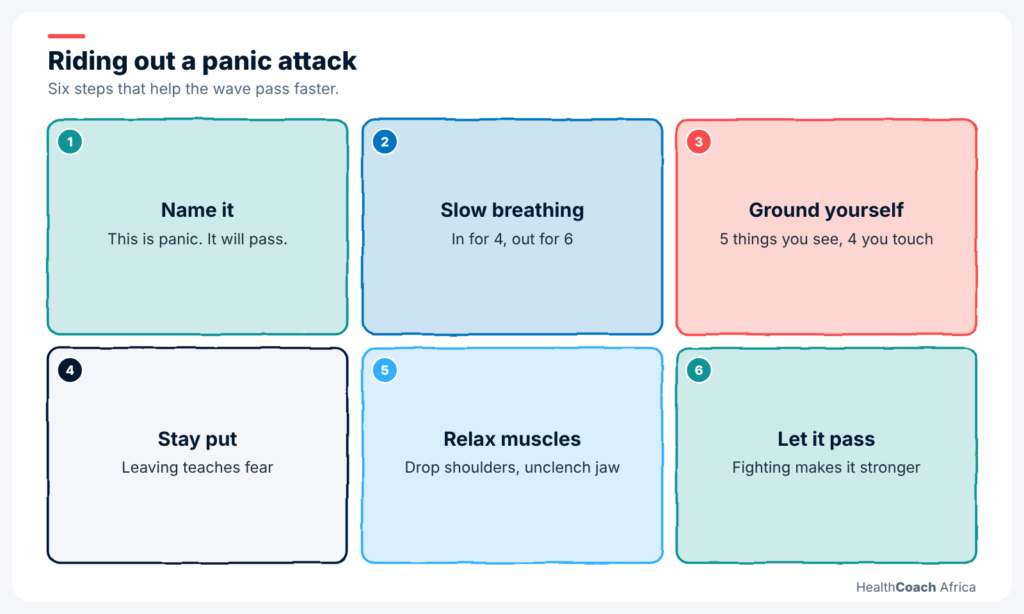
These steps help many people ride out an attack:
Remind yourself what is happening. Say: “This is a panic attack. It will pass. It cannot harm me.”
Slow your breathing. Breathe in gently through the nose for a count of four, then out through the mouth for a count of six.
Ground yourself. Name five things you can see, four you can touch and three you can hear.
Stay where you are if it is safe. Leaving can teach your brain that the place is dangerous.
Relax your muscles. Drop your shoulders, unclench your jaw and loosen your hands.
Let the wave pass. Fighting the symptoms tends to make them stronger.
Avoid breathing into a paper bag. It is no longer recommended and can be unsafe for some people.
Treatment options
Several treatments work well:
Cognitive behavioural therapy (CBT) is the most effective talking therapy. It teaches you to understand the symptoms, challenge frightening thoughts and gradually face avoided situations.
Antidepressant medicines, such as sertraline or other SSRIs1, reduce the frequency of attacks. They take several weeks to work.
Self-help programmes based on CBT, using books or apps, help some people with milder symptoms.
Medicines such as diazepam2 may be used very briefly in some cases, but they are not recommended for long-term use because of the risk of dependence. Avoid buying sedatives without a prescription.
HUBPHARM PHARMACIST’S NOTE
Some medicines and products can trigger or worsen panic symptoms, including decongestants in cold remedies, some asthma inhalers, slimming products and energy drinks. Send a photo of everything you take to a HubPharm pharmacist and we will check for hidden stimulants and caffeine. If you have been prescribed an SSRI, we will explain why the first two weeks can feel more anxious, how long it takes to work and why you should never stop suddenly. We never sell sedatives without a prescription, but we will help you find safer options.
Lifestyle changes that help
Cut down on caffeine and energy drinks
Avoid alcohol and recreational drugs
Exercise regularly, which helps the body handle adrenaline
Keep a regular sleep routine
Practise slow breathing daily, not only during attacks
Talk to someone you trust about what you are experiencing
Helping someone during a panic attack
Stay calm and stay with them. Speak slowly and reassure them that the attack will pass. Breathe slowly with them. Do not tell them to “calm down” or that it is all in their head. Once it passes, encourage them to see a doctor if attacks are frequent.
Panic attacks in young people
Teenagers and young adults can have panic attacks too, often during exam periods or times of change. Parents may mistake them for asthma, heart problems or attention seeking. Listen calmly, have the young person checked by a doctor, and look for support at school or college. Early help prevents avoidance from taking hold. Schools can help by having panic attack symptoms explained to staff, so a frightened student is met with calm support.
Keeping a panic diary
Writing down each attack helps you spot patterns. Note the date, time, where you were, what you were doing, your main symptoms and how long the attack lasted. Bring the diary to your appointments. It helps your therapist or doctor see what triggers attacks and how treatment is working. Over time, many people see their attacks become shorter and less frequent, which builds confidence. A therapist can use your diary to keep your panic attack symptoms explained in a way that makes sense to you.
Myths about panic attacks
“Panic attacks are just weakness.” They are a real response of the body’s alarm system and can affect anyone.
“You can faint from a panic attack.” Fainting is rare, because blood pressure usually rises during an attack.
“Avoiding triggers is the best cure.” Avoidance often makes panic disorder worse over time.
“Medicine is the only answer.” Talking therapy is very effective and its benefits last.
Getting help
Having panic attack symptoms explained is a strong first step, but frequent attacks deserve proper treatment. See a doctor to rule out physical causes and discuss therapy. The NHS guide to panic disorder has more information, and our mental health articles cover anxiety in depth.For questions about your medicines, message a HubPharm pharmacist or chat with Afiya on WhatsApp.
Medicines and products in this article
#
Medicine or product
What to know
1
SSRI antidepressants (such as sertraline)
Prescription only
Reduce how often panic attacks happen. Take several weeks to work.
2
Diazepam
Prescription only, controlled
Very short-term use only, because of dependence risk.
To order any of these, or to ask a pharmacist a question first, message HubPharm on WhatsApp or visit hubpharmafrica.com. Prescription medicines are supplied against a valid prescription.
National Institute for Health and Care Excellence. Generalised anxiety disorder and panic disorder in adults: management (CG113). https://www.nice.org.uk/guidance/cg113
Coping With Panic Attacks: 6 Steps That Calm Your Body Fast Your heart pounds, your chest tightens and you are suddenly sure that something terrible is about to happen. Many people who rush to hospital convinced they are having a heart attack are in fact having…
Asthma Attack Warning Signs: Know Them and Act Fast Asthma is one of the most common long-term conditions in Nigeria, affecting children and adults alike. Most of the time, it can be well controlled with the right inhalers. However, asthma attacks still send many…
Heart Attack Warning Signs: Act Fast and Save a Life Heart disease is rising in Nigeria, driven by high blood pressure, diabetes, smoking and changing lifestyles. A heart attack is a medical emergency in which every minute counts. The faster treatment starts, the more heart…
Gout Diet and Treatment: How to Stop the Attacks Gout causes some of the most intense pain a person can experience. An attack can turn a big toe hot, red and so tender that even a bed sheet feels unbearable. Gout is becoming more…