Chronic obstructive pulmonary disease, or COPD, is a long-term lung condition that makes breathing difficult. It is one of the leading causes of death worldwide. In Nigeria, it is often linked not only to smoking but also to years of breathing smoke from cooking with firewood and charcoal. COPD cannot be cured, but treatment can ease symptoms, prevent flare-ups and help people stay active. This guide explains COPD symptoms and treatment.
What COPD is
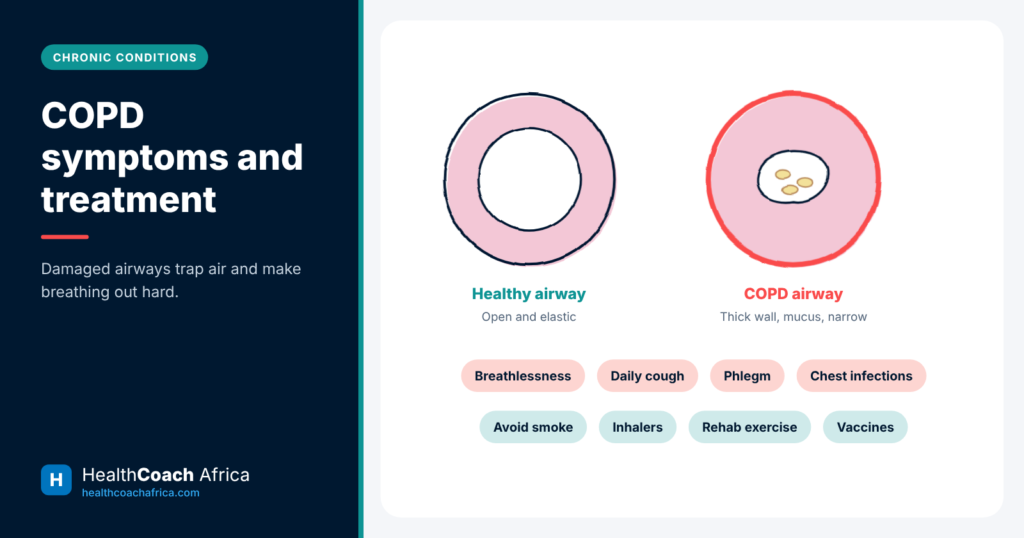
COPD is a group of lung conditions, including emphysema and chronic bronchitis. In COPD, the airways become narrowed and inflamed, and the tiny air sacs in the lungs are damaged. Air cannot flow in and out easily, and the lungs become less able to take in oxygen.
Common causes in Nigeria
The World Health Organization notes that tobacco smoking and household air pollution are major causes of COPD. Risk factors include:
Smoking cigarettes or shisha, and second-hand smoke
Cooking with firewood, charcoal or kerosene in poorly ventilated kitchens
Dust and fumes at work, such as in mining, quarrying, farming and factories
Outdoor air pollution, including generator fumes
Childhood chest infections and poorly controlled asthma
Previous tuberculosis
Women who have cooked over open fires for many years face a high risk, even if they have never smoked.
COPD symptoms and treatment: who should be tested?
Consider asking for a lung test if you are over 35 and have:
Breathlessness that is getting worse
A cough lasting most days for three months or more
Frequent chest infections
A history of smoking
Many years of cooking with firewood, charcoal or kerosene
Long-term exposure to dust or fumes at work
Early diagnosis allows treatment to begin before lung damage becomes severe. Learning about COPD symptoms and treatment early gives you more good years.
COPD symptoms
Breathlessness, especially during activity, which gets worse over time
A long-lasting cough, often with phlegm
Wheezing
Chest tightness
Frequent chest infections
Tiredness
Many people put early symptoms down to ageing or being unfit. As a result, COPD is often diagnosed late.
How COPD is diagnosed
The main test is spirometry. You blow into a machine that measures how much air you can breathe out and how fast. A chest X-ray and blood tests may also be done to rule out other conditions, such as tuberculosis, heart failure or asthma.
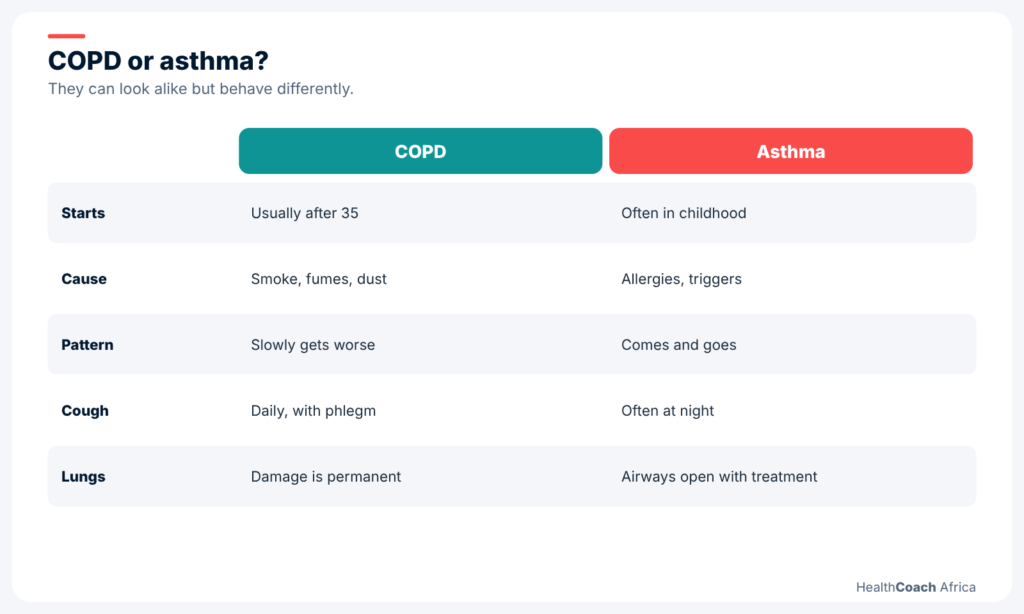
COPD or asthma?
COPD and asthma both cause breathlessness and wheezing, but they differ. Asthma often starts in childhood, symptoms come and go, and airways usually open fully with treatment. COPD usually starts after 40, symptoms are persistent and gradually worsen, and the damage is only partly reversible. Some people have features of both.
Comparison of COPD and asthma for COPD symptoms and treatment
A breathing test called spirometry helps tell them apart.
COPD symptoms and treatment: stopping smoke exposure
The most important step is to stop breathing smoke. Stopping smoking slows the decline in lung function at any age. Avoid second-hand smoke. Where possible, switch from firewood, charcoal or kerosene to cleaner cooking fuels such as gas or electricity. Cook in well-ventilated areas, keep children away from cooking smoke and use improved cookstoves.
Using inhalers correctly
Many people do not use their inhalers correctly, so the medicine does not reach the lungs. For a metered-dose inhaler:
Shake the inhaler and remove the cap.
Breathe out gently, away from the inhaler.
Seal your lips around the mouthpiece.
Press once as you begin a slow, deep breath.
Hold your breath for about ten seconds.
Breathe out slowly.
Dry powder inhalers need a fast, deep breath instead. Ask your pharmacist to check your technique at every visit. Correct technique is a key part of COPD symptoms and treatment.
Inhalers
Inhalers are the main medicines for COPD:
Short-acting relievers, such as salbutamol 1 , ease breathlessness quickly
Long-acting bronchodilators 2 keep the airways open for 12 to 24 hours and are taken every day
Inhaled steroids may be added for people with frequent flare-ups
Using an inhaler correctly is essential. A spacer helps 3 with some inhalers. Ask your pharmacist or nurse to check your technique.
HUBPHARM PHARMACIST’S NOTE Many people with COPD use two or three inhalers, each with a different technique. Mixing them up is one of the main reasons treatment fails. Book a video inhaler check with a HubPharm pharmacist. Bring every inhaler you use, and we will check each step and suggest a spacer where it helps.
Pulmonary rehabilitation
Pulmonary rehabilitation is a programme of exercise and education. It teaches breathing techniques, builds strength and helps you manage breathlessness. It improves quality of life and reduces hospital admissions. Where formal programmes are not available, regular walking and simple exercises at home help.
Breathing techniques
Pursed-lip breathing: breathe in through the nose, then breathe out slowly through pursed lips, as if blowing out a candle
Positioning: leaning forward with your arms resting on your knees or a table can ease breathlessness
Vaccines
Chest infections can trigger serious flare-ups. Vaccines against flu and pneumococcal infection are recommended for people with COPD. Ask your doctor.
Your COPD action plan
A written action plan, agreed with your doctor, helps you act quickly when symptoms worsen. It should include your usual medicines, the signs of a flare-up, what extra medicines to take, and when to seek emergency help. Keep it somewhere easy to find, and share it with your family.
Flare-ups
A flare-up, or exacerbation, is when symptoms suddenly get worse, often because of an infection. Signs include more breathlessness, more coughing and a change in the colour or amount of phlegm. Your doctor may give you a written plan, including when to use extra inhaler doses, steroid tablets or antibiotics. Seek urgent care for severe breathlessness, chest pain, confusion or blue lips.
Oxygen therapy
Some people with severe COPD have low oxygen levels and benefit from oxygen therapy at home. Oxygen must be prescribed and used safely, away from flames and smoking.
Myths about COPD
“COPD only affects smokers.” Cooking smoke, dust and fumes are important causes, especially for women in Nigeria.
“Once you have COPD, stopping smoking is pointless.” Stopping smoking slows lung damage at any stage.
“Exercise makes COPD worse.” Regular activity improves breathing and fitness.
“Breathlessness is just old age.” Worsening breathlessness should be checked.
Caring for someone with COPD
Family members can help by keeping the home smoke-free, encouraging activity and learning the signs of a flare-up.
Travelling and daily tasks
Plan activities for times of day when your breathing is best. Pace yourself and rest between tasks. Sit down to wash, dress and cook where possible. Keep things you use often within easy reach. When travelling, carry your inhalers in your hand luggage and take enough for the whole trip. Avoid smoky, dusty and very crowded places when you can. Small changes like these make daily life with COPD easier and help you stay independent.
COPD and mental health
Living with breathlessness can cause anxiety and low mood. Anxiety can make breathlessness feel worse. Breathing techniques, support groups and counselling help. Tell your doctor if you feel low or anxious, because treatment for mood is part of good COPD symptoms and treatment care.
Eating well and staying active
Breathlessness can make eating difficult. Small, frequent meals help. Keep a healthy weight, because both being underweight and overweight make breathing harder. Stay as active as possible.
COPD and the harmattan
Dry, dusty harmattan air can trigger flare-ups. Stay indoors on very dusty days where possible. Cover your nose and mouth with a clean cloth or mask outside. Drink plenty of water and keep your reliever inhaler with you. Start your action plan early if symptoms worsen. Planning for the season is part of COPD symptoms and treatment.
Getting help
Understanding COPD symptoms and treatment helps you take control of your lung health. Read more in our chronic conditions articles.For inhalers, spacers, help with inhaler technique or stop-smoking support, message a HubPharm pharmacist or ask Afiya on WhatsApp.
Medicines and products in this article
#
Medicine or product
What to know
1
Salbutamol reliever inhaler
Prescription only
Eases breathlessness quickly.
2
Long-acting bronchodilator inhaler
Prescription only
Keeps airways open for 12 to 24 hours. Used daily.
3
Spacer
Over the counter
Helps more medicine reach the lungs.
To order any of these, or to ask a pharmacist a question first, message HubPharm on WhatsApp or visit hubpharmafrica.com. Prescription medicines are supplied against a valid prescription.
Respiratory Challenges: A Comprehensive Guide to… Respiratory infections are a common health concern, affecting millions of people worldwide each year. Among the various respiratory infections, pneumonia and bronchitis stand out as significant contributors to global morbidity and mortality rates. These conditions…
Asthma Attack Warning Signs: Know Them and Act Fast Asthma is one of the most common long-term conditions in Nigeria, affecting children and adults alike. Most of the time, it can be well controlled with the right inhalers. However, asthma attacks still send many…
Diabetes in Nigeria: Why Blood Sugar Control Fails Diabetes in Nigeria does not usually fail in the clinic. Among people who reach a specialist and stay in care, control is often reasonable. It fails in the years before anyone tests you, and it…
Mosquito Control at Home: Protecting Your Family… Mosquitoes are more than a nuisance. In Nigeria, the Anopheles mosquito carries malaria, which kills many children every year. Other mosquitoes spread dengue, yellow fever and other infections. Much of the fight against mosquitoes happens…