Your kidneys filter your entire blood supply many times a day. They remove waste, balance fluid and help to control blood pressure. They can also lose most of their function before you feel anything. Community studies in Nigeria have found chronic kidney disease in anywhere from 2.5% to 26% of adults, and many patients arrive at hospital when dialysis is the only option left. Learning the kidney disease warning signs, and getting tested before they appear, is the best protection.
What your kidneys do
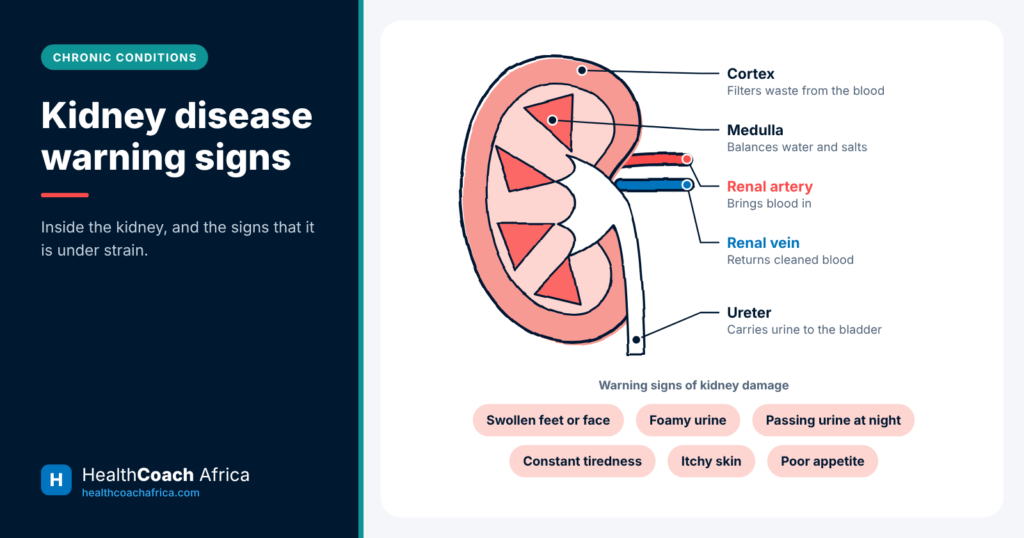
The kidneys are two bean-shaped organs that sit below the ribs on either side of the spine. Each is about the size of a fist. Besides making urine, they do several quiet jobs:
Removing waste products and extra fluid
Balancing salts such as sodium and potassium
Helping to control blood pressure
Producing a hormone that tells the body to make red blood cells
Activating vitamin D, which keeps bones strong
This list explains the symptoms of kidney disease. For example, when the kidneys fail, waste builds up and causes nausea and itching. Fluid collects and causes swelling. Fewer red blood cells are made, which causes tiredness and pale skin.
Why kidney disease is called silent
In the early stages, there is no pain and no obvious symptom. The healthy parts of the kidneys simply work harder to compensate. Symptoms usually appear only when much of the function has already been lost. By the time the classic kidney disease warning signs appear, the damage is usually advanced. Therefore, waiting until you feel unwell is a risky strategy.
Ten kidney disease warning signs
Swelling of the feet, ankles or face, especially around the eyes in the morning
Foamy or bubbly urine
Passing urine more often at night, or passing much less than usual
Blood in the urine
Persistent tiredness and difficulty concentrating
Poor appetite, nausea or a metallic taste in the mouth
Dry, itchy skin
Muscle cramps
Shortness of breath
Blood pressure that is difficult to control
One of these on its own does not prove kidney disease. However, if a symptom persists, ask for a test.
Sudden and long-term kidney damage
Kidney problems come in two forms.
Acute kidney injury develops over hours or days. In Nigeria, common causes include severe diarrhoea and vomiting, severe malaria, serious infections, heavy bleeding around childbirth, toxic herbal mixtures and overuse of anti-inflammatory painkillers. The kidney disease warning signs appear quickly in this form. With fast treatment, the kidneys often recover.
Chronic kidney disease develops over months or years. Doctors make the diagnosis when blood or urine tests remain abnormal for more than three months. The damage cannot be reversed, but it can be slowed considerably.
Who is most at risk?
People with high blood pressure or diabetes
Anyone with a family history of kidney disease
People living with sickle cell disease, HIV or hepatitis
Adults over 60 and people who are obese
Frequent users of painkillers such as ibuprofen and diclofenac
Regular users of herbal concoctions
Users of skin-lightening creams that contain mercury
In Nigeria, hypertension is among the leading causes of kidney failure, so every adult should know their blood pressure.
The five stages of chronic kidney disease
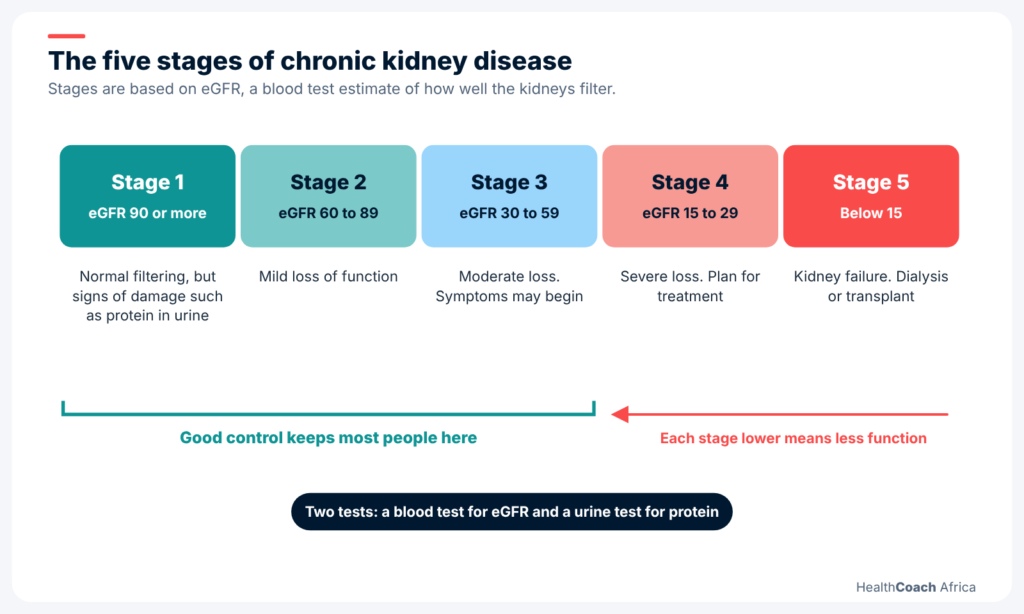
Doctors grade chronic kidney disease by the eGFR, which estimates how much of normal kidney function remains.
Stage 1: 90 or above, with other signs of damage such as protein in the urine
Stage 2: 60 to 89
Stage 3: 30 to 59
Stage 4: 15 to 29
Stage 5: below 15, which is kidney failure
The amount of protein in the urine adds further information about risk. Most people in stages 1 to 3 never reach kidney failure, provided that their blood pressure and blood sugar are well controlled. Knowing your stage therefore turns a frightening label into a practical plan.
Two simple tests
A blood test for creatinine. The laboratory uses it to calculate your eGFR, which estimates how well your kidneys filter.
A urine test for protein. Protein leaking into the urine is one of the earliest signs of damage.
Your blood pressure should be checked at the same visit. If you are in a risk group, repeat these tests at least once a year. Both are inexpensive, especially when compared with the cost of dialysis.
Eight ways to protect your kidneys
Control your blood pressure. Take your medicines every day and reach the target your doctor sets.
Control your blood sugar if you have diabetes.
Limit anti-inflammatory painkillers. Avoid taking them daily, and ask your pharmacist about safer options.
Avoid herbal mixtures and unregistered products. Their ingredients and doses are unknown.
Cut down on salt and seasoning cubes.
Drink enough water, particularly in hot weather.
Do not smoke, limit alcohol and stay active.
Check your cosmetics. Avoid bleaching creams and soaps that contain mercury.
Eating for healthy kidneys
Food choices support every other treatment.
Use less salt. Aim for no more than one level teaspoon a day from all sources. Seasoning cubes, stockfish, smoked foods, instant noodles and tinned foods contain a great deal of hidden salt.
Eat moderate amounts of protein. Very high-protein diets and protein supplements add work for damaged kidneys.
Choose fresh food over processed food whenever you can.
Drink according to thirst. Forcing down very large volumes of water does not “wash” the kidneys.
Follow special restrictions only when advised. In later stages, some people must limit foods rich in potassium or phosphate, but this depends on blood results.
Be wary of products sold as kidney cleansers or detox drinks. None has been shown to work, and some cause harm.
Medicines that need care
Many medicines leave the body through the kidneys. Consequently, when kidney function falls, doses may need to be reduced. Tell every doctor and pharmacist that you have kidney disease. Take particular care with:
Anti-inflammatory painkillers such as ibuprofen and diclofenac
Certain antibiotic injections
Some diabetes medicines, which may need a lower dose
Dyes used for some X-ray scans
Herbal remedies and supplements of unknown content
If you are diagnosed
A diagnosis does not automatically mean dialysis. In fact, early kidney disease can often be slowed for many years. Certain blood pressure and diabetes medicines protect the kidneys directly. In addition, your doctor or pharmacist may need to adjust the doses of your other medicines. Regular follow-up, usually every three to six months, allows changes to be made in good time.
In Nigeria, dialysis and transplant are expensive and are mostly paid for out of pocket. That is why early detection matters so much.
Dialysis and transplant in Nigeria
When the kidneys fail completely, treatment replaces their work. Dialysis uses a machine to clean the blood, usually three times a week, with each session lasting about four hours. A kidney transplant offers a better quality of life, but it requires a suitable donor and lifelong medicines.
Both treatments are available in Nigeria, mainly in teaching hospitals and private centres. Even so, the cost means that many patients cannot afford the number of dialysis sessions they need. This reality is the strongest argument for acting early on kidney disease warning signs.
When to seek urgent care
Go to hospital immediately if you pass very little or no urine, develop sudden severe swelling or breathlessness, become confused or cannot stop vomiting.
Frequently asked questions
Does drinking plenty of water clean the kidneys?
Staying hydrated is healthy, but extra water does not repair or clean kidneys.
Is back pain a sign of kidney disease?
Usually not. Most back pain comes from muscles and joints. Chronic kidney disease is typically painless.
Can kidney damage be reversed?
Sudden kidney injury often can be. Chronic damage cannot, but it can be slowed for many years.
Can herbs or bitter kola cure kidney disease?
No. There is no evidence that any herbal product cures it, and several are known to damage the kidneys.
How often should I be tested?
Do not wait for kidney disease warning signs. Test once a year if you have high blood pressure, diabetes or another risk factor. Your doctor will advise more frequent tests if a problem is found.
Act before symptoms appear
By the time kidney disease warning signs are obvious, valuable time has been lost. A blood test, a urine test and a blood pressure check take minutes. For anyone with a risk factor, they are among the most valuable health checks available.
Getting help
If you recognise any of these kidney disease warning signs, or you fall into a risk group, book a kidney check this month. HubPharm pharmacists can review your medicines for kidney safety and help you stay consistent with blood pressure and diabetes treatment.For practical steps, read our guide to lifestyle changes for hypertension, or visit the US National Institutes of Health page on chronic kidney disease.
Please follow and like us:
Views:64
Related Posts:
Diabetes in Nigeria: Why Blood Sugar Control Fails Diabetes in Nigeria does not usually fail in the clinic. Among people who reach a specialist and stay in care, control is often reasonable. It fails in the years before anyone tests you, and it…
How to Check for Breast Cancer at Home: 5 Simple, Safe Steps Most Nigerian women who find breast cancer find it themselves. Not at a screening centre, and not during a routine check-up, but in the shower or while dressing. So learning how to check for breast…
Chronic Kidney Disease in Nigeria: What you need to know Chronic Kidney Disease (CKD) is increasingly becoming one of the most pressing public health challenges in Nigeria. Often linked with hypertension, diabetes, and lifestyle changes, CKD is a long-term condition in which the kidneys gradually…
Living With Heart Failure: A Daily Guide for… Heart failure does not mean that the heart has stopped or is about to stop. It means that the heart is not pumping blood around the body as well as it should. It is a…