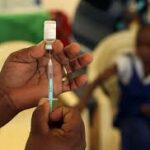
DAMONGO, GHANA — Health authorities in Ghana’s Savannah Region have deployed mobile immunization teams across all seven districts in a five-day mop-up campaign aiming to reach 6,668 eligible girls who missed the human papillomavirus (HPV) vaccine. Briefing journalists in Damongo, the Savannah Regional Health Directorate of the Ghana Health Service (GHS) confirmed that while the primary regional rollout successfully vaccinated 42,167 girls aged 9 to 14, targeted media collaboration is urgently required to dispel safety misinformation and reach remaining out-of-school and remote cohorts.
Dr. John Ekow Otoo, Savannah Regional Director of Health Service, emphasized that immunizing young girls before potential exposure to HPV provides optimal immunological protection against cervical cancer.
Regional Benchmarks for Savannah Region Targets Unvaccinated Girls
Data released by the Savannah Regional Health Directorate details the scope and targets of the regional immunization exercise:
Operational Category
Regional Immunization Benchmarks
Primary Target Population
48,835 eligible girls (aged 9–14) across 7 districts
Achieved Primary Coverage
42,167 girls vaccinated (~86% coverage rate)
Mop-Up Target Gap
6,668 unvaccinated girls targeted during 19–23 October exercise
National Cervical Cancer Burden
~3,000 new cases and ~2,000 deaths recorded annually
Technical Mechanics: Savannah Region Targets Unvaccinated Girls
Understanding the public health strategy behind why the savannah region targets unvaccinated girls underscores essential oncology and epidemiological principles:
Pre-Exposure Prophylactic Efficacy: The HPV vaccine achieves maximum efficacy when administered to adolescent girls prior to viral exposure. High-risk oncogenic HPV genotypes (primarily types 16 and 18) drive persistent cellular dysplasias that progress to invasive cervical carcinoma decades later.
Overcoming Hesitancy and Misinformation: Vaccine uptake gaps stem from false rumors regarding fertility, low public awareness, reproductive health stigma, and limited screening access. Health teams are partnering with journalists, local chiefs, and school authorities to reassure parents of vaccine safety.
Reaching Vulnerable Cohorts: Closing the remaining 14 percent coverage gap requires door-to-door outreach to identify out-of-school girls, agrarian migrant populations, and hard-to-reach rural communities across the Savannah Region.
Community Mobilization, Media Partnerships, and Screening Access
To maximize mop-up coverage, the directorate called on media houses to amplify accurate medical messaging, counter online myths, and mobilize parents. Health officials stressed that addressing cervical cancer requires a dual approach: pairing adolescent HPV vaccination with expanded adult screening and early treatment for precancerous lesions.
The mop-up exercise forms part of a broader nationwide school-based campaign executed by the GHS Expanded Programme on Immunization (EPI) in partnership with the Ghana Education Service (GES).
Sector Outlook and Cervical Cancer Control Objectives
As the five-day exercise concludes across Damongo and surrounding districts, regional health managers will evaluate final coverage figures to measure progress toward national elimination goals. Ensuring high vaccination coverage among young girls represents Ghana’s most effective defense against a preventable cancer that continues to claim thousands of lives each year.
Continued collaboration between health workers, educators, and community leaders remains vital to establishing long-term cervical cancer immunity across the region.
Why It Matters: Vaccinating girls before viral exposure provides lasting immunity against high-risk HPV strains, protecting future generations from a disease that causes nearly 2,000 deaths in Ghana every year.
Understanding Human Papillomavirus (HPV) and Its… Human Papilloma Virus (HPV) is a significant public health concern among young girls in Nigeria. The rising cases of HPV infection and cervical cancer in the country are alarming, highlighting the urgent need for awareness,…
Ghana Launches School Campaign to Vaccinate Girls… ACCRA, GHANA — The Ghana Health Service (GHS), in direct collaboration with the Ghana Education Service (GES), has launched a nationwide school-based campaign providing the hpv vaccine in ghana to protect young girls aged 9…
Enugu State Achieves Milestone: 220,000 Girls… Enugu State has made significant strides in public health by successfully vaccinating 220,000 girls against the Human Papillomavirus (HPV) to prevent cervical cancer. The groundbreaking initiative, conducted by the Enugu State Primary Health Care Development…
Cervical Cancer Screening Tests: A Clear Guide for… Cervical cancer is the second most common cancer among Nigerian women, with about 14,000 new cases and more than 7,000 deaths recorded each year. Almost all of those deaths are avoidable. Cervical cancer screening tests…