Cervical cancer is the second most common cancer among Nigerian women, with about 14,000 new cases and more than 7,000 deaths recorded each year. Almost all of those deaths are avoidable. Cervical cancer screening tests find abnormal cells years before they turn into cancer, when treatment is simple, quick and affordable. This guide explains which tests exist, who needs them and what happens next.
Why screening matters
Cervical cancer is caused by long-lasting infection with high-risk types of human papillomavirus (HPV), a very common virus passed on through sexual contact. Most infections clear on their own. However, in some women the virus persists and slowly changes the cells of the cervix over 10 to 20 years.
These early changes cause no pain, no bleeding and no discharge. In other words, you can feel completely well and still need treatment. That is why waiting for symptoms is the most dangerous strategy. Vaccinating girls against HPV prevents most cases, but women who are already adults still need screening.
The three main cervical cancer screening tests
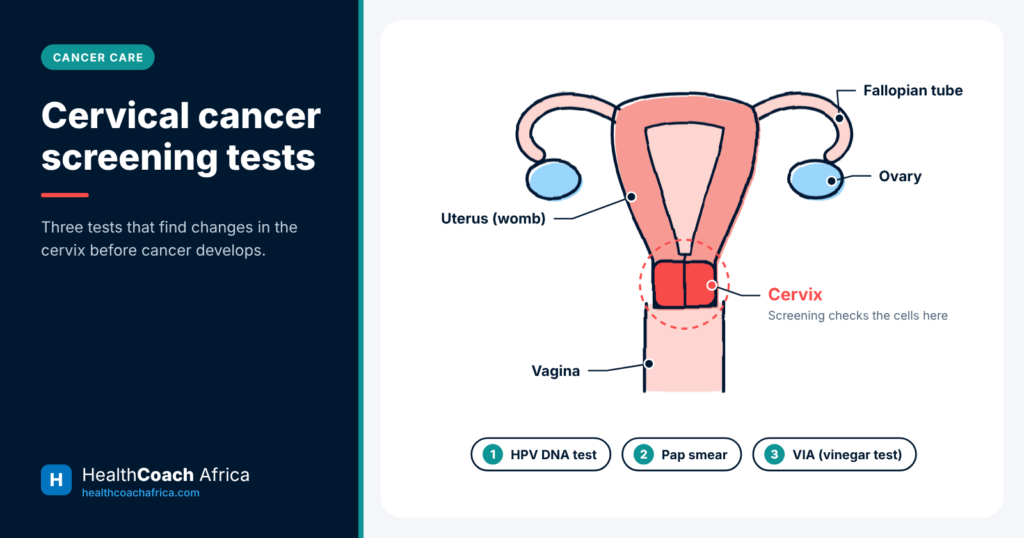
HPV DNA test. This checks a sample from the cervix for high-risk HPV. The World Health Organization now recommends it as the preferred test because it is the most accurate. Some centres allow you to collect the sample yourself.
Pap smear (cytology). A health worker gently brushes cells from the cervix, and a laboratory examines them under a microscope for abnormal changes.
Visual inspection with acetic acid (VIA). A trained nurse applies dilute vinegar to the cervix and looks for areas that turn white. It is low cost, gives an immediate result and is widely used in Nigerian primary health centres.
All three cervical cancer screening tests take only a few minutes. You may feel pressure or mild discomfort, but the test should not be painful.
Who should be screened, and how often
WHO advises that women begin screening at age 30 and repeat an HPV test every five to ten years. Women living with HIV face a higher risk, so they should start at 25 and screen every three to five years. Where only Pap smear or VIA is available, screening every three years is the usual advice.
In addition, you still need screening if you have had the HPV vaccine, if you are no longer sexually active or if you have reached menopause. For the most reliable result, book your test for a day when you are not menstruating. Also avoid sex, douching and vaginal creams for 48 hours beforehand.
What happens during the test
Knowing what to expect makes the visit easier. First, the health worker asks a few questions about your periods, pregnancies and any symptoms. You then lie on a couch with your knees bent. A smooth instrument called a speculum is gently placed in the vagina so that the cervix can be seen.
For a Pap smear or HPV test, a soft brush collects cells in a few seconds. For VIA, the nurse applies the vinegar solution and waits about one minute before looking. The whole visit usually takes less than fifteen minutes.
Afterwards, light spotting for a day is normal. VIA gives a result before you leave the room. Pap smear and HPV results take from a few days to a few weeks, so ask how you will be contacted. If you feel anxious, bring a friend or ask for a female health worker.
Vaccination and screening work together
Nigeria added the HPV vaccine to its routine immunisation schedule in October 2023. Girls aged 9 to 14 now receive a single free dose. The vaccine works best when given before any sexual contact, which is why it is offered so young.
Older teenagers and young women can still benefit, although they usually pay for it privately. However, the vaccine prevents new infections. It does not clear a virus that is already present, and it does not cover every cancer-causing type. Therefore, vaccinated women still need cervical cancer screening tests at the recommended ages.
What a positive result means
A positive screening test is not a cancer diagnosis. It means that abnormal cells or high-risk HPV were found and need follow-up. In many cases, the health worker can treat the affected area on the same day by freezing it (cryotherapy) or by using heat (thermal ablation). Larger areas are removed in a short procedure called LEEP.
As a result, treating precancer early protects your fertility and stops cancer from developing at all.
Risk factors you can change
Any woman who has had sex can develop cervical cancer. Nevertheless, some factors raise the risk:
Smoking, which weakens the cervix’s defence against HPV
HIV infection that is not well controlled
A weak immune system from other illnesses or medicines
Other untreated sexually transmitted infections
Never having been screened
You cannot change your past, but you can act on these. For example, stopping smoking lowers your risk within a few years. Women living with HIV who take their treatment daily clear HPV more easily. Condoms reduce the spread of HPV, although they do not block it completely.
Where to get screened in Nigeria
Cervical cancer screening tests are more available than many women realise. Start with these options:
Primary health centres. Many offer VIA at low cost, and some offer it free.
General and teaching hospitals. Their gynaecology clinics provide Pap smears and treatment of precancer.
Private laboratories and hospitals. These are the usual source of HPV DNA testing.
Outreach programmes. Churches, mosques, workplaces and charities often run free screening days, especially in January, which is Cervical Cancer Awareness Month.
Prices vary widely between centres, so ask before you book. In addition, ask whether treatment is available on site if the result is abnormal. A centre that can screen and treat on the same day saves you a second journey.
Symptoms that need a doctor now
Screening is for women without symptoms. Therefore, see a doctor promptly, whatever your last result, if you notice:
Bleeding after sex, between periods or after menopause
Watery, bloody or foul-smelling vaginal discharge
Persistent pelvic pain or pain during sex
Three myths that delay screening
“I feel fine, so I do not need a test.” Precancer has no symptoms, so feeling well proves nothing.
“Screening is only for women with many partners.” Any woman who has ever had sex can carry HPV, including women with one lifetime partner.
“The test will damage my womb.” It will not. Screening does not affect your periods or your ability to have children.
Frequently asked questions
Do cervical cancer screening tests hurt?
Most women feel pressure and brief discomfort, not pain. Relaxing your legs and breathing slowly helps. Tell the health worker if it hurts, because a smaller speculum can be used.
Can I be screened during pregnancy?
Routine screening is usually postponed until about three months after delivery. However, if you have symptoms such as bleeding, see a doctor at once and do not wait.
I have had a hysterectomy. Do I still need screening?
If your womb and cervix were both removed for a reason other than cancer, you usually do not. If the cervix was left in place, you still do. Ask your doctor which operation you had.
What if I have never had sex?
Your risk is very low. Discuss with your doctor whether screening is needed.
How soon should I repeat an abnormal test?
Follow the date your health worker gives you. Missing a follow-up visit is one of the main reasons precancer goes on to become cancer.
The goal: a Nigeria free of cervical cancer
The World Health Organization has set three targets for 2030. These are to vaccinate 90% of girls by age 15, screen 70% of women by ages 35 and 45, and treat 90% of women found to have disease. Countries that reach these targets can eliminate cervical cancer as a public health problem. Every woman who books one of the cervical cancer screening tests brings that goal closer.
Getting help
Ask your nearest primary health centre, general hospital or teaching hospital which cervical cancer screening tests they offer and what each one costs. If you have questions about your results or follow-up treatment, you can message a HubPharm pharmacist or ask Afiya on WhatsApp for confidential guidance in your own language.
Please follow and like us:
Views:83
Related Posts:
Understanding Human Papillomavirus (HPV) and Its… Human Papilloma Virus (HPV) is a significant public health concern among young girls in Nigeria. The rising cases of HPV infection and cervical cancer in the country are alarming, highlighting the urgent need for awareness,…
Ghana Launches School Campaign to Vaccinate Girls… ACCRA, GHANA — The Ghana Health Service (GHS), in direct collaboration with the Ghana Education Service (GES), has launched a nationwide school-based campaign providing the hpv vaccine in ghana to protect young girls aged 9…
Metformin Side Effects: What Is Normal and What Is Not Most people meet metformin side effects in the first fortnight, decide the drug does not agree with them, and stop it without telling anyone. That decision is usually wrong, and it is almost always avoidable,…
Diabetes in Nigeria: Why Blood Sugar Control Fails Diabetes in Nigeria does not usually fail in the clinic. Among people who reach a specialist and stay in care, control is often reasonable. It fails in the years before anyone tests you, and it…