For couples trying for a baby, timing matters. A woman can only get pregnant on a few days in each cycle, around the time an egg is released. Knowing when those days fall can make trying to conceive less stressful and more effective. This guide explains how to track ovulation using simple methods, how to time sex for the best chance of pregnancy and when it is time to see a doctor.
Understanding your cycle
The menstrual cycle starts on the first day of your period and ends the day before your next period. An average cycle is about 28 days, but anywhere from 21 to 35 days is considered normal.
During each cycle, hormones prepare an egg to mature inside a small fluid-filled sac in the ovary, called a follicle. Around the middle of the cycle, a surge of a hormone called LH triggers ovulation, when the egg is released. The egg travels into the fallopian tube, where it can be fertilised by sperm.
The fertile window
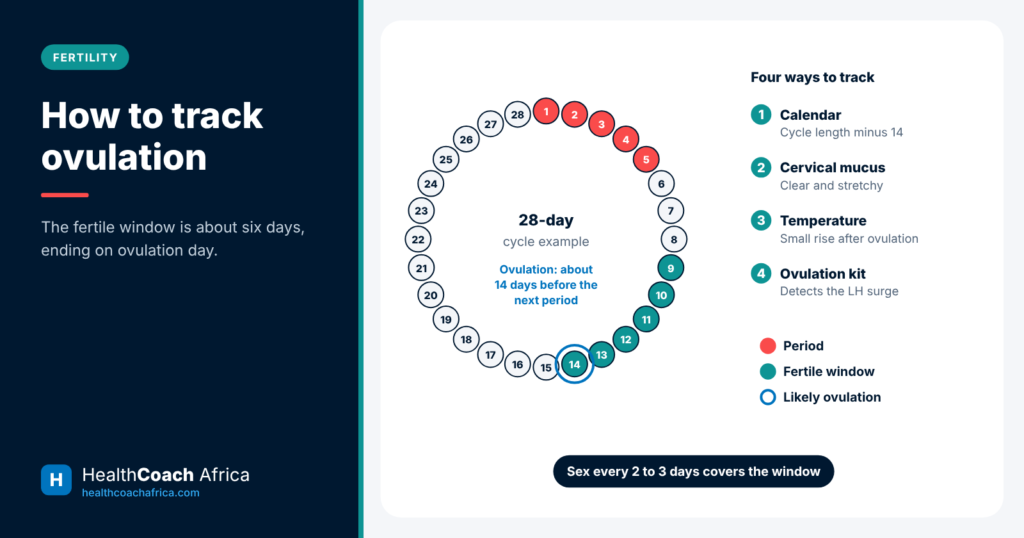
An egg survives for only about 12 to 24 hours after ovulation. However, sperm can live inside a woman’s body for up to five days. This means the fertile window lasts about six days: the five days before ovulation and the day of ovulation itself.
The best chance of pregnancy comes from having sex in the two to three days before ovulation, so that sperm are already waiting when the egg is released.
Ovulation is not always on day 14
Many people believe that ovulation always happens on day 14. In reality, ovulation usually occurs about 12 to 16 days before the next period starts. In a 28-day cycle, that is around day 14. In a 35-day cycle, it may be around day 21, and in a 24-day cycle, around day 10.
Method 1: the calendar method
Track the length of your cycles for several months. Subtract 14 from your average cycle length to estimate your ovulation day. For example, if your cycles are usually 30 days long, you probably ovulate around day 16. Your fertile window would then be about days 11 to 16.
This method is simple, but it is only an estimate. It works best for women with regular cycles. Period tracking apps use a similar calculation, so they are also estimates.
Method 2: cervical mucus
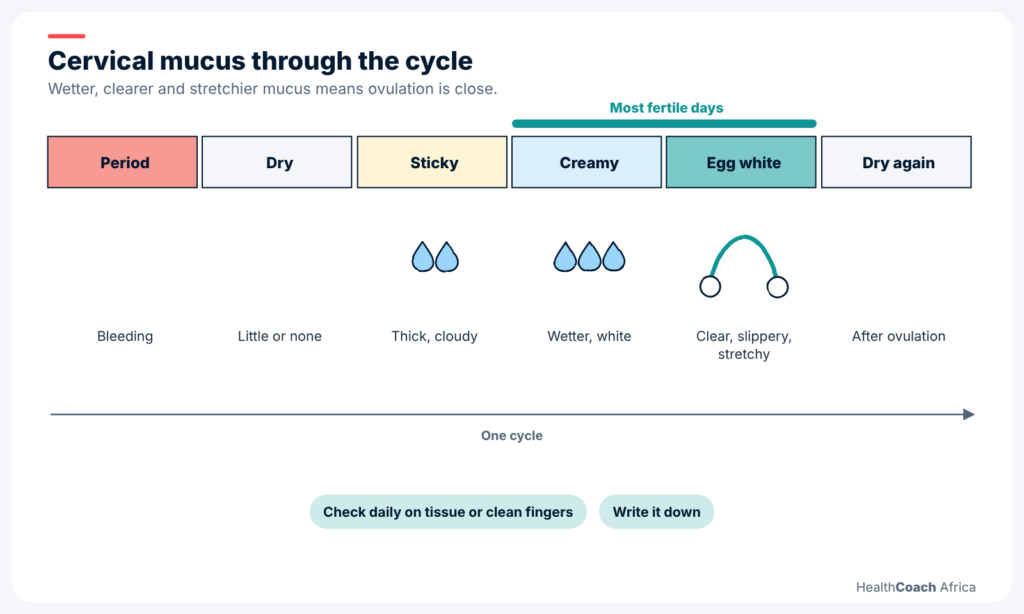
The mucus produced by the cervix changes during the cycle. After your period, it is usually scant or sticky. As ovulation approaches, it becomes wetter, clearer, more slippery and stretchy, like raw egg white. This fertile mucus helps sperm to swim towards the egg.
Check your mucus each day, either on toilet paper or with clean fingers. The last day of slippery, stretchy mucus is usually very close to ovulation. This free method is one of the most useful ways to learn how to track ovulation.
Strip diagram of cervical mucus changes across the cycle, a free way how to track ovulation
The last day of clear, stretchy mucus is usually very close to ovulation.
Method 3: basal body temperature
Your resting body temperature rises slightly, by about 0.2 to 0.5°C, after ovulation, because of the hormone progesterone. To use this method, take your temperature with a sensitive thermometer 1 every morning before getting out of bed, and record it on a chart.
The rise confirms that ovulation has already happened, so it does not predict it in advance. However, after a few months of charting, you can see your own pattern and plan ahead for future cycles.
Method 4: ovulation predictor kits
Ovulation kits 2 test urine for the LH surge, which happens 24 to 36 hours before ovulation. A positive result means you are about to ovulate, so the next two days are your most fertile.
Start testing a few days before you expect to ovulate, and follow the instructions carefully. Testing in the early afternoon often works well. Kits are easy to use, but they can give confusing results for women with polycystic ovary syndrome, who may have high LH levels throughout the cycle.
How to track ovulation with irregular cycles
If your cycles vary a lot in length, the calendar method and apps are less reliable. Instead, rely more on signs from your own body. Check cervical mucus daily, and use ovulation kits for a longer stretch of the cycle, starting a few days after your period ends. Charting your temperature for two or three months shows whether and when you ovulate.
Irregular cycles can also signal a hormonal problem that is worth checking. Learning how to track ovulation in this situation gives your doctor useful information at your first visit.
A simple monthly tracking chart
Keep a notebook or use an app to record:
The first day of each period
Daily cervical mucus: dry, sticky, creamy or stretchy
Morning temperature, if you are charting it
Ovulation kit results
Days you had sex
After two or three months, patterns become clear. This record is valuable if you later need to see a fertility specialist, and it shows exactly how to track ovulation in your own body.
HUBPHARM PHARMACIST’S NOTE Ovulation kits differ in how sensitive they are, and some give confusing results for women with PCOS. Tell a HubPharm pharmacist about your cycle length and any diagnosis, and we will recommend a kit and show you when in your cycle to start testing.
Combining methods works best
No single method is perfect. Many women find that using two methods together, such as cervical mucus and ovulation kits, gives the clearest picture. Charting your cycle over two or three months also helps you understand your body.
How often should you have sex?
You do not need to time sex perfectly. Having sex every two to three days throughout the cycle covers the fertile window without the stress of exact timing. If you prefer, you can focus on having sex every day or every other day during your fertile window. There is no need to save sperm by avoiding sex for long periods.
Tests your doctor may use
If you are having trouble conceiving, your doctor may confirm ovulation with:
A progesterone blood test, taken about seven days before your next expected period
Follicle tracking scans, a series of ultrasound scans that show the follicle growing and releasing an egg
These tests are especially useful for women with irregular cycles.
Signs that you may not be ovulating
You may not be ovulating regularly if your periods are very irregular, very infrequent or absent. Common causes include polycystic ovary syndrome, thyroid problems, high prolactin levels, being very underweight or overweight, and intense exercise or stress. Most of these are treatable.
Myths about ovulation
“Lying with your legs up after sex increases the chance of pregnancy.” Sperm reach the cervix within minutes. Resting briefly does no harm, but it is not necessary.
“You can only get pregnant on the day of ovulation.” Sex in the days before ovulation is just as important, because sperm survive for several days.
“An app tells you exactly when you ovulate.” Apps estimate. Body signs and kits give more accurate information.
Lifestyle tips for better fertility
While learning how to track ovulation, you can also improve your chances by:
Taking folic acid 3 400 micrograms daily from before conception
Keeping a healthy weight
Stopping smoking and limiting alcohol
Eating a balanced diet and staying active
Avoiding lubricants that harm sperm, or choosing fertility-friendly ones
Remember that fertility is shared. Men should also avoid smoking, heavy drinking and overheating the testicles.
When to see a doctor
See a doctor if you are under 35 and have not conceived after 12 months of regular unprotected sex, or if you are 35 or older and have not conceived after six months. Seek help sooner if your periods are irregular or absent, you have a history of pelvic infection or endometriosis, or your partner has known sperm problems. Read more in our guide to understanding female fertility.
Sensitive thermometer for daily morning temperature charting.
2
Ovulation predictor kits
Over the counter
Urine tests that detect the LH surge 24 to 36 hours before ovulation.
3
Folic acid 400 micrograms
Over the counter
Taken daily from before conception to reduce the risk of spine defects in the baby.
To order any of these, or to ask a pharmacist a question first, message HubPharm on WhatsApp or visit hubpharmafrica.com. Prescription medicines are supplied against a valid prescription.
Endometriosis and Getting Pregnant: What Women Need to Know Endometriosis is a common condition that causes painful periods, pelvic pain and, for some women, difficulty conceiving. Many women in Nigeria live with symptoms for years before diagnosis, because severe period pain is often dismissed…
PCOS and Getting Pregnant: Proven Steps That Help… Polycystic ovary syndrome (PCOS) affects roughly one in ten women of reproductive age, and the World Health Organization estimates that up to 70% of them have never been diagnosed. It is also the most common…
IVF Treatment in Nigeria: A Step-by-Step Guide for Couples Infertility affects many Nigerian couples and often brings stress, stigma and family pressure. In vitro fertilisation, or IVF, has helped many of these couples to have children. The number of fertility clinics in Nigeria has…
Understanding Female Fertility: Factors, Diagnosis,… Female fertility refers to a woman's ability to conceive and carry a pregnancy to term. It is a complex and dynamic process that is influenced by various factors, including hormonal balance, reproductive anatomy, and overall…