ACCRA, GHANA — Highlighting severe mortality rates driven by late-stage clinical presentations, breast cancer kills nearly 2000 Ghanaians annually out of approximately 5,000 newly diagnosed cases. Speaking at a community outreach event in Krowor, Accra, Minister for Gender, Children and Social Protection Dr. Agnes Naa Momo Lartey called for an immediate transition from general public awareness to funded early screening, clinical diagnostic access, and early treatment pathways across all municipal districts.
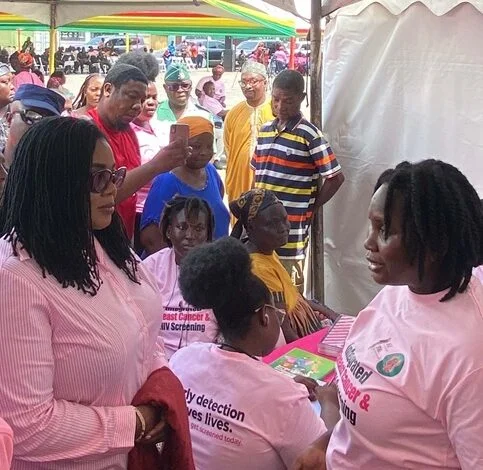
The initiative, organized by the Lordina Foundation in partnership with the Ghana AIDS Commission under the national banner “Let Us Move Beyond Awareness to Action,” brought together health professionals, traditional leaders, and cancer survivors during Breast Cancer Awareness Month.
National Epidemiology and Impact Benchmarks
Data compiled from Ghana Health Service disclosures, Ministry of Health registries, and the Lordina Foundation detail the national oncology profile:
Epidemiological & Socioeconomic Category
National Public Health Benchmarks
Annual New Case Incidence
~5,000 new breast cancer cases recorded annually in Ghana
Annual Mortality Toll
~2,000 deaths per year (~40% case fatality ratio)
Primary Clinical Barrier
Late-stage presentation (Stage III & IV initial diagnoses)
Vulnerable Employment Sector
Informal sector workers lacking health insurance & sick leave
Technical Mechanics Behind High Mortality and Late-Stage Diagnosis
Understanding the public health factors explaining why breast cancer kills nearly 2000 citizens annually involves evaluating clinical presentation stages, diagnostic infrastructure, and economic barriers:
Late-Stage Presentation and Delayed Screening: Roughly two out of every five individuals diagnosed with breast cancer in Ghana succumb to the disease. Late diagnosis remains the primary driver: many women present at tertiary hospitals only after tumors have metastasized, making curative surgery, chemotherapy, and radiotherapy far more complex and expensive.
Informal Economy Vulnerabilities and Financial Distress: Diagnostic and therapeutic costs pose severe challenges to women working within the informal economy. Lacking employer-sponsored health insurance or formal sick leave, self-employed market vendors and small business owners frequently delay seeking medical evaluations for painless breast lumps to avoid missing daily income.
Gaps in Diagnostic and Therapeutic Infrastructure: Early detection relies on clinical breast examinations, diagnostic mammography, core needle biopsies, and prompt histopathology. Diagnostic services and specialized oncology treatment remain concentrated within major urban tertiary centers, such as Korle Bu and Komfo Anokye Teaching Hospitals.
Stigma Reduction, Community Leadership, and Social Support
Minister Lartey, who also serves as Member of Parliament for Krowor, emphasized that breast cancer must never lead to social isolation, workplace discrimination, or marital abandonment. She called on traditional rulers, religious leaders, and civic groups to dismantle social stigmas surrounding cancer diagnoses and actively disseminate accurate health information in churches, mosques, and local markets.
The Minister also noted that while breast cancer predominantly affects women, men can also develop the disease. Educating both men and women to recognize unusual anatomical changes and seek prompt medical attention remains essential to improving survival outcomes.
Strategic Alignment, Referral Pathways, and Healthcare Outlook
Health advocates stress that celebrating Breast Cancer Awareness Month must translate into actionable subnational policy. Equipping primary health centers to conduct routine clinical examinations, expanding National Health Insurance Scheme (NHIS) coverage to include diagnostic mammograms and tissue biopsies, and streamlining referral pathways are critical to reducing diagnostic delays.
Accelerating early detection capabilities across municipal clinics remains central to saving lives as breast cancer kills nearly 2000 patients across Ghana each year.
Why It Matters: A case fatality ratio of nearly 40% reflects systemic late diagnosis, making decentralized screening, affordable diagnostics, and rapid tertiary referral national oncology priorities.
Breast Cancer Screening in Nigeria: Where to Go and Costs Breast cancer screening in Nigeria confuses people for a simple reason: nobody tells you which test you need. A woman of 32 asks for a mammogram and is told she does not need one. A…
World AIDS Day 2023: What You Need to Know World AIDS Day, observed annually on December 1st, is a significant event that raises awareness about HIV/AIDS and commemorates the progress made in the ongoing fight against this global health crisis. As we approach World…
Newly Diagnosed With Breast Cancer? Your First 30 Days Guide If you have just been newly diagnosed with breast cancer, start here. You do not need to understand everything today. You need to know what to do next, and in what order. This guide breaks…
Breast Cancer Warning Signs: What Every Woman Should Check Breast cancer is the most common cancer in Nigeria. Sadly, many women reach hospital only when the disease is advanced and harder to treat. Knowing the breast cancer warning signs, and acting on them quickly,…