ILORIN, NIGERIA — Child immunisation in Kwara has improved markedly, with coverage of the third dose of the pentavalent vaccine rising from 34.9 per cent in 2024 to 50.4 per cent in 2025 to 2026, the state’s primary healthcare agency said, citing a recent federal survey reported by the News Agency of Nigeria (NAN) and Premium Times on 28 October.
Nusirat Elelu, executive secretary of the Kwara State Primary Healthcare Development Agency, said the findings came from a survey report released by the Federal Ministry of Health and Social Welfare. The share of children aged 12 to 23 months who had received no vaccines at all fell from 48.1 per cent to 27.3 per cent.
What the child immunisation in Kwara figures show
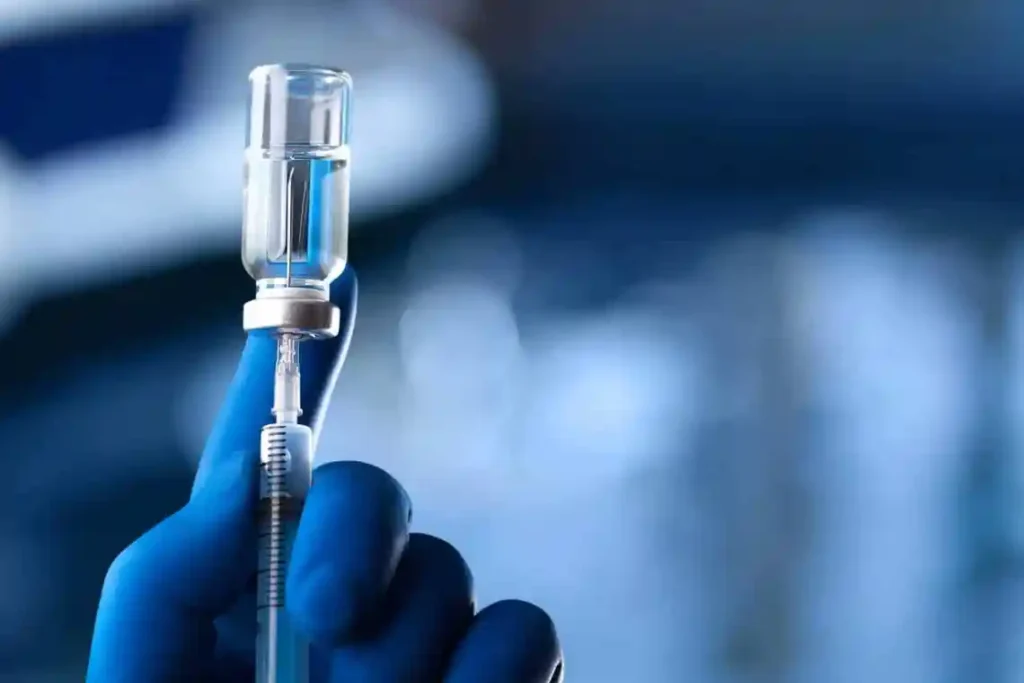
The pentavalent vaccine is given at six, 10 and 14 weeks and protects against five diseases, including diphtheria, tetanus and whooping cough. Completion of the third dose, known as Penta-3, is a standard measure of whether a health system is reaching children reliably over several visits.
Besides diphtheria, tetanus and whooping cough, the pentavalent vaccine protects against hepatitis B and Haemophilus influenzae type b, a bacterium that can cause pneumonia and meningitis in young children.
Health planners also watch the drop between the first and third doses, known as the dropout rate, because it shows whether families return for follow-up visits. A high dropout rate usually points to problems such as long distances to clinics, vaccine stock-outs on clinic days, missed appointments or poor communication about the schedule.
“This improvement in our pentavalent vaccine coverage underscores the Kwara government’s effort at improving child health,” Elelu said. “It further reaffirms the importance of routine immunisation in protecting children and promoting healthy development.”
The survey also showed improvements in nutrition. Stunting fell from 40.8 per cent to 35.5 per cent, wasting from 6.1 per cent to 3.5 per cent and underweight prevalence from 24.5 per cent to 14.8 per cent. “This is one of the greatest improvements in our nutrition indices recorded in Kwara in recent years,” Elelu said.
She credited the state government’s investment in primary health care, including nutrition-sensitive interventions and the twice-yearly Maternal, Newborn and Child Health Week. Such weeks typically bundle vaccination with deworming, vitamin A supplementation and nutrition screening, reaching children who may not visit clinics regularly.
Gaps that remain
Despite the gains, about half of children in the state still do not complete the three-dose series, and more than one in four children aged 12 to 23 months had received no vaccine at all, according to the figures. These so-called zero-dose children are the most vulnerable to outbreaks of measles, diphtheria and other preventable diseases.
Zero-dose children are a priority for Gavi, the Vaccine Alliance, and for Nigeria’s immunisation programme, because children who miss every vaccine are also more likely to miss other health services, including nutrition support and treatment for common illnesses. Reaching them often requires outreach sessions in hard-to-reach settlements, mobile teams and engagement with community leaders.
Progress in child immunisation in Kwara will depend on reaching families in remote and underserved communities, keeping vaccines in stock at primary healthcare centres, and following up children who miss scheduled visits. Vaccinators often rely on community mobilisers and religious and traditional leaders to persuade hesitant parents.
The nutrition gains are linked to vaccination, because well-nourished children are better able to fight infections, and the health visits that deliver vaccines are also used to monitor growth and provide supplements.
Stunting, a measure of chronic undernutrition, affects growth, brain development and future earnings. Reductions usually reflect several factors at once, including better feeding practices, access to health services, clean water and household income, so the Kwara figures suggest improvements beyond the vaccination programme itself.
Reliable data will matter for child immunisation in Kwara to keep improving. Household surveys provide a snapshot every few years, while routine records collected at clinics show progress month by month. Differences between the two are common in Nigeria, and states that reconcile them are better able to target the wards and communities where children are being missed.
Nigeria as a whole has one of the largest numbers of zero-dose children in the world, which makes state-level progress important for national targets.
The statement did not name the survey or give its sample size and dates, and it did not set a target for the next survey. Sustaining gains in child immunisation in Kwara will require steady funding for routine services, staff and vaccine storage.
Why it matters: Halving zero-dose children protects Kwara from deadly outbreaks and shows sustained primary care investment can improve both vaccination and nutrition.
Malaria Vaccine for Children: A Guide for Nigerian Parents For generations, Nigerian parents have relied on nets, drugs and prayer to protect their children from malaria. Now there is another tool. In December 2024, Nigeria introduced a malaria vaccine into its routine childhood immunisation…
WHO Says Nigeria Must Spend More to Vaccinate… ABUJA, NIGERIA — The World Health Organization (WHO) has warned that Nigeria must significantly increase domestic health expenditure to maintain routine immunisation services and reach approximately eight million additional children each year. Speaking at the…
Nigeria’s Health Insurance Coverage Hits 23.06… ABUJA, NIGERIA — Nigeria’s national health insurance coverage has reached 23.06 million people, up 42.35 per cent from 16.20 million in late 2023, the Director-General of the National Health Insurance Authority (NHIA), Dr Kelechi Ohiri,…
NCDC Emphasizes Pentavalent Vaccination as Key… The Nigeria Centre for Disease Control and Prevention (NCDC) has reaffirmed that the most effective safeguard against diphtheria is through vaccination with the Pentavalent or Tetanus-Diphtheria (TD) vaccine. In a bid to curb the disease's…