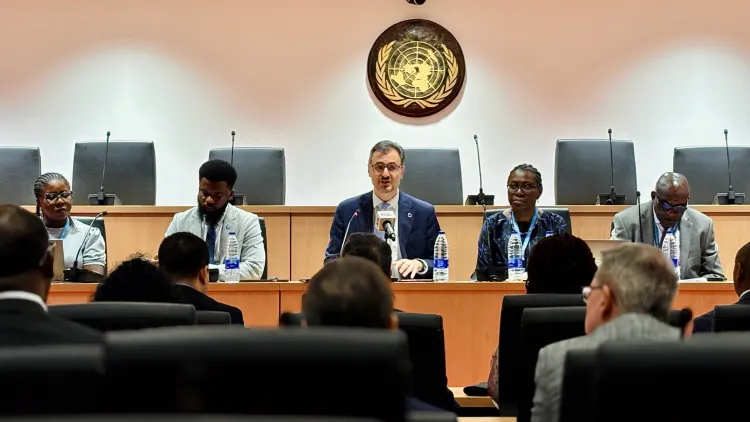
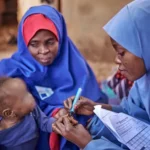
ABUJA, NIGERIA — The World Health Organization (WHO) has warned that Nigeria must significantly increase domestic health expenditure to maintain routine immunisation services and reach approximately eight million additional children each year. Speaking at the WHO Health Diplomacy Dialogue in Abuja, Country Representative Dr. Pavel Ursu stressed that progressive domestic financing is essential to offset declining global development assistance and sustain progress against vaccine-preventable diseases.
With one of the world’s largest annual birth cohorts, Nigeria faces ongoing challenges in containing recurrent outbreaks of circulating vaccine-derived poliovirus and measles. International health partners, including Gavi, the Vaccine Alliance, continue to support national immunisation programs, but long-term sustainability requires federal, state, and local governments to take on greater financial responsibility.
Immunisation Gaps and Childhood Vaccination in Nigeria
Data disclosed by global health agencies highlights the demographic scale and clinical coverage gaps affecting national immunisation efforts:
Indicator Category
National Metrics & Coverage Benchmark
Annual Target Expansion
~8 million additional children must be reached each year
Zero-Dose Child Population
~2.2 million zero-dose children recorded in 2025 (highest in Africa)
Poliovirus Impact
>700 children disabled by circulating vaccine-derived poliovirus
Outbreak Hotspot Data
96% of regional cholera cases concentrated in Borno State
Health System Mechanics for Childhood Vaccination in Nigeria
To close zero-dose gaps and prevent recurrent epidemics, public health authorities are prioritizing key operational mechanics for childhood vaccination in nigeria:
Domestic Transition Financing: Progressively increasing government budget allocations for vaccine procurement to replace declining external donor subsidies.
Integrated Surveillance Networks: Strengthening functional emergency operations centers and rapid response teams for early detection of poliovirus and cholera outbreaks.
Cross-Border Health Security: Coordinating cross-border surveillance and immunisation campaigns across the Lake Chad basin to track mobile populations.
Vaccine-Derived Poliovirus, Water Security, and Health System Resilience
Circulating vaccine-derived poliovirus emerges in underserved communities where low routine immunisation coverage allows weakened viral strains from oral vaccines to circulate, mutate, and regain neurovirulence.Overcoming this threat requires maintaining consistently high population immunity through routine health clinic visits and door-to-door supplemental campaigns.
Simultaneously, secondary disease threats like cholera continue to exacerbate public health emergencies in vulnerable areas, particularly across Borno State. WHO Emergency Adviser Alex Chimbaru highlighted that weak water, sanitation, and hygiene (WASH) infrastructure, coupled with regional insecurity and population displacement, fuels ongoing bacterial transmission. Reinforcing government-led primary healthcare systems rather than creating parallel donor structures remains essential to building long-term health system resilience.
Primary Healthcare Delivery, Local Manufacturing, and Household Care
Sustaining long-term health security requires transforming global health architecture through local manufacturing of essential vaccines and medical supplies.By establishing domestic production capacity and integrating digital health platforms for logistics management, Nigeria can insulate its routine healthcare delivery from global supply chain shocks.
For caregivers and parents, public health guidelines emphasize that routine immunisation remains free, safe, and available at all primary health centres nationwide.Children who have missed scheduled doses can catch up at any local clinic, ensuring every infant receives full protection against polio, measles, diphtheria, and other life-threatening childhood illnesses.
Why It Matters: Without expanding domestic health financing, routine immunisation gaps will widen, leaving millions of Nigerian children vulnerable to preventable paralysis, cholera, and fatal disease outbreaks.
Malaria Vaccine for Children: A Guide for Nigerian Parents For generations, Nigerian parents have relied on nets, drugs and prayer to protect their children from malaria. Now there is another tool. In December 2024, Nigeria introduced a malaria vaccine into its routine childhood immunisation…
Recurrent Malaria: Understanding the Cycle of a… Malaria, a mosquito-borne infectious disease caused by the Plasmodium parasite, continues to be a major global health concern especially in Africa. While significant progress has been made in reducing malaria-related deaths and cases over the…
Ghana Closes Type 2 Polio Outbreak as It Marks World… ACCRA, GHANA — As ghana closes type 2 poliovirus outbreak parameters following comprehensive health evaluations, the Ministry of Health and the Ghana Health Service (GHS) have formally announced the successful containment of the viral strain…
Nigeria Has Africa’s Most Unvaccinated Children… ABUJA, NIGERIA — Nigeria accounts for the largest burden of unimmunized children in Africa, with approximately 2.2 million infants missing all routine vaccinations in 2025. According to new data from Gavi, the Vaccine Alliance, and…