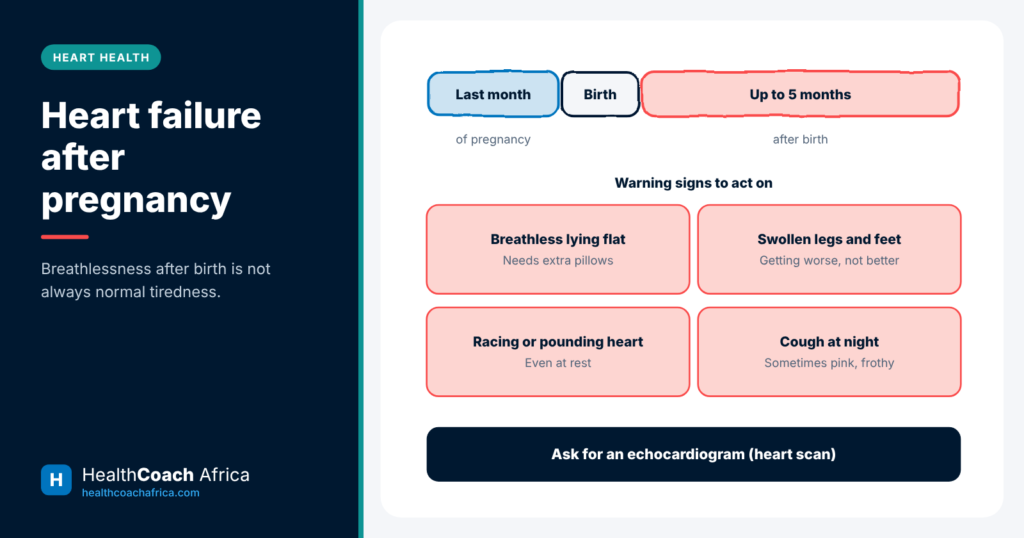
Most new mothers feel tired and breathless at times. Pregnancy and caring for a newborn are physically demanding. However, for a small number of women, these symptoms are signs of a serious heart condition called peripartum cardiomyopathy. It is a form of heart failure after pregnancy that develops in late pregnancy or in the months after birth. Nigeria, particularly the north, reports some of the highest rates in the world. Early diagnosis saves lives.
What peripartum cardiomyopathy is
Peripartum cardiomyopathy, often shortened to PPCM, is a weakness of the heart muscle that develops towards the end of pregnancy or within about five months after delivery, in women with no previous heart disease. The left side of the heart becomes weak and enlarged, and it cannot pump blood as well as it should.
The exact cause is not fully understood. Hormonal changes, inflammation, genetic factors and the stress of pregnancy all seem to play a part.
Heart failure after pregnancy in Nigeria
Nigerian studies, particularly from northern states, have reported high rates of peripartum cardiomyopathy. Researchers have linked this to factors such as high blood pressure in pregnancy, anaemia, nutritional deficiencies and some postpartum customs, such as very hot baths and high salt intake during confinement. More research is needed. However, awareness among mothers, families and health workers can help find heart failure after pregnancy earlier.
Who is at higher risk?
Any woman can develop heart failure after pregnancy, but the risk is higher in women who:
Are of African descent
Are older mothers, especially over 30
Have had several pregnancies
Are carrying twins or more
Have high blood pressure in pregnancy or pre-eclampsia
Have poor nutrition or anaemia
Have a family history of cardiomyopathy
Why the signs are often missed
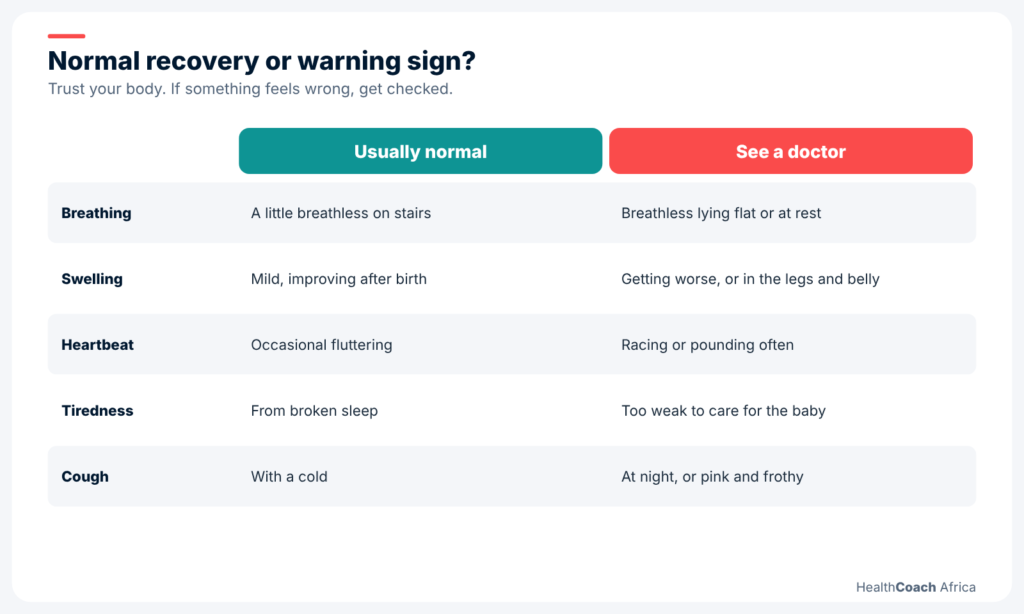
The symptoms of heart failure after pregnancy overlap with normal pregnancy and the postpartum period. Breathlessness, tiredness and swollen feet are common in healthy pregnant women. As a result, women and health workers may assume nothing is wrong until the condition is severe.
The key is to notice symptoms that are worsening, unusual or out of proportion to what is expected.
Warning signs to act on
See a doctor promptly if, in late pregnancy or the months after birth, you notice:
Breathlessness that is getting worse, or occurs at rest
Waking at night unable to breathe, or needing to sit up to breathe
A cough, especially at night, sometimes with frothy sputum
Swelling of the legs, feet or abdomen that is getting worse
Rapid weight gain
A racing or irregular heartbeat
Extreme tiredness
Chest pain or dizziness
Go to hospital immediately for severe breathlessness, fainting or chest pain.
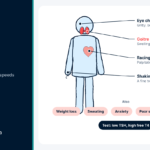
Comparison of normal recovery and warning signs of heart failure after pregnancy
New mothers who are breathless lying flat need a heart check, not just rest.
How it is diagnosed
Doctors suspect PPCM from the symptoms and a physical examination. The key test is an echocardiogram, an ultrasound of the heart, which shows how well it is pumping. Other tests include an ECG, a chest X-ray and blood tests, including a heart hormone called BNP. These tests also rule out other causes, such as a blood clot in the lungs or pre-eclampsia.
Heart failure after pregnancy: what to tell your midwife
At antenatal and postnatal visits, be specific about your symptoms. Say if you cannot lie flat, if you wake up breathless, or if swelling is spreading above your ankles. Mention any racing heartbeat or chest pain. Ask whether a heart check, such as an ECG or echocardiogram, is needed. Clear information helps health workers spot heart failure after pregnancy sooner.
Treatment
Treatment for heart failure after pregnancy is similar to other forms of heart failure, but medicines must be chosen carefully during pregnancy and breastfeeding:
Water tablets, such as furosemide 1 , to remove extra fluid
Beta blockers 2 to protect the heart and slow the heart rate
Medicines that relax blood vessels, such as ACE inhibitors after delivery. These are not used during pregnancy.
Blood thinners in some women, because the risk of clots is higher
Bromocriptine 3 , a medicine that stops breast milk production, which may help the heart recover in some women and is given under specialist guidance
Severe cases may need intensive care.
HUBPHARM PHARMACIST’S NOTE Some heart failure medicines pass into breast milk and others do not, and the safest choice can change once the baby is born. Send your prescription to a HubPharm pharmacist and tell us how you are feeding your baby. We will check each medicine and help you plan safe contraception after peripartum cardiomyopathy.
Recovery
Many women with PPCM recover partly or fully within six to twelve months, especially when the condition is found early. Others are left with a weak heart that needs long-term treatment. Regular follow-up with echocardiograms is important, even when you feel better. Do not stop medicines without advice from your heart specialist.
Breastfeeding questions
Many heart medicines are compatible with breastfeeding, but some are not. In some cases, doctors may advise stopping breastfeeding, for example when bromocriptine is used. Discuss feeding options with your doctor, so that your baby is fed safely while your heart is protected.
Future pregnancies
Women who have had PPCM face a risk that it will return in a future pregnancy, which can be life-threatening. The risk is highest if the heart has not fully recovered. Before trying for another baby, see a heart specialist for an assessment.
Reliable contraception is very important after PPCM. Some contraceptives that contain oestrogen are not recommended because they raise the risk of clots. Progestogen-only methods and intrauterine devices are often safer choices. Ask your doctor.
Support for mothers and families
A diagnosis of heart failure after pregnancy can be frightening at a time that should be joyful. Mothers may need help with caring for the baby while they recover. Partners and family members can help with night feeds, housework and attending appointments. Emotional support and counselling help mothers cope.
Daily self-care during recovery
Self-care helps the heart recover. Weigh yourself each morning and report a rapid gain. Limit salt. Rest when you need to. Take medicines exactly as prescribed. Attend every follow-up. Gentle walking can usually begin once your doctor agrees. MedlinePlus has more information on this condition.
Questions to ask your heart specialist
How strong is my heart now, and is it improving?
How long should I take each medicine?
Is it safe to breastfeed with my current medicines?
Which contraception is safest for me?
Is it safe to have another baby, and when?
Write the answers down and bring them to future appointments.
Planning ahead in your next pregnancy
If you had heart failure after pregnancy and later become pregnant again, early specialist care is essential. Your team will check your heart before and during pregnancy. Some medicines will be stopped or switched. You may be advised to deliver in a hospital with heart specialists. Close monitoring lowers the risk for both mother and baby.
Myths about heart problems after birth
“Breathlessness after birth is always normal.” Worsening breathlessness, especially at night, needs a check.
“Hot water baths after birth always help.” Very hot baths and heavy salt intake can strain a weak heart. Ask your doctor what is safe.
Returning to work and daily activity
Most women can gradually return to work and normal activity as the heart recovers. Ask your doctor when it is safe to lift, exercise or travel. Start slowly and rest when you feel tired. Heart failure after pregnancy needs patience during recovery.
Getting help
If you are pregnant or have recently given birth and notice worsening breathlessness or swelling, do not ignore it. Ask for a heart check. Read more about protecting mothers in our article on malaria and maternal and child health. For help with heart medicines that are safe while breastfeeding, or advice on contraception after PPCM, message a HubPharm pharmacist or chat with Afiya on WhatsApp.
Medicines and products in this article
#
Medicine or product
What to know
1
Furosemide
Prescription only
Water tablet that removes extra fluid and eases breathlessness.
2
Beta blockers
Prescription only
Protect the heart muscle. Several are compatible with breastfeeding.
3
Bromocriptine
Prescription only, specialist use
Stops breast milk and may help recovery in some women.
To order any of these, or to ask a pharmacist a question first, message HubPharm on WhatsApp or visit hubpharmafrica.com. Prescription medicines are supplied against a valid prescription.
Living With Heart Failure: A Daily Guide for… Heart failure does not mean that the heart has stopped or is about to stop. It means that the heart is not pumping blood around the body as well as it should. It is a…
Common Thyroid Disorders Explained The thyroid gland is a small butterfly-shaped organ located in the neck, but despite its size, it plays a major role in regulating metabolism, growth, and overall health. When the thyroid doesn’t function properly, it…
Signs of Overactive Thyroid and How It Is Treated The thyroid is a small, butterfly-shaped gland in the front of the neck. It makes hormones that control how fast the body uses energy. When the gland makes too much hormone, everything speeds up: the…
Chronic Kidney Disease in Nigeria: What you need to know Chronic Kidney Disease (CKD) is increasingly becoming one of the most pressing public health challenges in Nigeria. Often linked with hypertension, diabetes, and lifestyle changes, CKD is a long-term condition in which the kidneys gradually…