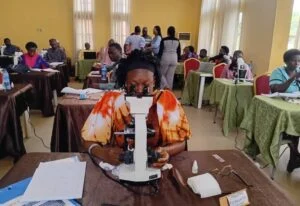
ABEOKUTA, NIGERIA — The Global Fund is supporting malaria laboratory diagnosis training for 464 laboratory personnel in nine Nigerian states, aiming to improve the accuracy of malaria and tuberculosis (TB) testing and cut unnecessary prescriptions of antimalarial medicines, Vanguard reported on 5 November.
The programme is being implemented through the National Malaria Elimination Programme (NMEP) and the Federal Ministry of Health and Social Welfare. The Ogun State session was inaugurated at Mokland Hotel in Ibara GRA, Abeokuta, with participants drawn from all 20 local government areas and from primary, secondary and tertiary facilities, including private and faith-based institutions. Ogun expects 44 trained personnel.
What the malaria laboratory diagnosis training covers
The malaria laboratory diagnosis training covers slide preparation, microscopy, identification of malaria parasites, quality management and diagnostic best practice, including the ISO 15189 standard for medical laboratories. Participants are also being taught to recognise Plasmodium malariae, a less common malaria species that can be missed.
Prof. Wellington Oyibo, Consultant Medical Parasitologist at the College of Medicine, University of Lagos, said microscopy remains essential even with rapid diagnostic tests and molecular technologies. Microscopy can confirm the species of parasite and estimate how many parasites are in the blood, which helps doctors judge severity and monitor treatment.
Health experts at the event warned that poor laboratory testing, inaccurate malaria diagnosis and unnecessary antimalarial prescriptions are undermining Nigeria’s fight against the disease.
When patients insist it is malaria
Mrs Olamide Adeyinka, Ogun State Malaria Elimination Programme Manager, said some patients insist they have malaria even after a negative test, putting pressure on health workers to prescribe antimalarials. “We have always recorded a high malaria test positivity rate,” she said.
Dr Simon Ijiezie, Assistant Director of Medical Laboratory Services in Ogun State, said inaccurate diagnosis leads to unnecessary medication and financial losses. He appealed for quality equipment, especially microscopes. “Without a good microscope, accurate diagnosis becomes difficult,” he said.
Mr Atinsola Ayodeji Olalekan of the Ogun State Primary Health Care Board said stronger laboratories at primary level would ease pressure on higher-level hospitals. Mr Ogundimu Olusola, State TB Quality Assurance Officer, said molecular methods had reduced some laboratory workers’ interest in microscopy. “Some people have gradually lost interest in microscopy,” he said.
Participants described the course as demanding. “It’s not a program. It’s not a seminar. It’s a school,” said Mrs Damilare Funmilola Yetunde. Medical laboratory scientist Fashina Sunday Anthony said the training improved his ability to tell malaria parasites apart from other blood components.
Why accurate malaria diagnosis matters
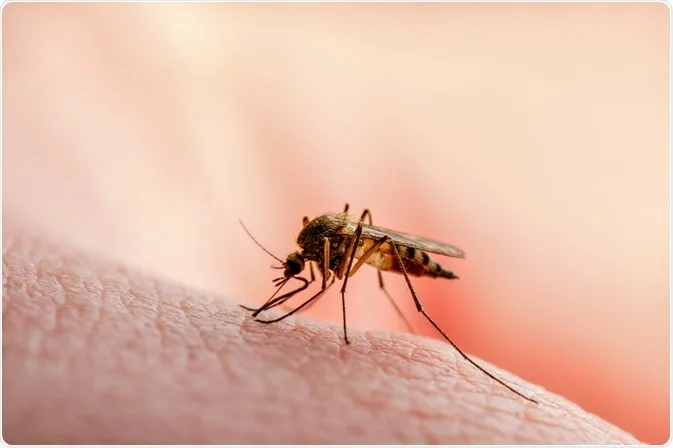
Nigeria carries the world’s largest burden of malaria, accounting for more than a quarter of global cases and deaths, according to WHO’s World Malaria Reports. Yet many fevers are not malaria. Typhoid, viral infections including dengue and Lassa fever, urinary tract infections and pneumonia can all cause fever and body pain.
When every fever is treated as malaria, patients with other illnesses may go untreated until they become seriously ill. Overuse of antimalarials also wastes money for households and the health system, and can add to drug resistance. Resistance to artemisinin, the backbone of modern malaria treatment, has already been confirmed in parts of East Africa.
WHO recommends that every suspected malaria case be confirmed by a parasite test, either microscopy or a rapid diagnostic test, before treatment. Accurate malaria diagnosis protects the effectiveness of artemisinin-based combination therapies and helps doctors look for the real cause of fever when the test is negative.
Laboratories also feed surveillance. Reliable test results help programmes track where malaria is rising or falling, target bed nets and seasonal chemoprevention, and detect unusual outbreaks early.
Malaria and TB in the same laboratory
The integration of malaria and TB training reflects the reality of many facilities, where the same staff and microscopes handle both. TB diagnosis has shifted towards molecular tests such as GeneXpert, but sputum smear microscopy is still used in many places and for monitoring treatment.
Mrs Adebola Oke, Assistant Director of Medical Laboratory Services at the Ogun State Hospital Management Board, urged participants to share their knowledge with colleagues so that the benefits reach facilities beyond those represented.
For patients and pharmacies, the message is to test before treating. Community pharmacists can encourage customers with fever to get tested, and clinics can explain a negative result and look for other causes rather than prescribing antimalarials by default.
The malaria laboratory diagnosis training will run across the nine states, according to the report. Its impact will depend on whether trained staff have working microscopes, reagents and quality assurance systems when they return to their facilities.
Why it matters: Testing before treating protects malaria medicines, saves families money and helps clinicians find the real cause of fever.
Tuberculosis Symptoms and Treatment: What You Need to Know Tuberculosis, or TB, is one of the oldest diseases known to humans, and it remains a major killer. Nigeria has one of the highest TB burdens in Africa, and many people with the disease have…
Ogun records 238 cholera cases, decries open defecation Ogun State has been grappling with a significant cholera outbreak, with a total of 238 cases and 12 deaths reported in the past month [1]. The state government confirmed these alarming figures on Thursday, shedding light…
Malaria: Understanding Symptoms, Treatment,… In this article, we will discuss the symptoms, treatment and prevention of malaria. Furthermore, we will highlight global efforts and challenges in eradicating malaria in our world Malaria, a life-threatening mosquito-borne disease, continues to…
Government Demands Arrest After Health Worker Is… ABEOKUTA, NIGERIA — The Federal Government of Nigeria has directed law enforcement agencies to immediately apprehend and prosecute a suspect accused of stabbing Lawal Olasunkanmi, a medical laboratory scientist at the Federal Medical Centre (FMC),…