Gonorrhoea is one of the most common sexually transmitted infections. It is caused by bacteria that infect the genitals, rectum and throat. Many people, especially women, have no symptoms and do not know they are infected. Left untreated, gonorrhoea can cause infertility and other serious problems. It is also becoming harder to treat because of antibiotic resistance. This guide explains gonorrhoea symptoms and treatment, and how to protect yourself and your partners.
How gonorrhoea spreads
Gonorrhoea is caused by the bacterium Neisseria gonorrhoeae. It spreads through unprotected vaginal, anal or oral sex. It can also pass from a mother to her baby during birth, causing a serious eye infection. It is not spread by kissing, hugging, sharing towels or toilet seats.
Symptoms in men
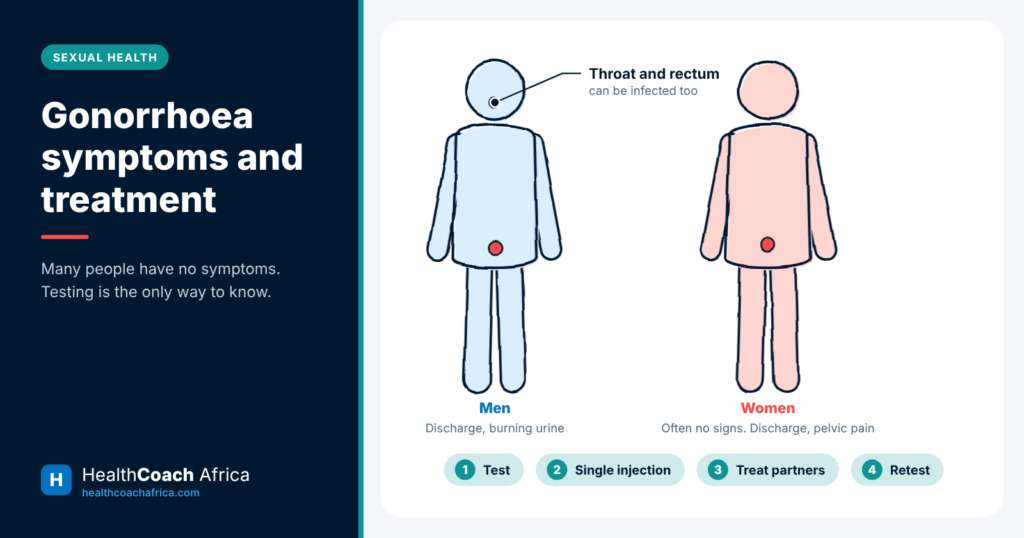
Men usually develop symptoms within two weeks of infection, although some have none. Symptoms include:
A thick yellow, white or green discharge from the penis
Pain or burning when passing urine
Pain or swelling in the testicles, which is less common
Symptoms in women
Many women have no symptoms or only mild ones, which are easily mistaken for a urine or vaginal infection. Symptoms can include:
Unusual vaginal discharge
Pain or burning when passing urine
Bleeding between periods or after sex
Lower abdominal pain
Gonorrhoea symptoms and treatment: who should test?
Many people with gonorrhoea have no symptoms. Testing is recommended if you:
Have a new sexual partner or several partners
Have a partner diagnosed with an STI
Notice discharge, burning or pelvic pain
Are pregnant
Have had sex without a condom
Have recently been treated for gonorrhoea, as a follow-up check
Regular testing is the best way to find gonorrhoea early. Early gonorrhoea symptoms and treatment are simple to manage.
Infections in the rectum and throat
Gonorrhoea in the rectum may cause discharge, pain or bleeding, but often causes no symptoms. Infection in the throat usually causes no symptoms. Testing these sites depends on the type of sex you have.
Gonorrhoea in pregnancy and newborns
Gonorrhoea in pregnancy can increase the risk of premature birth and can be passed to the baby during birth. Newborns may develop a serious eye infection within days, with red, swollen eyes and pus. Without treatment, this can cause blindness. Testing and treating pregnant women prevents this. Babies’ eyes are often protected with ointment after birth in many hospitals.
Complications of untreated gonorrhoea
Without treatment, gonorrhoea can cause:
Pelvic inflammatory disease in women, which can lead to chronic pelvic pain, ectopic pregnancy and infertility from blocked fallopian tubes
Epididymitis in men, a painful swelling near the testicles that can affect fertility
Eye infection in newborns, which can cause blindness if not treated
Spread to the blood and joints, which is rare but serious
A higher risk of getting or passing on HIV
Testing for gonorrhoea
Gonorrhoea is diagnosed with:
A urine test, often for men
A swab from the vagina or cervix for women
Swabs from the throat or rectum if needed
Laboratory tests that detect the genetic material of the bacteria are the most accurate. Because chlamydia often occurs alongside gonorrhoea, you will usually be tested for both. Testing for HIV and syphilis is also recommended.
Gonorrhoea symptoms and treatment: the right antibiotics
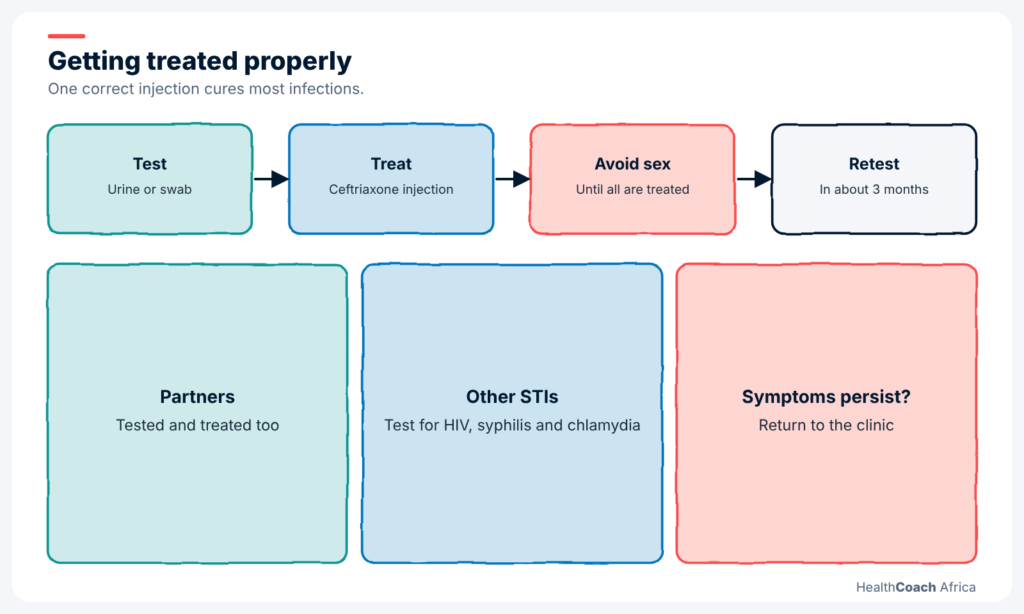
Gonorrhoea is treated with antibiotics, usually a single injection of ceftriaxone 1 .Your health worker may add treatment for chlamydia if needed. Take all medicines exactly as prescribed.
Symptoms usually improve within a few days. Avoid sex until you and your partner have both finished treatment and for seven days afterwards.
Treatment steps in gonorrhoea symptoms and treatment, from testing to partner care
Self-treating with tablets can hide the infection and fuel resistance.
Why self-treatment is dangerous
Many people buy antibiotics such as ciprofloxacin or amoxicillin from a chemist when they notice discharge. These antibiotics often no longer work against gonorrhoea. Even if symptoms improve, the infection may remain hidden, causing damage and spreading to partners. Self-treatment also helps resistant bacteria to spread. The right test, the right antibiotic and partner treatment are the only safe approach to gonorrhoea symptoms and treatment.
The problem of antibiotic resistance
Gonorrhoea has become resistant to many antibiotics that used to work, partly because of misuse and self-treatment. Taking random antibiotics bought without a prescription, or stopping treatment early, helps resistant strains to spread. In some countries, strains resistant to almost all antibiotics have been reported. Learn more in our article on antibiotic misuse and superbugs.
That is why getting tested and treated correctly matters, rather than buying antibiotics on your own.
HUBPHARM PHARMACIST’S NOTE Antibiotics bought over the counter for discharge often do not cure gonorrhoea and may hide it. Message a HubPharm pharmacist if you have already taken something. Tell us what and for how long, and we will direct you to the right test and make sure your partner can be treated too, confidentially.
Follow-up
If your symptoms do not improve after treatment, return to the clinic. You may need another test, especially if the infection was in the throat. A repeat test a few months later is often advised, because reinfection is common.
Partners need treatment too
Anyone you have had sex with in the past two months should be tested and treated, even if they feel well. Otherwise, you may be reinfected. Many clinics can help with partner notification.
Myths about gonorrhoea
“No symptoms means no infection.” Many people, especially women, have no symptoms.
“Any antibiotic will cure it.” Gonorrhoea is resistant to many antibiotics.
“You can only get it once.” You can be reinfected if partners are not treated.
“Condoms are not needed if you trust your partner.” Testing both partners is the best way to know.
What to expect at the clinic
A health worker will ask about your symptoms and sexual history in private. Men usually give a urine sample. Women may take a vaginal swab themselves or have a swab taken during an examination. Results from laboratory tests may take a few days. If you have clear symptoms, or a partner has gonorrhoea, you may be treated on the same day. You will be advised to avoid sex and to inform partners. Everything is kept confidential.
Gonorrhoea and HIV
Gonorrhoea inflames the genital tract and makes it easier to catch and pass on HIV. Anyone diagnosed with gonorrhoea should be offered an HIV test. People at ongoing risk can ask about PrEP, a daily tablet that prevents HIV. Condoms protect against both infections.
Telling a partner
Telling a partner can feel difficult. Keep it simple and factual. Explain that gonorrhoea often has no symptoms, so it is not always clear who had it first. Many clinics offer cards or messages to help notify partners without naming you.
Protecting your fertility
Gonorrhoea is one of the leading causes of blocked fallopian tubes and infertility in women. In men, it can damage the tubes that carry sperm. Prompt testing and treatment protect fertility. Women who have had pelvic infections should tell their doctor if they later struggle to conceive.
Gonorrhoea symptoms and treatment: key points
Discharge and burning are common in men
Women often have no symptoms
Testing uses urine or swabs
Treatment is usually a single injection
Partners must be treated
Self-treatment fuels resistance
These points about gonorrhoea symptoms and treatment can protect your fertility and your partners.
Prevention
Use condoms correctly 2 every time
Reduce the number of sexual partners
Get tested regularly if you have new or multiple partners
Get tested during pregnancy
Young people and gonorrhoea
Gonorrhoea is most common in people under 25. Young people may avoid clinics because they fear being judged. Many services are confidential and youth-friendly. Learning about gonorrhoea symptoms and treatment helps young people protect their future fertility.
Getting help
Knowing gonorrhoea symptoms and treatment helps you get the right care. The NHS guide to gonorrhoea has more information. If you have symptoms or a partner has been diagnosed, get tested rather than self-treating. For confidential advice, testing referrals or help with prescribed treatment, message a HubPharm pharmacist or chat with Afiya on WhatsApp.
Medicines and products in this article
#
Medicine or product
What to know
1
Ceftriaxone injection
Prescription only
Single injection, the main treatment for gonorrhoea.
2
Condoms
Over the counter
Reduce the risk of gonorrhoea and other STIs.
To order any of these, or to ask a pharmacist a question first, message HubPharm on WhatsApp or visit hubpharmafrica.com. Prescription medicines are supplied against a valid prescription.
Vaginal Yeast Infection Treatment: A Practical Guide… Vaginal yeast infection, often called thrush or candidiasis, is very common. Many women experience it at least once in their lives. It causes itching, soreness and discharge, and it can be very uncomfortable. It is…
STI Testing in Nigeria: A Confidential Guide to… Sexually transmitted infections, or STIs, are very common, and many cause no symptoms at all. That means you can have an infection, pass it on and develop complications without knowing. Testing is the only way…
Causes of Secondary Infertility: When the Second… Many couples assume that if they had one child easily, the next pregnancy will follow just as easily. When it does not, they can feel confused, frustrated and even guilty. Secondary infertility means difficulty getting…
Antibiotic Overuse and Resistance: A Call to Action… Antibiotic overuse and resistance pose significant dangers to public health . Overuse refers to the unnecessary or excessive use of antibiotics, while resistance occurs when bacteria develop the ability to withstand the effects of antibiotics, rendering…