Sexually transmitted infections, or STIs, are very common, and many cause no symptoms at all. That means you can have an infection, pass it on and develop complications without knowing. Testing is the only way to be sure. This guide to STI testing in Nigeria explains who should test, which tests are available, when to test after sex and how to get treated confidentially.
Why testing matters
The World Health Organization estimates that more than a million STIs are acquired every day worldwide. Many are easily cured. However, untreated STIs can cause:
Pelvic inflammatory disease, which can damage the fallopian tubes
Infertility in both women and men
Ectopic pregnancy
Pregnancy complications and infections passed to the baby, such as congenital syphilis
A higher risk of getting or passing on HIV
Liver disease from hepatitis B and C
Cervical cancer, caused by long-term HPV infection
Regular testing breaks this chain.
Many STIs have no symptoms
Chlamydia, gonorrhoea in women, syphilis in its early stages, hepatitis B and HIV often cause no symptoms for months or years. When symptoms do appear, they can include:
Unusual discharge from the vagina or penis
Burning or pain when passing urine
Sores, ulcers, blisters or warts on or around the genitals or anus
Pain in the lower abdomen or during sex
Bleeding between periods or after sex
Pain or swelling in the testicles
A rash on the body, palms or soles
If you have any of these, get tested promptly, and avoid sex until you have been treated.
Who should get tested?
Consider STI testing in Nigeria if you:
Have a new sexual partner
Have more than one partner, or a partner who has other partners
Had sex without a condom, or a condom broke
Have a partner who has been diagnosed with an STI
Have any symptoms
Are pregnant, because antenatal clinics test for HIV, syphilis and hepatitis B
Are planning a pregnancy or a marriage
Have been sexually assaulted
People with ongoing risk should test at least once a year, and more often if advised.
What the tests involve
Different infections need different samples:
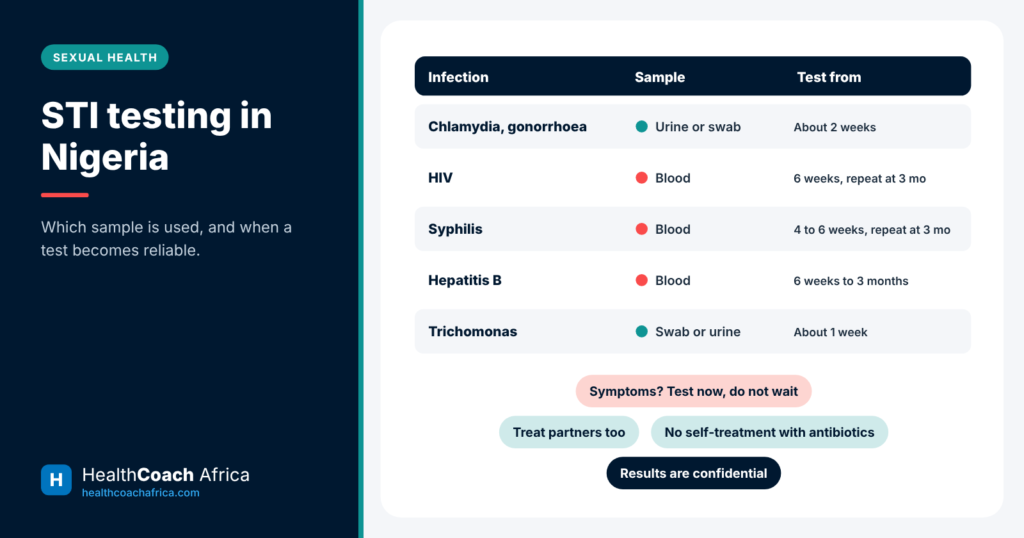
Chlamydia and gonorrhoea: a urine sample for men, or a vaginal swab for women, which you can often take yourself. Swabs from the throat or rectum may be needed depending on the type of sex.
HIV, syphilis, hepatitis B and hepatitis C: a blood test, either from a vein or a finger prick.
Trichomonas: a vaginal swab or urine sample.
Herpes and genital warts: usually diagnosed by examination, sometimes with a swab from a sore.
Most tests are quick and painless. Results for rapid tests are ready within minutes. Laboratory results may take a few days.
When to test after sex
Some infections take time to show up on tests. This is called the window period. As a guide:
Chlamydia and gonorrhoea: about two weeks after sex
HIV: most modern laboratory tests detect infection from about six weeks, with a repeat test at three months to be sure
Syphilis: about four to six weeks, with a repeat at three months
Hepatitis B: from about six weeks, sometimes up to three months
If you have symptoms, do not wait for the window period. Get tested straight away. If you had a high-risk exposure to HIV in the last 72 hours, ask about PEP immediately.
Where to get tested
Options for STI testing in Nigeria include:
General and teaching hospitals, often in their sexual health or infectious disease clinics
Primary health centres
HIV testing and counselling centres, which often provide free HIV tests
HIV self-test kits 1 are also sold in pharmacies. They allow you to test privately at home. A positive self-test must be confirmed at a health facility.
Confidentiality and respect
Health workers are required to keep your results confidential. You have the right to be treated with respect, regardless of your age, marital status or sexual history. If you feel uncomfortable, it is fine to ask for a different health worker or to choose another facility.
STI testing in Nigeria for young people
Young people aged 15 to 24 have some of the highest rates of STIs. Yet many avoid testing because they fear judgement, cost or being reported to their parents. Youth-friendly services, run by some hospitals and non-governmental organisations, offer confidential, non-judgemental care. Many universities also have health centres that provide testing. If you are a young person, you have the right to accurate information and respectful care. STI testing in Nigeria is a sign of maturity, not shame.
STI testing in Nigeria during pregnancy
Every pregnant woman should be tested for HIV, syphilis and hepatitis B at her first antenatal visit. Syphilis can cause miscarriage, stillbirth and serious illness in the newborn, but it is cured with penicillin injections. Treating HIV during pregnancy prevents most infections in babies. Babies born to mothers with hepatitis B need a hepatitis B vaccine dose within 24 hours of birth. Partners should be tested too, so that the mother is not reinfected.
If your result is positive
Most STIs caused by bacteria, such as chlamydia, gonorrhoea and syphilis, are cured with the right antibiotics. Viral infections, such as HIV, hepatitis B and herpes, can be controlled with medicines, allowing people to live long, healthy lives.
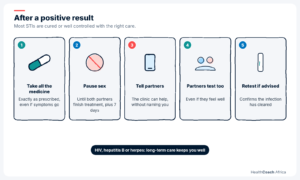
After treatment for a curable STI:
Take all your medicine exactly as prescribed
Avoid sex until you and your partner have both completed treatment, and for about seven days afterwards
Make sure your partner or partners are tested and treated, otherwise you may be reinfected
Return for a repeat test if advised
HUBPHARM PHARMACIST’S NOTE If you have already taken antibiotics from a shop for a discharge or a sore, still get tested. Tell the clinic exactly what you took and for how long. Send a photo of the pack to a HubPharm pharmacist, and we will help you work out what was covered and what still needs a test.
Five steps to take after a positive result from STI testing in Nigeria
Treating partners at the same time stops the infection passing back and forth.
Do not treat yourself
Many people buy antibiotics without testing. This is risky. You may take the wrong medicine, the wrong dose or too short a course. Gonorrhoea, in particular, has become resistant to several antibiotics because of misuse. Self-treatment also leaves partners untreated and hides infections that need follow-up, such as syphilis and HIV.
How to tell a partner
Telling a partner about an STI can feel difficult. However, it protects their health and prevents you from being reinfected. Choose a calm, private moment, stick to the facts and explain that many STIs have no symptoms, so it is not always clear who had it first. Some clinics offer partner notification services or give you a card to pass on. Encourage your partner to get tested, even if they feel well. If you fear violence or a serious reaction, ask the clinic for help. Health workers can notify a partner without naming you, so that you stay safe while your partner still gets the care they need.
Prevention
Testing goes hand in hand with prevention. Use condoms correctly 2 every time, and learn more in our article on condoms and safe sex.Get vaccinated against hepatitis B, and against HPV 3 if you are eligible. People at high risk of HIV can consider PrEP. Reducing the number of sexual partners also lowers risk.
Getting help
STI testing in Nigeria is simple, quick and often free. Make it a routine part of looking after your health. For HIV self-test kits, condoms or confidential advice about symptoms and treatment, message a HubPharm pharmacist or chat with Afiya on WhatsApp.
Medicines and products in this article
#
Medicine or product
What to know
1
HIV self-test kit
Over the counter
Private home test for HIV. Confirm any positive result at a health facility.
2
Condoms
Over the counter
Reduce the risk of most STIs when used correctly every time.
3
Hepatitis B vaccine
Vaccine
Prevents hepatitis B, which is common in Nigeria and spread through sex and blood.
To order any of these, or to ask a pharmacist a question first, message HubPharm on WhatsApp or visit hubpharmafrica.com. Prescription medicines are supplied against a valid prescription.
Urinary Tract Infection Symptoms, Causes and Treatment A burning feeling when you pass urine is hard to ignore. Urinary tract infections, or UTIs, are among the most common bacterial infections, and at least half of all women will have one at some…
How STIs Steal the Future: Africa's Silent Crisis Sexually transmitted infections (STIs) are among the most silent yet devastating causes of infertility in Africa. While STIs are often associated with discomfort or embarrassment, their long-term effects on reproductive health are frequently overlooked. Untreated…
Endometriosis and Getting Pregnant: What Women Need to Know Endometriosis is a common condition that causes painful periods, pelvic pain and, for some women, difficulty conceiving. Many women in Nigeria live with symptoms for years before diagnosis, because severe period pain is often dismissed…
Cervical Cancer Screening Tests: A Clear Guide for… Cervical cancer is the second most common cancer among Nigerian women, with about 14,000 new cases and more than 7,000 deaths recorded each year. Almost all of those deaths are avoidable. Cervical cancer screening tests…