A burning feeling when you pass urine is hard to ignore. Urinary tract infections, or UTIs, are among the most common bacterial infections, and at least half of all women will have one at some point. Recognising urinary tract infection symptoms early means faster relief and a lower risk of the infection spreading to the kidneys. It also helps you avoid the wrong treatment.
Common urinary tract infection symptoms
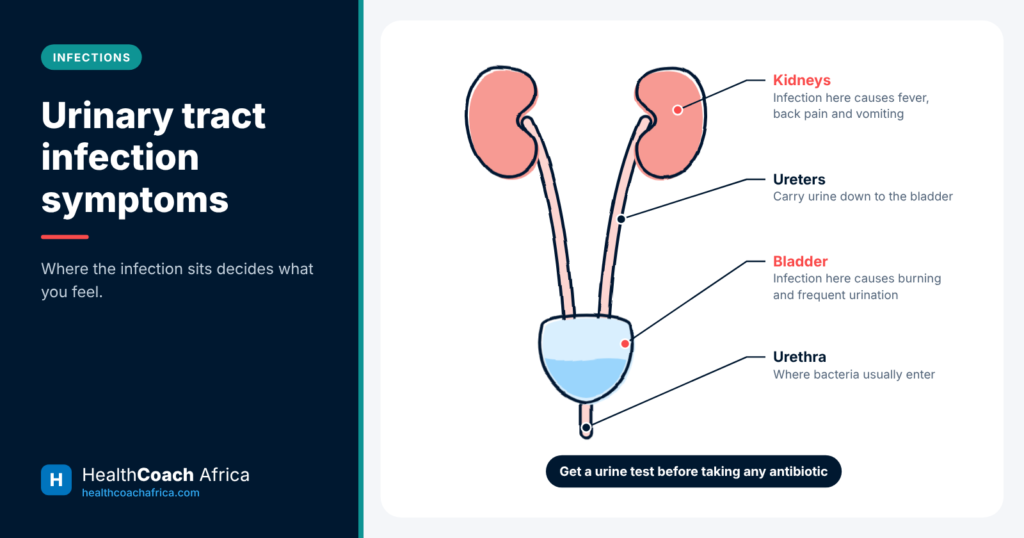
A bladder infection usually causes:
Burning or pain when passing urine
A frequent, urgent need to urinate, often passing only small amounts
Cloudy, strong-smelling or bloody urine
Pain or pressure in the lower abdomen
A feeling that the bladder is never empty
Symptoms often start suddenly and can worsen over a day or two.
If the infection reaches the kidneys, you may also notice fever and chills, pain in the side or back, and nausea or vomiting. In older adults, sudden confusion may be the only sign. In young children, look for fever, irritability, poor feeding or new bedwetting.
Lower and upper infections
Doctors divide UTIs into two types, and the difference matters. A lower UTI affects the bladder and urethra. It is uncomfortable but usually clears quickly with treatment.
An upper UTI affects the kidneys. It is more serious, because bacteria can pass from the kidneys into the bloodstream. Fever, shivering and pain in the side or back are the key urinary tract infection symptoms that point to the kidneys. Anyone with these signs needs medical care on the same day, and some people need treatment in hospital.
UTI or “toilet infection”?
In Nigeria, “toilet infection” is used loosely for vaginal itching, discharge and odour. However, those symptoms usually point to a vaginal infection, such as thrush or bacterial vaginosis, or to a sexually transmitted infection. They are not caught from toilet seats.
A UTI is different. It happens when bacteria, usually E. coli from the bowel, enter the urinary tract. Because the causes differ, the treatments differ too. That is why “flushing” products and broad antibiotic combinations sold for toilet infection so often fail. Some people have both problems at once, so describe all of your symptoms to the health worker.
Who is most at risk?
Women are affected far more often than men because the female urethra is short. In addition, the risk rises with:
Sexual activity
Pregnancy and menopause
Diabetes
Kidney stones or a urinary catheter
An enlarged prostate in men
Drinking too little water or holding urine for long periods
UTIs in pregnancy, men, children and older adults
Urinary tract infection symptoms differ between groups.
Pregnancy. Hormones slow the flow of urine, so infections are more common and more likely to reach the kidneys. For that reason, urine is checked at antenatal visits even when you feel well. Treatment uses antibiotics that are safe for the baby.
Men. UTIs are uncommon in younger men. When one occurs, the doctor looks for a cause, such as a sexually transmitted infection, a kidney stone or an enlarged prostate.
Children. A young child cannot describe burning. Instead, look for fever with no obvious source, vomiting, poor feeding or smelly urine. Children with a confirmed UTI may need a scan of the kidneys.
Older adults. Confusion, falls or new incontinence may be the only signs. However, bacteria in the urine without any symptoms are common in old age and usually do not need antibiotics.
How a UTI is diagnosed and treated
A simple urine test confirms the infection. For repeated or complicated infections, the laboratory also grows the bacteria to find out which antibiotic will work. Your doctor then prescribes a short course, usually three to seven days. Pregnant women are routinely tested, because an untreated infection can lead to early labour.
Symptoms should begin to improve within two days. Nevertheless, finish the whole course. Drink plenty of water, and take paracetamol if you need pain relief.
Do not treat yourself with leftover tablets or with whatever antibiotic the shop recommends. In Nigeria, many commonly sold antibiotics no longer work reliably against the bacteria that cause UTIs. As a result, guessing wastes money and allows the infection to worsen.
Why UTIs keep coming back
Some women have several infections a year. Common reasons include:
Stopping antibiotics early
Bacteria that are resistant to the medicine used
Sexual activity
Falling oestrogen levels after menopause
Diabetes that is not well controlled
Kidney stones, or a bladder that does not empty fully
A doctor can investigate with a urine culture and, if needed, a scan. Depending on the cause, solutions may include a longer or different antibiotic, a single preventive dose after sex or a vaginal oestrogen cream after menopause. Recurrent infections should therefore be assessed, not simply treated again and again.
Home remedies: what helps and what does not
Some home measures are useful, while others waste time.
Water helps. Drinking more dilutes the urine and flushes bacteria out.
Cranberry products may modestly reduce repeat infections in some women. However, they do not treat an active infection.
Sachets that reduce the acidity of urine can ease burning, but they do not kill bacteria.
Herbal “flushers”, potash and alum have no proven benefit, and some irritate the bladder or harm the kidneys.
Antibiotic injections given without a test expose you to risk and drive resistance.
Home care is reasonable for the first day of mild symptoms. If there is no improvement after that, get a urine test.
Is it a UTI or a sexually transmitted infection?
Not all urinary tract infection symptoms are caused by a UTI. Chlamydia and gonorrhoea cause the same feeling, often with a discharge from the penis or vagina. Suspect an STI if you have a new partner, if a partner has symptoms or if a standard UTI treatment does not work. In that case, both partners need testing and treatment at the same time.
When to see a doctor urgently
Not all urinary tract infection symptoms can wait. Seek care on the same day if you have:
Fever, shivering, back pain or vomiting
Blood in your urine
Symptoms during pregnancy
Symptoms and you are a man, or the patient is a child
Diabetes or a weak immune system
No improvement after two days of treatment
Furthermore, three or more infections in a year should be investigated.
Seven ways to prevent a UTI
Drink enough water to keep your urine pale yellow.
Do not hold urine for long periods.
Wipe from front to back after using the toilet.
Pass urine soon after sex.
Avoid douching and perfumed soaps or sprays.
Wear cotton underwear and change out of damp clothing quickly.
Keep your blood sugar under control if you have diabetes.
These habits will not prevent every infection, but they reduce how often it returns.
Frequently asked questions
Can a UTI clear on its own?
A very mild bladder infection sometimes does. However, waiting carries a risk of kidney infection, so see a health worker if symptoms last more than two days.
Can my partner give me a UTI?
A UTI is not passed on like an STI. However, sex can move bacteria towards the urethra, which is why passing urine afterwards helps.
How much water should I drink?
About two litres a day suits most adults, and more in hot weather. Pale yellow urine shows that you are drinking enough.
Do public toilets cause UTIs?
No. The bacteria come from your own body, not from the seat.
Should I have a urine test after treatment?
Not usually, if you feel well. A repeat test is advised in pregnancy and when symptoms continue.
In summary
Urinary tract infection symptoms are common, and they respond well to the right treatment. Test before you treat, complete the course and return if you are not better within two days. Finally, mention repeated infections to your doctor, because the cause can often be fixed.
Getting help
If you notice urinary tract infection symptoms, get a urine test before you take any antibiotic. HubPharm pharmacists can advise on testing, check that your prescription is appropriate and explain how to take it. To understand why this matters, read how the misuse of antibiotics fuels superbugs, or visit the NHS guide to urinary tract infections.
Please follow and like us:
Views:139
Related Posts:
Kidney Disease Warning Signs You Should Never Ignore Your kidneys filter your entire blood supply many times a day. They remove waste, balance fluid and help to control blood pressure. They can also lose most of their function before you feel anything. Community…
Lower Back Pain Relief: What Works and When to Worry Low back pain is the leading cause of disability worldwide. The World Health Organization estimates that it affected 619 million people in 2020, and almost everyone experiences it at least once. Market traders, drivers, office…
Prostate Cancer in Nigeria: Signs, Testing and Treatment Prostate cancer is the most common cancer among Nigerian men. Men of African descent develop it more often, at a younger age and in a more aggressive form than many other groups. Yet many men…
Chronic Pain Management in African Women: A… Chronic pain, characterized by persistent discomfort lasting for more than three to six months, is a global health challenge that affects millions of individuals. In the context of Africa, chronic pain poses unique considerations, and…