Neck pain is very common. Long hours on phones and laptops, poor sleeping positions, heavy loads carried on the head and long journeys in traffic all strain the neck. Most neck pain is not serious and improves within a few weeks. These neck pain relief tips will help you ease discomfort, prevent it returning and know when to see a doctor.
How the neck works
The neck, or cervical spine, is made up of seven small bones, called vertebrae, separated by discs that act as cushions. Muscles, ligaments and nerves surround them. The neck supports the weight of the head, which is about five kilograms, and allows it to move in many directions.
Common causes of neck pain
Poor posture, especially looking down at phones and laptops for long periods
Sleeping awkwardly, or on a pillow that is too high or too flat
Muscle strain from lifting, carrying loads or sudden movements
Stress, which tightens neck and shoulder muscles
Whiplash from road accidents, including motorcycle and car crashes
Wear and tear of the joints and discs with age
A trapped nerve, which can cause pain, tingling or weakness in the arm
Neck pain relief tips for drivers and commuters
Long hours in traffic strain the neck. Adjust the seat so you sit upright with your back supported. Set the headrest so its middle is level with the top of your ears. Keep both hands on the wheel at a comfortable height. Take short breaks on long journeys to stretch. Commercial drivers and okada riders are especially at risk. These neck pain relief tips help you arrive with less stiffness.
The phone and laptop problem
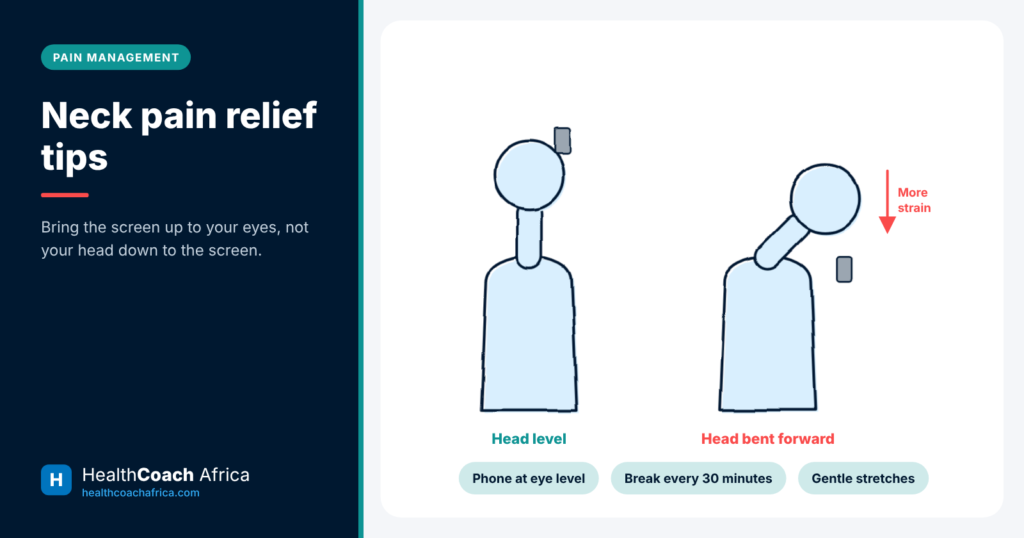
When you bend your head forward to look at a phone, the strain on your neck rises sharply. Holding this position for hours each day can lead to stiffness and pain, sometimes called “text neck”. Simple changes make a big difference:
Raise your phone to eye level rather than bending your head down
Place laptop screens at eye level, using a stand or books, with a separate keyboard if possible
Take a break every 30 minutes to move your neck and shoulders
Neck pain relief tips: keep moving
It may seem sensible to keep the neck still, but gentle movement helps recovery. Avoid neck collars unless a doctor recommends one. Continue normal activities as much as possible, and gradually increase movement as pain allows.
A two-minute desk routine
Every hour at your desk, try this:
Sit tall with your feet flat on the floor.
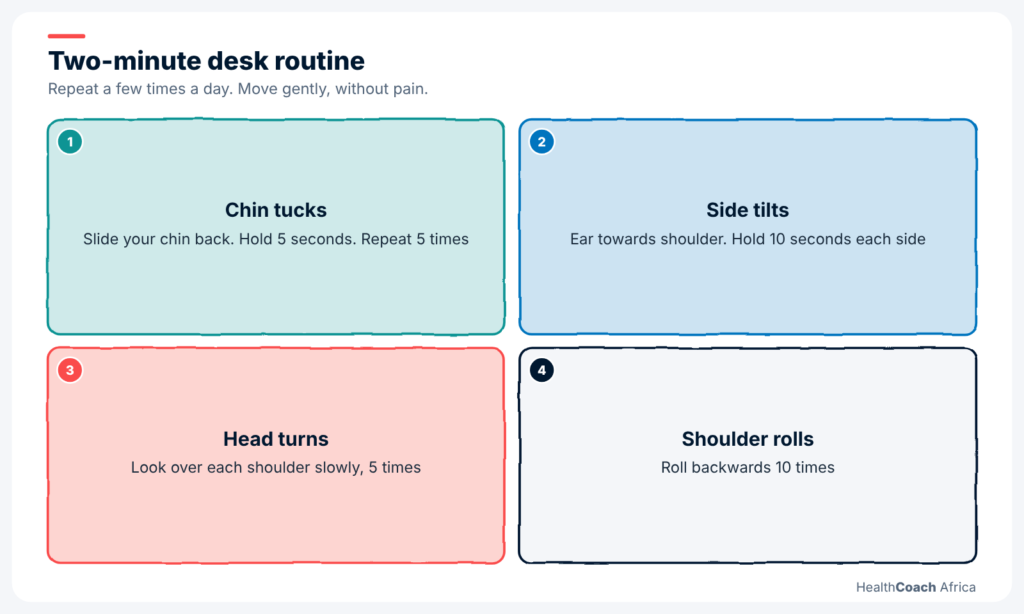
Do five slow chin tucks.
Tilt your head to each side, holding for ten seconds.
Roll your shoulders backwards ten times.
Squeeze your shoulder blades together five times.
Stand up and walk for a minute.
Short, regular movement breaks are among the most effective neck pain relief tips for office workers.
Two-minute desk routine with neck pain relief tips and gentle stretches
Stop any movement that causes sharp pain, tingling or dizziness.
Gentle neck exercises
Do these slowly, without forcing, several times a day:
Chin tucks: sit up straight and gently draw your chin back, as if making a double chin. Hold for five seconds and relax.
Side tilts: tilt your head towards one shoulder until you feel a gentle stretch. Hold for 10 seconds. Repeat on the other side.
Turns: slowly turn your head to look over one shoulder, then the other.
Shoulder rolls: roll your shoulders backwards in a circle ten times.
Shoulder blade squeeze: squeeze your shoulder blades together, hold for five seconds and release.
Stop if any exercise causes sharp pain, numbness or dizziness.
HUBPHARM PHARMACIST’S NOTE Anti-inflammatory gels 1 work best rubbed in three times a day for a week or more, not just once. Tablets are not always safe with blood pressure or stomach problems. Ask a HubPharm pharmacist which gel, heat pack or tablet is safest for you, and whether a cervical pillow might help your sleep.
Heat, cold and massage
A warm towel or hot water bottle wrapped in cloth can relax tight muscles. Some people find a cold pack helpful in the first day or two after a strain. Gentle massage can ease muscle tension. Avoid forceful manipulation by untrained practitioners, which can cause injury.
Stress and neck pain
Stress makes the muscles of the neck and shoulders tense up. Many people carry tension without noticing. Slow breathing, regular exercise and enough sleep can reduce this tension. If your neck pain is worse during stressful times, managing stress is part of the treatment.
Sleeping well
Use a pillow that keeps your neck in line with your spine, not too high or too flat
Sleep on your back or side rather than your stomach
Avoid falling asleep sitting up in a chair or vehicle with your head dropped forward
Safe use of painkillers
For short-term relief:
Paracetamol at 2 the recommended dose
Anti-inflammatory gels, such as ibuprofen or diclofenac gel, rubbed into the painful area
Anti-inflammatory tablets, such as ibuprofen, for a few days if they are safe for you
Avoid buying strong painkillers or injections without a prescription. Ask a pharmacist which option is safest with your other medicines.
How long does neck pain last?
Most episodes of neck pain improve within a few days to a few weeks. Pain that lasts longer than three months is called chronic neck pain. It may need a longer plan, including physiotherapy, regular exercise and help with stress or sleep. Avoid relying on painkillers alone.
Choosing a pillow
A good pillow fills the gap between your neck and the mattress, keeping your head level. Side sleepers usually need a firmer, higher pillow than back sleepers. Replace flattened pillows. A rolled towel inside the pillowcase can add neck support.
Physiotherapy
If neck pain does not improve within a few weeks, a physiotherapist can assess your posture, movement and strength. They will design an exercise programme for you and may use hands-on treatment. Regular exercises at home are the most important part of recovery.
Myths about neck pain
“Cracking your neck fixes it.” Forceful twisting can strain the neck and, rarely, damage blood vessels.
“Rest is best.” Gentle movement helps recovery more than keeping still.
“A neck collar is always needed.” Collars are only for specific injuries.
Neck pain relief tips: a quick summary
Keep moving gently
Raise screens to eye level
Do short neck exercises several times a day
Use heat for tight muscles
Choose the right pillow
Use painkillers safely for short periods
See a doctor for warning signs
Following these neck pain relief tips helps most people recover and stay pain-free.
Carrying loads
Carrying heavy loads on the head is common in Nigeria. It can strain the neck over time. Where possible, use a trolley or wheelbarrow, split loads into smaller amounts, and keep your back straight. Use a padded head ring to spread the weight.
Warning signs that need a doctor
See a doctor promptly if you have:
Neck pain after a fall or road accident
Numbness, tingling or weakness in the arms or legs
Difficulty walking or loss of balance
Loss of control of your bladder or bowels
Fever, a severe headache or a stiff neck that makes it hard to bend your chin to your chest
Unexplained weight loss
Pain that is getting worse or has not improved after a few weeks
A stiff neck with fever and headache can be a sign of meningitis, which is an emergency.
Neck pain in older adults
Wear and tear in the neck is common with age and can cause stiffness. Gentle daily movement keeps the neck flexible. Tingling or weakness in the arms needs a doctor’s review. These neck pain relief tips suit older adults too.
Rubbed into the painful area. Fewer side effects than tablets.
2
Paracetamol
Over the counter
For short-term pain relief at the recommended dose.
To order any of these, or to ask a pharmacist a question first, message HubPharm on WhatsApp or visit hubpharmafrica.com. Prescription medicines are supplied against a valid prescription.
Breaking the Myths: Debunking Common Misconceptions… On this World Spine Day, let's debunk some of the most common myths regarding spinal health and embrace the facts about this vital part of our anatomy. World Spine Day is celebrated every year on…
World Spine Day 2023: 10 Essential Tips for a… The spine, that crucial pillar of the human body, serves as the ultimate support structure, allowing us to stand upright and maintain our posture. Beyond its role in maintaining our physical form, it safeguards the…
Lower Back Pain Relief: What Works and When to Worry Low back pain is the leading cause of disability worldwide. The World Health Organization estimates that it affected 619 million people in 2020, and almost everyone experiences it at least once. Market traders, drivers, office…
Get Moving: World Spine Day 2023 Encourages Better… On World Spine Day 2023, people from all corners of the globe are coming together to promote better spinal health through the "Move Your Spine" campaign. This initiative aims to raise awareness about the importance…