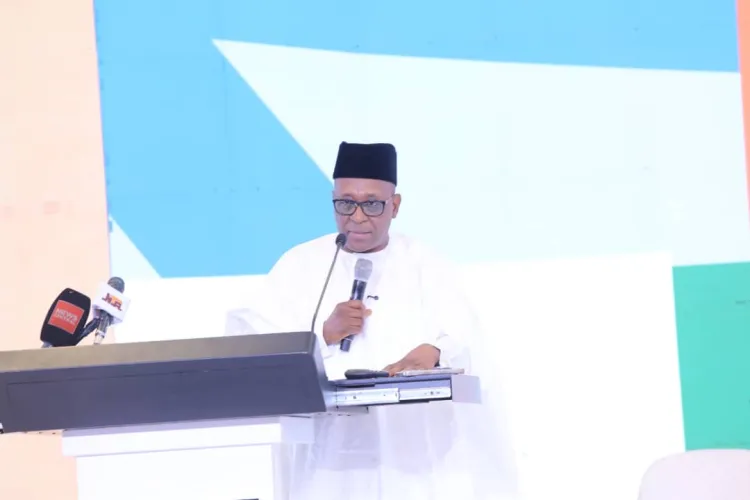
ABUJA, NIGERIA — Nigeria’s free caesarean section programme has delivered 80,906 free operations, and deaths from obstetric emergencies have fallen by 22 per cent in participating facilities, Coordinating Minister of Health and Social Welfare Muhammad Pate said, Premium Times reported on 10 November.
“Two years after we announced the free emergency obstetric care programme, almost 100,000 services have been delivered,” Pate said at the 2026 Nigeria Health Sector Joint Annual Review in Abuja. “Deaths from obstetric emergencies have fallen by 22 per cent in participating facilities.”
How the free caesarean section programme has grown
In addition to the caesarean sections, the programme has provided about 9,100 newborn services and 6,059 repairs of vesicovaginal fistula, an injury from obstructed labour that leaves women leaking urine, according to the report. More than 300 secondary facilities and over 500 PHCs have received equipment.
The federal government announced free caesarean sections for eligible pregnant women in November 2024, after a pilot began in August 2024 in four facilities in Kano and Akwa Ibom states. The National Health Insurance Authority (NHIA) said the intervention started in over 100 hospitals across the six geopolitical zones, and eligible women are assessed by hospital social welfare teams and must provide a National Identification Number.
Speaking at a maternal health panel during the same review, NHIA Director-General Dr Kelechi Ohiri said emergency obstetric and newborn care facilities have grown from 4 to 272, and users of emergency obstetric services rose from 19,270 at the 2025 launch to about 53,000 by October 2026, the News Agency of Nigeria reported. “Save their lives first,” Ohiri said.
Getting women to care
Under the Maternal and Newborn Mortality Reduction Innovation Initiative (MAMII), 750,000 pregnant women have been mapped and linked to functional facilities, and emergency transport operated in 171 of 172 covered local government areas, carrying 104,566 women and newborns, Pate said. A wider referral network of 1,053 transport assets and 9,050 community drivers has moved 168,571 patients.
“These arrangements are connecting women and newborns to the care they need,” he said. In September 2026, the government introduced maternal and newborn care incentives under MAMII to encourage women to use services.
Health experts say the free caesarean section programme is most effective when combined with transport, because many women die not in hospital but on the way, after long delays in deciding to seek care and in finding a vehicle. The MAMII transport network is intended to close that gap.
Community drivers, often local transport operators who are paid or reimbursed to carry pregnant women, have been used successfully in several Nigerian states and in other African countries.
The skilled worker gap
Muntaqa Umar-Sadiq, National Coordinator of the Sector-Wide Approach Coordination Office, said shortages of skilled health workers and gaps in Comprehensive Emergency Obstetric and Newborn Care (CEmONC) services remain. Investments in CEmONC facilities “must be matched with adequate numbers of skilled health workers,” he said.
“The facilities, staff and referral services must work together if we are to reduce preventable deaths,” Pate said.
Why caesarean access matters
A caesarean section can save the lives of mothers and babies when labour is obstructed, the baby is in distress, the placenta is in the wrong position or the mother has severe high blood pressure. Cost has long been a barrier in Nigeria, where families often have to pay before surgery, leading to dangerous delays.
Caesarean sections are major operations that need safe anaesthesia, blood for transfusion, sterile theatres and follow-up care. Overuse carries risks too, so the procedure should be done when medically needed.
Vesicovaginal fistula, which the programme has repaired in more than 6,000 women, is a devastating consequence of prolonged obstructed labour without timely caesarean section. Women with fistula often leak urine continuously, face stigma and may be abandoned by families. Timely access to emergency obstetric care prevents most cases.
Nigeria has one of the world’s highest maternal death rates, and UN Women said last week that the country accounts for about a quarter of global maternal deaths. The free caesarean section programme is one of the government’s main efforts to change that, and its expansion will depend on funding, staff and whether women in rural areas can reach participating hospitals in time.
Women and families can ask at their nearest primary health centre or general hospital whether it participates in the free caesarean section programme and what documents are needed, including a National Identification Number.
Why it matters: Removing the cost of emergency caesareans saves mothers and babies who might otherwise die waiting for families to raise money.
Nigeria Targets 90% Functional Health Centres and… ABUJA, NIGERIA — Nigeria aims to make at least 90 per cent of its primary health care centres (PHCs) functional and cover 40 per cent of Nigerians with health insurance by 2031, Minister of State…
Nigeria’s Under-Five Deaths Fall 17 Per Cent but… ABUJA, NIGERIA — Nigeria’s under-five mortality rate fell by about 17 per cent between 2018 and 2024, but neonatal deaths in Nigeria rose over the same period, the federal health ministry said at the 2026…
Nigeria Has Released N422.3bn for Basic Health Care… ABUJA, NIGERIA — Nigeria has released about N422.3 billion through the Basic Health Care Provision Fund (BHCPF) since 2019, including N249.5 billion disbursed under the current administration, Coordinating Minister of Health and Social Welfare Muhammad Pate…
Nigeria Says It Disbursed ₦249.6 Billion Health Fund… ABUJA, NIGERIA — Nigeria says it has disbursed ₦249.6 billion in primary health care funding through the Basic Health Care Provision Fund (BHCPF) over the past three years, and aims to extend direct financing to…