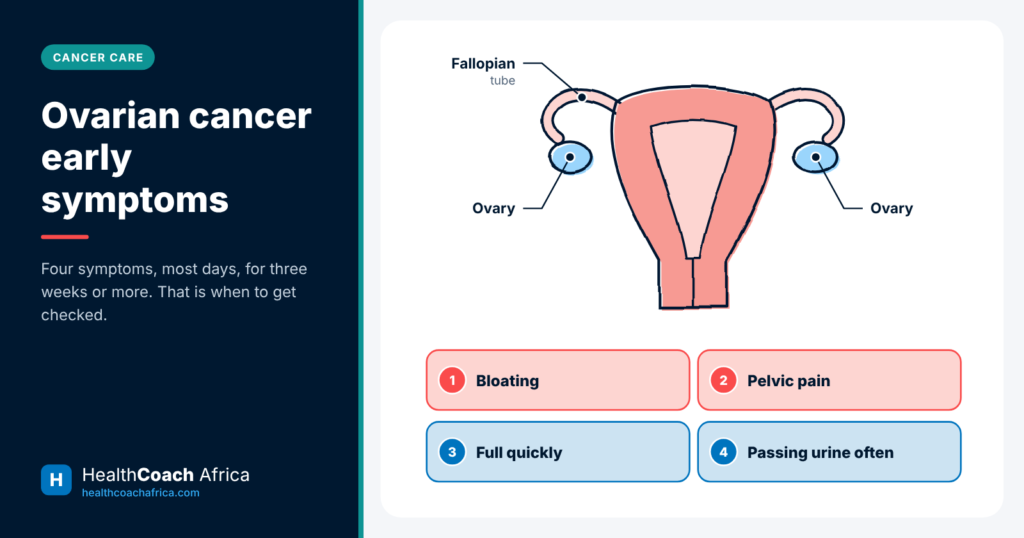
Ovarian cancer has been called a “silent” disease, but that is not quite true. Most women do have symptoms. The problem is that ovarian cancer early symptoms feel like everyday complaints, such as bloating, mild belly pain or needing to pass urine often. Many women, and some health workers, blame these on food, stress or fibroids. This guide explains the signs to watch for, who is at higher risk and how to get checked quickly.
What is ovarian cancer?
The ovaries are two small organs on either side of the womb. They store eggs and produce the hormones oestrogen and progesterone. Ovarian cancer starts when cells in or near the ovaries grow out of control. Many ovarian cancers actually begin in the fallopian tubes before spreading to the ovary.
There are several types. The most common type begins in the outer layer of cells. Other types start in the egg-producing cells or in the hormone-producing tissue. These rarer types are more common in younger women.
The four main ovarian cancer early symptoms
Doctors pay special attention to four symptoms. Each is common on its own. What matters is when they are persistent, meaning most days, and new for you:
Persistent bloating or a swollen belly that does not come and go
Pain or discomfort in the lower belly or pelvis
Feeling full quickly or losing your appetite
Needing to pass urine more often or more urgently than usual
These are the classic ovarian cancer early symptoms. If you notice any of them on most days for three weeks or more, see a doctor.
Other symptoms
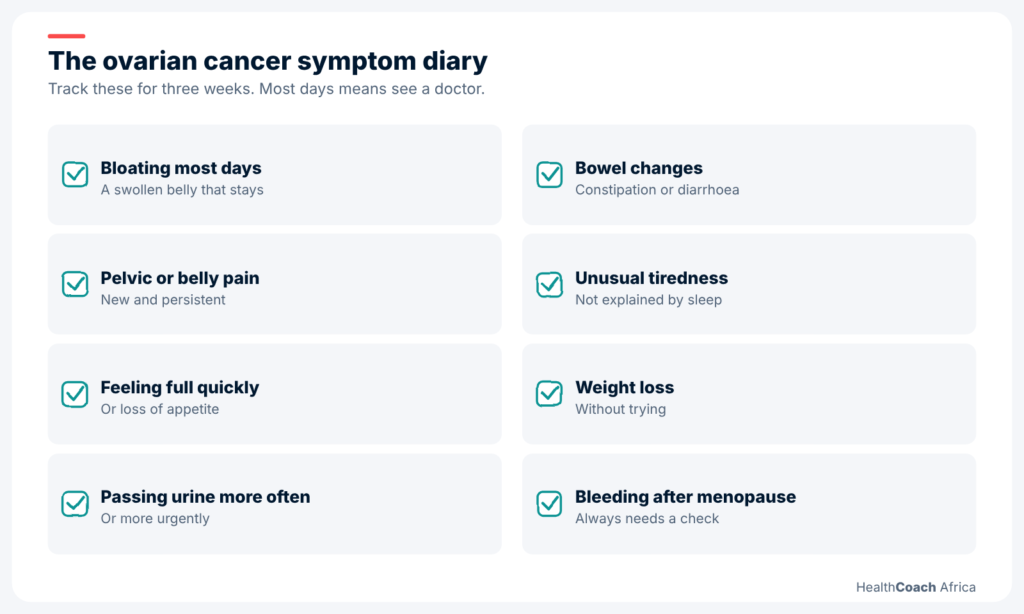
Symptom diary checklist to help women track ovarian cancer early symptoms for three weeks
A simple diary helps your doctor see the pattern and choose the right tests.
Some women also notice:
Changes in bowel habit, such as constipation or diarrhoea
Indigestion that will not settle
Back pain
Unexplained tiredness
Unexplained weight loss
Bleeding after menopause or between periods
Pain during sex
Keep a symptom diary for two to three weeks. Note how often each symptom occurs. A diary helps your doctor see a pattern and decide which tests you need.
Who is at higher risk?
Ovarian cancer can affect women of any age, but most cases occur after menopause. Your risk is higher if you:
Are over 50
Have a mother, sister or daughter who had ovarian or breast cancer
Carry a change in the BRCA1 or BRCA2 genes
Have endometriosis
Have never been pregnant
Started periods early or reached menopause late
Are overweight
Smoke
Some factors lower the risk. These include pregnancy, breastfeeding and using the combined contraceptive pill1 for several years. Having your fallopian tubes tied or removed also lowers the risk.
Ovarian cancer early symptoms or fibroids?
Fibroids are very common in Nigerian women and can also cause bloating, pelvic pain and frequent urination. Because of this, ovarian cancer early symptoms are sometimes blamed on fibroids without further checks. The two conditions can even exist together. If you have known fibroids but notice new symptoms, worsening bloating or weight loss, ask for a fresh scan. Do not assume that every new symptom comes from fibroids found years ago.
Why ovarian cancer is often found late
There is no reliable screening test for ovarian cancer in women without symptoms. A Pap smear checks the cervix, not the ovaries, so it cannot detect ovarian cancer. This surprises many women.
In addition, ovarian cancer early symptoms overlap with common conditions such as fibroids, irritable bowel syndrome and urinary infections. Women may be treated for these conditions several times before anyone looks at the ovaries. If symptoms persist after treatment, ask your doctor directly whether ovarian cancer has been ruled out.
HUBPHARM PHARMACIST’S NOTE
Women with ovarian cancer are often treated several times for ulcers, infections or fibroids before anyone checks the ovaries. Message a HubPharm pharmacist if you have been given repeated courses of medicine for bloating or pelvic pain that keeps coming back. We will review what you have taken, help you prepare a short symptom summary for your doctor and point you to where a CA125 test and pelvic ultrasound can be done. During treatment, we also supply anti-sickness medicines and nutrition drinks, and we check every new prescription for interactions.
How ovarian cancer is diagnosed
If your doctor is concerned, the first tests are usually:
Pelvic examination to feel for a lump or swelling.
CA125 blood test, which measures a protein that may be raised in ovarian cancer.
Pelvic ultrasound, often through the vagina, to look closely at the ovaries.
CT scan to check whether anything has spread, if the first tests are abnormal.
Biopsy or surgery to confirm the diagnosis.
A raised CA125 does not always mean cancer. It can also rise with fibroids, endometriosis, pregnancy and pelvic infection. That is why doctors use it together with an ultrasound scan.
Treatment options
Treatment depends on the type and stage of cancer. It usually involves a team of specialists.
Surgery is the main treatment. Surgeons aim to remove all visible cancer. This often means removing the ovaries, fallopian tubes and womb.
Chemotherapy is usually given after surgery2, and sometimes before it to shrink the tumour.
Targeted medicines may be used for some women, especially those with BRCA gene changes.
Fertility-sparing surgery may be possible for some younger women with early cancer.
Treatment can be demanding. Good nutrition, support from family and clear information help women cope. Ask your team about side effects and how to manage them at home.
Family history and genetic risk
If several women in your family have had breast or ovarian cancer, talk to your doctor. Genetic counselling and BRCA testing are becoming more available in Nigeria, mostly in teaching hospitals and private centres. Women with a BRCA gene change may be offered closer monitoring or surgery to remove the tubes and ovaries once they have finished having children.
Share your family history with your daughters and sisters too. Knowing their risk helps them act early.
Ovarian cancer early symptoms: myths and facts
“A normal Pap smear means my ovaries are fine.” A Pap smear only checks the cervix.
“Bloating is always caused by food.” Bloating on most days for weeks needs a check.
“Only older women get ovarian cancer.” It is more common after menopause, but younger women can be affected.
“Ovarian cysts are cancer.” Most ovarian cysts are harmless and go away on their own.
Life after treatment
After treatment ends, you will have regular follow-up visits. These usually include a check of your symptoms, an examination and sometimes a CA125 blood test or scan. Report new bloating, pain or changes in bowel habit between visits. Many women also need support with early menopause after surgery, as well as with tiredness and emotional recovery. Support groups, faith communities and counselling can help you adjust. Ask your team about safe exercise and a healthy diet to build strength.
Supporting a woman with ovarian cancer
Family members can help in practical ways. Accompany her to appointments and help her keep track of medicines. Cook light, nutritious meals and allow her to rest. Listen without judging. Encourage her sisters and daughters to learn about their own risk, especially if a gene change is found.
What you can do today
Learn the four main ovarian cancer early symptoms
Keep a diary if you have bloating or pelvic pain
Ask your mother and aunts about family history of breast and ovarian cancer
See a doctor if symptoms last three weeks or more
Ask for a CA125 test and pelvic ultrasound if your doctor agrees it is needed
Do not accept repeated treatment for the same symptoms without further tests
Long-term use lowers ovarian cancer risk. Check suitability with a health worker.
2
Chemotherapy support medicines
Prescription only
Anti-sickness tablets and other medicines prescribed by your cancer team.
To order any of these, or to ask a pharmacist a question first, message HubPharm on WhatsApp or visit hubpharmafrica.com. Prescription medicines are supplied against a valid prescription.
Fibroids and Getting Pregnant: How Fibroids Affect Fertility Fibroids are very common among Nigerian women. Many women only learn they have them during a scan for another reason, or when they struggle to conceive. Some are told that fibroids will stop them from…
Uterine Fibroids and Fertility: What Every Woman Should Know Fibroids are non-cancerous growths in the muscle of the womb, and they are very common. By the age of 50, most women will have developed at least one. Black women tend to get them earlier,…
Period Pain Relief Tips for Every Woman and Girl Most women and girls experience some pain during their periods. For many, it is a mild ache. For others, it is severe enough to cause vomiting, fainting or days off school and work. Too often,…
Endometriosis and Getting Pregnant: What Women Need to Know Endometriosis is a common condition that causes painful periods, pelvic pain and, for some women, difficulty conceiving. Many women in Nigeria live with symptoms for years before diagnosis, because severe period pain is often dismissed…