Fibroids are very common among Nigerian women. Many women only learn they have them during a scan for another reason, or when they struggle to conceive. Some are told that fibroids will stop them from ever having a baby. This is rarely true. Many women with fibroids conceive naturally and have healthy pregnancies. However, some fibroids do affect fertility and need treatment. This guide explains the link between fibroids and getting pregnant, which fibroids matter most and the treatment options available.
What are fibroids?
Fibroids are non-cancerous growths of muscle and fibrous tissue in or around the womb. They can be as small as a seed or as large as a melon. A woman may have one fibroid or many.
They are more common in women of African descent and tend to appear at a younger age and grow larger. Fibroids depend on the hormones oestrogen and progesterone, so they often grow during the reproductive years and shrink after menopause.
Why fibroids are common in Nigerian women
Research shows that women of African descent are more likely to develop fibroids, often at a younger age and with larger or more numerous growths. Family history, early periods, obesity, high blood pressure and low vitamin D levels may increase the risk. Many Nigerian women delay pregnancy for education and work, and fibroids can grow in the meantime. Knowing this helps women plan, discuss fibroids and getting pregnant with a doctor early, and seek checks if symptoms appear.
Types of fibroids
Fibroids are described by where they grow:
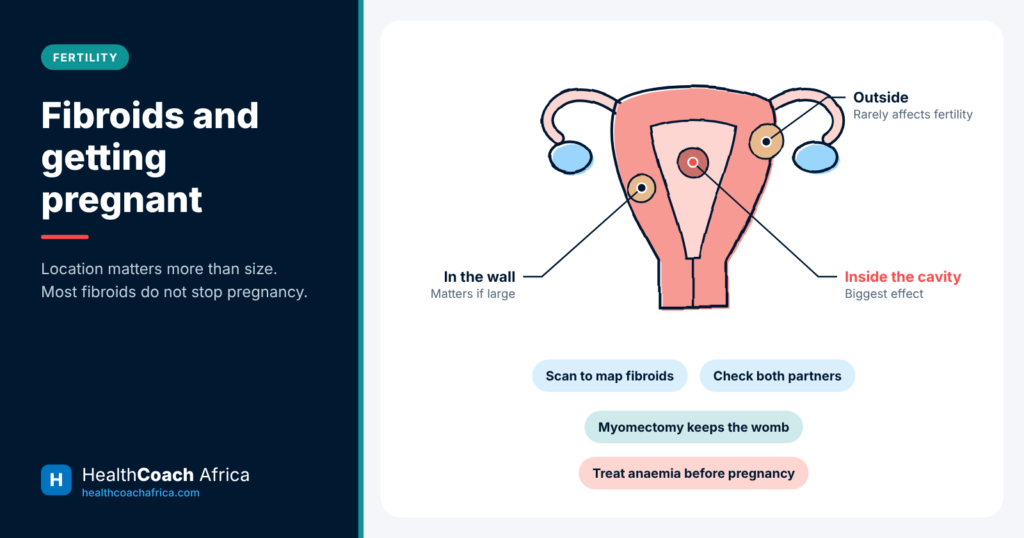
Submucosal fibroids grow into the cavity of the womb, where a pregnancy implants.
Intramural fibroids grow within the muscle wall of the womb.
Subserosal fibroids grow on the outer surface of the womb.
Pedunculated fibroids hang from the womb on a stalk.
The location matters more than the size when it comes to fertility.
Symptoms
Many women have no symptoms. Others notice:
Heavy or long periods
Anaemia from blood loss, causing tiredness and breathlessness
Pelvic pain or pressure
A swollen belly
Frequent urination
Constipation
Pain during sex
How fibroids affect fertility
The link between fibroids and getting pregnant depends mainly on location:
Submucosal fibroids are most likely to reduce fertility. They can change the shape of the womb lining, making it harder for an embryo to implant, and increase the risk of miscarriage.
Large intramural fibroids may affect fertility if they distort the cavity or affect blood flow to the lining.
Subserosal fibroids usually have little effect on fertility.
Fibroids near the fallopian tubes or cervix can occasionally block the path of sperm or eggs.
Most women with small fibroids outside the cavity can conceive without treatment.
Fibroids and getting pregnant: the tests
If you are trying to conceive and have fibroids, your doctor may recommend:
Pelvic ultrasound, often through the vagina, to map the fibroids
Saline sonography or hysteroscopy, to see whether fibroids distort the cavity
MRI, in some cases, to plan surgery
Full fertility tests for both partners, because fibroids may not be the only factor
It is important to check other causes of infertility, such as ovulation problems, blocked tubes and sperm quality, before blaming fibroids.
HUBPHARM PHARMACIST’S NOTE
Heavy bleeding from fibroids leaves many women anaemic before surgery or pregnancy, and some take herbal fibroid mixtures that can harm the liver and kidneys. Message a HubPharm pharmacist before you start any fibroid product. We will review it with you, suggest iron supplements if your doctor agrees and supply folic acid for pregnancy planning. If you are having a myomectomy, we will also help you prepare your medicines for before and after surgery.
Treatment options when planning pregnancy
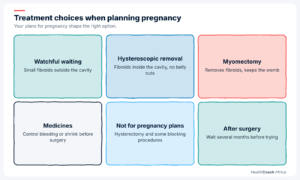
Treatment options for fibroids and getting pregnant, comparing womb-sparing and other procedures
Tell your gynaecologist clearly that you want to keep your fertility.
Treatment depends on the type, size and number of fibroids, your symptoms and your plans for pregnancy:
Watchful waiting for small fibroids that do not affect the cavity
Hysteroscopic myomectomy, removing submucosal fibroids through the vagina and cervix without cuts on the belly
Myomectomy by open or keyhole surgery, removing fibroids from the wall or outside of the womb while keeping the womb
Medicines to control heavy bleeding1 or shrink fibroids before surgery
Some treatments, such as hysterectomy and certain procedures that block blood supply to fibroids, are usually not recommended for women who want to become pregnant. Discuss your plans clearly with your gynaecologist.
Fibroids and getting pregnant after 35
Fertility naturally falls with age, especially after 35. When fibroids are also present, timing matters. Waiting several months after surgery, then trying to conceive, can feel like lost time. Your doctor may suggest fertility tests before surgery, or a fertility treatment plan soon afterwards. Some women choose to freeze eggs or embryos before major surgery. Discuss your age, your fibroids and your plans together.
After myomectomy
After myomectomy, doctors usually advise waiting several months before trying to conceive, to let the womb heal. If the surgery involved deep cuts into the womb wall, a caesarean section may be recommended for delivery, to reduce the risk of the womb tearing during labour. Ask your surgeon for written details of the operation to share with your antenatal team.
Pregnancy with fibroids
Many women have healthy pregnancies with fibroids. Some fibroids grow in the first trimester. Possible problems include:
Pain, especially if a fibroid outgrows its blood supply
A higher chance of miscarriage with submucosal fibroids
Premature labour
The baby lying in an unusual position
A higher chance of caesarean section
Heavier bleeding after birth
Book antenatal care early and tell your team about your fibroids. Pain from fibroids in pregnancy is usually managed with rest and paracetamol. Avoid anti-inflammatory painkillers in pregnancy unless advised.
Anaemia and fibroids
Heavy periods from fibroids often cause iron deficiency anaemia. Treating anaemia before pregnancy is important for your health and your baby’s. Eat iron-rich foods such as beans, green leafy vegetables, eggs and meat. Your doctor may prescribe iron tablets2 or other treatment.
Questions to ask your gynaecologist
Where exactly are my fibroids, and how big are they?
Do any of them affect the womb cavity?
Do I need treatment before trying for a baby?
What are the risks of surgery to my fertility?
How long should I wait after surgery before trying?
Will I need a caesarean section in future?
Writing down the answers helps you understand your fibroids and getting pregnant plan and share it with your partner.
Choosing a surgeon
Myomectomy is a skilled operation, especially when fibroids are large or numerous. Ask about the surgeon’s experience, the type of operation recommended and the plan to reduce blood loss. Ask how your blood count will be prepared before surgery. A well-planned operation protects your womb for future pregnancy.
Myths about fibroids and getting pregnant
“Women with fibroids cannot get pregnant.” Many women with fibroids conceive and deliver healthy babies.
“All fibroids must be removed before trying.” Only some fibroids need treatment.
“Herbal mixtures dissolve fibroids.” No herbal product has been proven to dissolve fibroids, and some may harm the liver or kidneys.
“Fibroids are caused by sleeping with men or a curse.” Fibroids are linked to hormones and genetics.
Support from your partner
Fibroid treatment and fertility planning are decisions for both partners. Attend key appointments together and share the plan.
Keep your scan reports
Keep copies of every scan report. Comparing reports shows whether your fibroids are growing and helps your doctor plan treatment.
Getting help
Understanding the link between fibroids and getting pregnant helps you make informed choices with your doctor. The NHS guide to fibroids has more information, and our health conditions articles cover fertility and women’s health. For iron supplements, folic acid or pain relief that is safe while trying to conceive, message a HubPharm pharmacist or chat with Afiya on WhatsApp.
Medicines and products in this article
#
Medicine or product
What to know
1
Tranexamic acid
Prescription only
Reduces heavy menstrual bleeding.
2
Iron supplements
Pharmacy or prescription
Treat anaemia from heavy periods.
To order any of these, or to ask a pharmacist a question first, message HubPharm on WhatsApp or visit hubpharmafrica.com. Prescription medicines are supplied against a valid prescription.
Uterine Fibroids and Fertility: What Every Woman Should Know Fibroids are non-cancerous growths in the muscle of the womb, and they are very common. By the age of 50, most women will have developed at least one. Black women tend to get them earlier,…
Endometriosis and Getting Pregnant: What Women Need to Know Endometriosis is a common condition that causes painful periods, pelvic pain and, for some women, difficulty conceiving. Many women in Nigeria live with symptoms for years before diagnosis, because severe period pain is often dismissed…
Getting Pregnant After 35: What You Need to Know More women are having children later in life, after completing their education, building careers or finding the right partner. Getting pregnant after 35 is very common, and many women have healthy pregnancies and babies. However,…
Blocked Fallopian Tubes Treatment: Your Options Explained Blocked fallopian tubes are one of the most common causes of female infertility in Nigeria and across sub-Saharan Africa. Many women do not know their tubes are damaged until they struggle to conceive. The tubes…