Blocked fallopian tubes are one of the most common causes of female infertility in Nigeria and across sub-Saharan Africa. Many women do not know their tubes are damaged until they struggle to conceive. The tubes are where the egg and sperm meet, so a blockage can prevent pregnancy. This guide explains the causes, the tests and the options for blocked fallopian tubes treatment.
What the fallopian tubes do
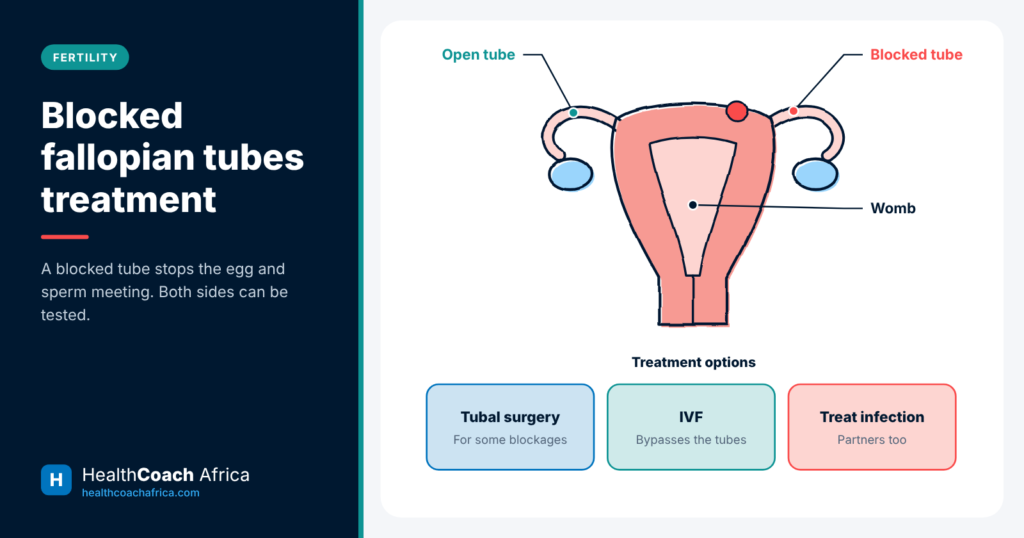
There are two fallopian tubes, one on each side of the womb. Each month, an egg is released from an ovary and picked up by the fringed end of a tube. Sperm swim up through the womb into the tube, where fertilisation usually takes place. The fertilised egg then travels down the tube into the womb, where it implants.
If a tube is blocked or damaged, the sperm and egg may not meet, or the fertilised egg may not reach the womb.
Common causes in Nigeria
The main causes of tubal damage include:
Pelvic inflammatory disease 1 , usually caused by untreated sexually transmitted infections such as chlamydia and gonorrhoea
Infection after childbirth, miscarriage or unsafe abortion
Previous pelvic or abdominal surgery, such as surgery for a ruptured appendix or ectopic pregnancy
Endometriosis
Tuberculosis affecting the pelvis
The World Health Organization notes that preventable infections are a major cause of infertility worldwide.
Blocked fallopian tubes treatment: why both partners need tests
Before deciding on blocked fallopian tubes treatment, both partners should be assessed. A semen analysis checks the male partner’s fertility. If there are male fertility problems as well, IVF with a technique called ICSI may be the best approach. Hormone and ovulation tests check the woman’s egg reserve and cycle. Testing both partners avoids wasted time and money on treatments that cannot work.
Symptoms
Blocked tubes usually cause no symptoms. Some women have a history of pelvic pain, painful periods, painful sex or unusual discharge from past infections. A fluid-filled, blocked tube, called a hydrosalpinx, can sometimes cause pelvic pain.
HUBPHARM PHARMACIST’S NOTE An HSG is usually booked between the end of your period and ovulation, and some clinics give antibiotics or advise a painkiller an hour before. Message a HubPharm pharmacist with your appointment date. We will tell you what to take beforehand, and arrange STI tests for you and your partner if they have not been done.
Tests for tubal blockage
Your doctor may recommend:
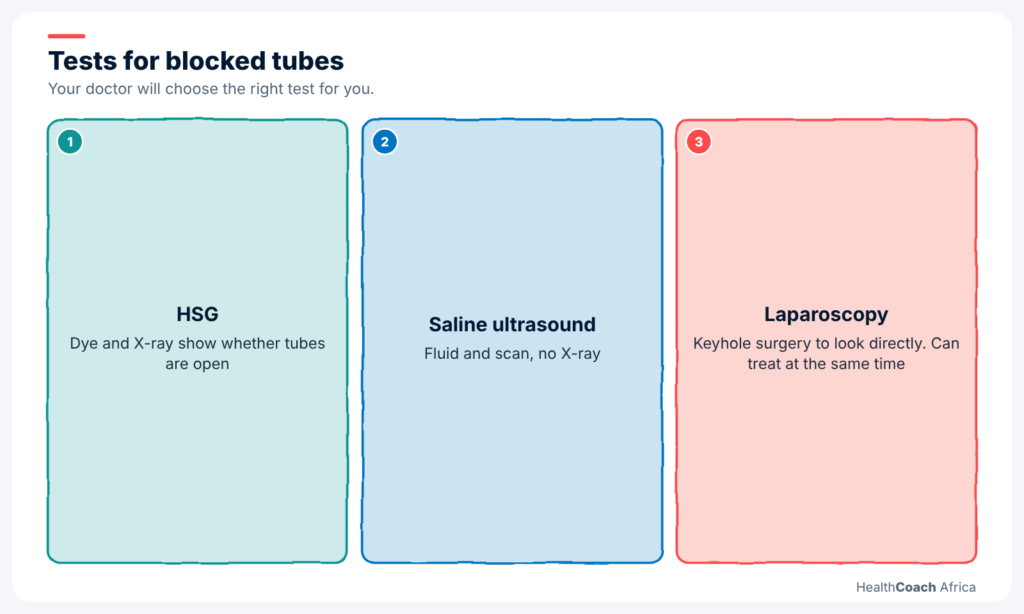
Hysterosalpingogram (HSG): a special X-ray. Dye is passed through the cervix into the womb and tubes. If the dye spills out of the ends of the tubes, they are open.
Hysterosalpingo-contrast sonography: a similar test using ultrasound instead of X-ray
Laparoscopy with dye test: a keyhole operation that allows the surgeon to see the tubes directly and test whether they are open
An HSG is usually done after a period and before ovulation. Mild cramping 2 during the test is common.
Three tests used before blocked fallopian tubes treatment: HSG, saline ultrasound and laparoscopy
Tests are usually done after your period and before ovulation.
Blocked fallopian tubes treatment options
The best approach depends on where the blockage is, how damaged the tubes are, the woman’s age and any other fertility factors.
Choosing between surgery and IVF
The choice between surgery and IVF depends on several factors:
Location and severity of the blockage: small blockages near the womb may respond to surgery, while extensive damage usually needs IVF
Age: older women often benefit from going straight to IVF, because time is important
Other fertility factors: male factor problems or low egg reserve favour IVF
Cost and access: surgery may be cheaper upfront, but IVF may offer a higher chance per attempt
Plans for more children: successful surgery may allow several natural pregnancies
Discuss these factors openly with a fertility specialist. Ask about success rates for each option in women of your age.
Option 1: tubal surgery
In some cases, surgery can open or repair the tubes. This may be suitable when:
The blockage is near the womb and can be cleared
Only a small section of tube is damaged
The woman is younger and has no other major fertility problems
However, tubes that have been badly damaged by infection often do not function well even after surgery. Surgery also increases the risk of ectopic pregnancy.
Option 2: IVF
In vitro fertilisation bypasses the tubes completely. Eggs are collected from the ovaries, fertilised in the laboratory and placed directly into the womb. For many women with blocked or badly damaged tubes, IVF offers the highest chance of pregnancy. It is the main blocked fallopian tubes treatment recommended by many specialists.
Hydrosalpinx and IVF
A hydrosalpinx is a blocked tube filled with fluid. This fluid can leak into the womb and lower IVF success rates. Doctors often recommend removing or blocking the affected tube before IVF to improve the chances of pregnancy.
Blocked fallopian tubes treatment: what to expect after surgery
After tubal surgery, you may be advised to start trying for a pregnancy once you recover. If you do not conceive within about a year, IVF is usually the next step. Attend follow-up visits and report any pelvic pain or abnormal bleeding promptly. Remember the higher risk of ectopic pregnancy and seek an early scan if your period is late.
Emotional support
Learning that your tubes are blocked can be devastating, especially if the damage resulted from an infection you did not know you had. Feelings of guilt, anger or sadness are common. Couples counselling and support groups can help. Remember that blocked tubes are a medical condition, and effective treatment exists.
Ectopic pregnancy risk
Women with damaged tubes are at higher risk of ectopic pregnancy, where a pregnancy implants in the tube. This is a medical emergency. If you have had tubal damage and become pregnant, have an early scan. Seek urgent care for one-sided pelvic pain, shoulder tip pain, fainting or vaginal bleeding in early pregnancy.
Costs and planning
Fertility tests and treatments can be expensive. Ask for a written estimate for each step, including tests, surgery, medicines and IVF. Find out what your health insurance or HMO covers. Some clinics offer payment plans. Planning ahead helps you choose the blocked fallopian tubes treatment that fits both your medical needs and your budget.
STI screening for couples
Because infections cause much tubal damage, both partners should be screened for chlamydia, gonorrhoea, syphilis and HIV before fertility treatment. Treating any infection protects the woman’s remaining tubes and the health of a future pregnancy.
Questions to ask your fertility specialist
Are one or both of my tubes blocked, and where?
Is there a hydrosalpinx?
Would surgery help in my case, and what are the chances of success?
Should we go straight to IVF?
What are the risks of each option?
How long should we try after surgery before moving to IVF?
Writing down the answers helps you and your partner make a clear decision together.
Preventing tubal damage
Many cases of blocked tubes can be prevented by:
Using condoms to reduce the risk of sexually transmitted infections
Getting tested and treated promptly for infections
Ensuring partners are treated too
Seeking care early for pelvic pain, fever or unusual discharge
Accessing safe care after miscarriage and childbirth
Myths about blocked tubes
“Herbal drinks can unblock tubes.” No herbal remedy has been shown to open blocked tubes, and some can be harmful.
“Fallopian tube massage clears blockages.” There is no evidence that massage opens damaged tubes.
“Blocked tubes mean you can never have a baby.” IVF and sometimes surgery give many women the chance to conceive.
Getting help
If you have been trying to conceive without success, ask your doctor about a tubal test. Understanding blocked fallopian tubes treatment options helps you make informed choices. Read more in our guide to understanding female fertility.For STI testing kits, fertility medicines or help planning IVF medicines, message a HubPharm pharmacist or chat with Afiya on WhatsApp.
Medicines and products in this article
#
Medicine or product
What to know
1
Antibiotics before HSG
Prescription only
Sometimes given to prevent infection, especially after past pelvic infection.
2
Ibuprofen
Pharmacy medicine
Taken about an hour before an HSG to ease cramping, if suitable for you.
To order any of these, or to ask a pharmacist a question first, message HubPharm on WhatsApp or visit hubpharmafrica.com. Prescription medicines are supplied against a valid prescription.
Causes of Secondary Infertility: When the Second… Many couples assume that if they had one child easily, the next pregnancy will follow just as easily. When it does not, they can feel confused, frustrated and even guilty. Secondary infertility means difficulty getting…
IVF Treatment in Nigeria: A Step-by-Step Guide for Couples Infertility affects many Nigerian couples and often brings stress, stigma and family pressure. In vitro fertilisation, or IVF, has helped many of these couples to have children. The number of fertility clinics in Nigeria has…
Endometriosis and Getting Pregnant: What Women Need to Know Endometriosis is a common condition that causes painful periods, pelvic pain and, for some women, difficulty conceiving. Many women in Nigeria live with symptoms for years before diagnosis, because severe period pain is often dismissed…
Uterine Fibroids and Fertility: What Every Woman Should Know Fibroids are non-cancerous growths in the muscle of the womb, and they are very common. By the age of 50, most women will have developed at least one. Black women tend to get them earlier,…