High blood pressure is one of the most serious problems a woman can face in pregnancy. It often causes no symptoms until it is advanced. In Nigeria, pre-eclampsia and eclampsia are among the leading causes of death in mothers and babies. Most of these deaths can be prevented with regular antenatal checks and prompt treatment. This guide explains the types of high blood pressure, the pre-eclampsia signs in pregnancy, how it is treated and why the danger continues after birth.
Types of high blood pressure in pregnancy
There are several types:
Chronic hypertension: high blood pressure present before pregnancy or before 20 weeks.
Gestational hypertension: high blood pressure that starts after 20 weeks without protein in the urine.
Pre-eclampsia: high blood pressure after 20 weeks with protein in the urine or signs that organs such as the kidneys, liver or brain are affected.
Eclampsia: seizures in a woman with pre-eclampsia. This is a life-threatening emergency.
Blood pressure of 140/90 mmHg or higher is considered high in pregnancy.
Why pre-eclampsia is dangerous
Pre-eclampsia affects the placenta and blood vessels throughout the body. For the mother, it can lead to seizures, stroke, kidney failure, liver damage and bleeding problems. For the baby, it can reduce growth, cause the placenta to separate early and lead to premature birth or stillbirth.
Pre-eclampsia signs in pregnancy
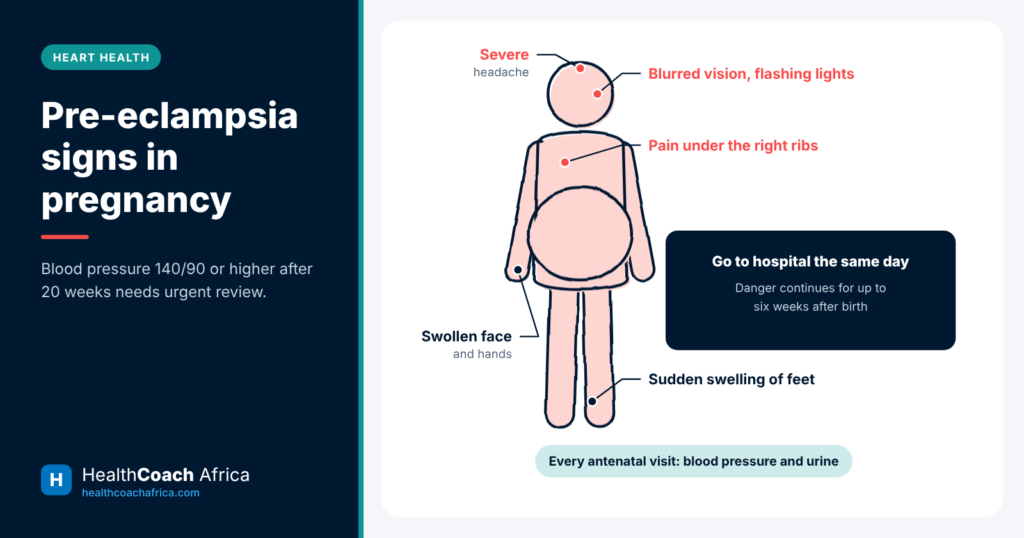
Many women with pre-eclampsia feel well at first. That is why blood pressure is checked at every antenatal visit. Seek urgent care if you notice:
A severe headache that does not go away with rest or paracetamol
Vision problems, such as blurring, flashing lights or spots
Pain below the ribs, especially on the right side
Vomiting in the second half of pregnancy
Sudden swelling of the face, hands or feet
Shortness of breath
Reduced baby movements
Fits or seizures
Mild swelling of the feet is common in pregnancy. Sudden swelling of the face and hands, especially with headache, is a warning sign.
Pre-eclampsia signs in pregnancy that families should know
Partners and relatives can help save lives by knowing the pre-eclampsia signs in pregnancy. If a pregnant woman complains of a headache that will not go away, blurred vision or pain under the ribs, take her to a hospital the same day. Do not wait for the next antenatal visit. Do not give herbal mixtures or take her to a prayer house first. Fast hospital care prevents eclampsia, stroke and loss of the baby.
Who is at higher risk?
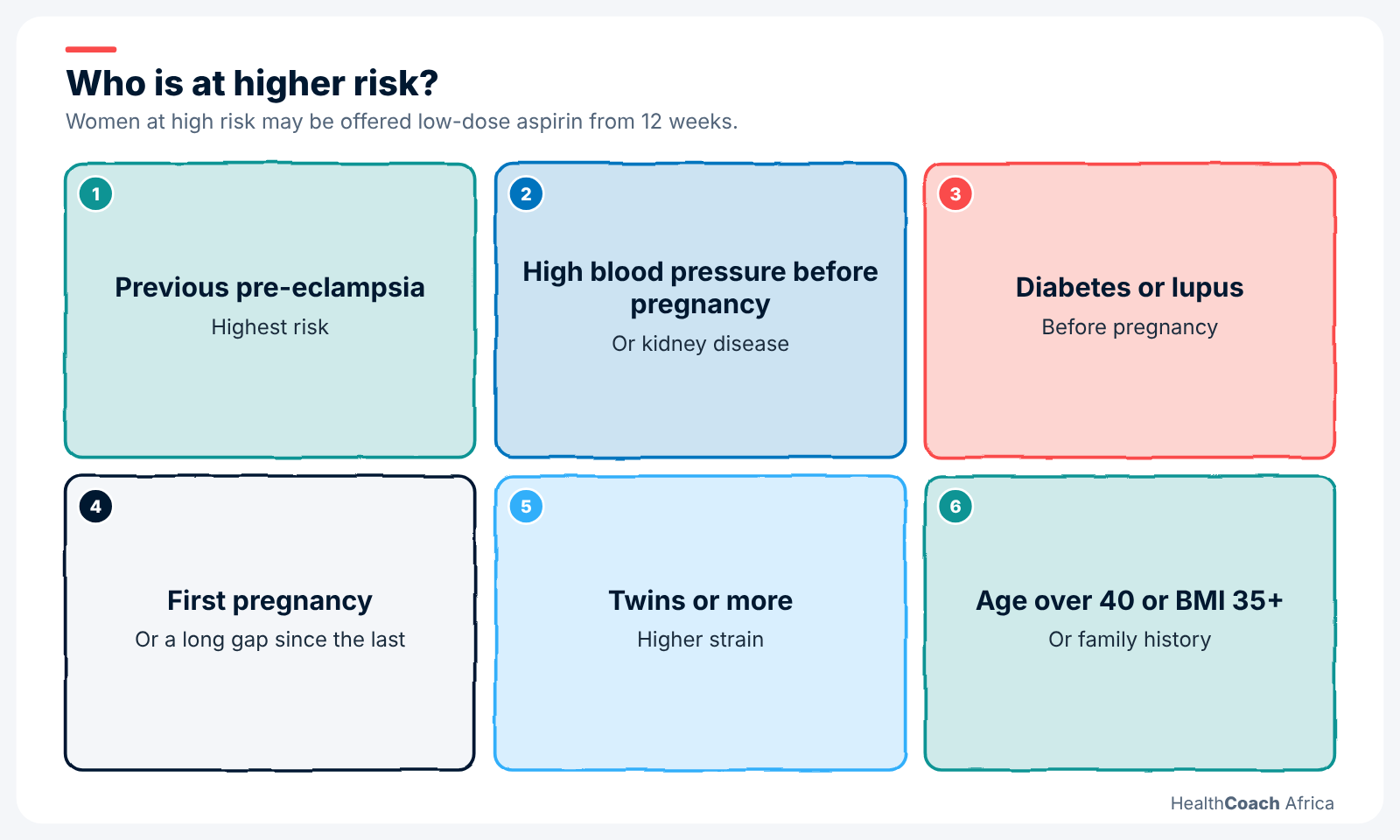
Risk factors linked to pre-eclampsia signs in pregnancy, including first pregnancy, twins and high blood pressure
Tell your antenatal team about any of these at your booking visit.
Your risk of pre-eclampsia is higher if you:
Had pre-eclampsia in a previous pregnancy
Have high blood pressure, diabetes or kidney disease before pregnancy
Have lupus or another autoimmune condition
Are pregnant for the first time
Are over 40, or are a teenager
Are carrying twins or more
Have a body mass index of 35 or higher
Have a family history of pre-eclampsia
Have a gap of more than ten years since your last pregnancy
HUBPHARM PHARMACIST’S NOTE
Low-dose aspirin only protects when it is taken every day from about 12 weeks, and many women stop early or take the wrong strength. Send your antenatal prescription to a HubPharm pharmacist. We will confirm the dose your doctor prescribed, set daily reminders and check your other medicines and supplements. If you have chronic hypertension, we will make sure your blood pressure tablets are safe for pregnancy. We can also supply a validated home blood pressure monitor and show you how to record readings.
Low-dose aspirin for high-risk mothers
Women at high risk of pre-eclampsia are often advised to take low-dose aspirin daily1 from about 12 weeks of pregnancy until birth. This reduces the chance of developing pre-eclampsia. Only take aspirin in pregnancy if your doctor or midwife advises it, and take the dose they prescribe.
Checking blood pressure at home
Some women are asked to check their blood pressure at home, especially those with chronic hypertension or a history of pre-eclampsia. Use a validated automatic monitor with the right cuff size. Sit quietly for five minutes, with your arm supported at heart level. Take two readings a minute apart and record them. Contact your midwife or doctor if your reading is 140/90 or higher, or if you notice any of the pre-eclampsia signs in pregnancy.
Antenatal checks save lives
Attend all antenatal appointments. At each visit, your blood pressure is measured and your urine is tested for protein. Book early in pregnancy, ideally before 12 weeks. If you have a home blood pressure monitor and your doctor asks you to use it, record your readings and bring them to visits.
How it is treated
Treatment depends on how high the blood pressure is and how far along the pregnancy is.
Blood pressure medicines that are safe in pregnancy, such as methyldopa, nifedipine and labetalol2, are used to keep blood pressure in a safe range.
Close monitoring of mother and baby, including blood tests, urine tests and scans.
Magnesium sulphate is given in hospital3 to prevent and treat eclampsia seizures.
Delivery of the baby is the only cure for pre-eclampsia. Doctors balance the risks to the mother against the risks of early birth for the baby.
Some blood pressure medicines used outside pregnancy are not safe for the baby. Tell your doctor if you take blood pressure tablets and are planning a pregnancy.
Eclampsia first aid
If a pregnant or recently delivered woman has a seizure, call for emergency help. Lay her on her left side, protect her head and keep the area clear. Do not put anything in her mouth. Stay with her and note how long the seizure lasts. She needs urgent hospital care with magnesium sulphate.
The danger after birth
Pre-eclampsia and eclampsia can develop or worsen after delivery, usually within the first few days but sometimes up to six weeks. Keep watching for severe headache, vision changes, breathlessness and seizures after you go home. Have your blood pressure checked in the days after birth and at your postnatal visit.
Long-term health after pre-eclampsia
Women who had high blood pressure in pregnancy have a higher risk of high blood pressure, heart disease and stroke later in life. Have your blood pressure checked at least once a year. A healthy diet, regular activity and not smoking help protect your heart. Tell your doctor about your history before any future pregnancy.
Caring for yourself during pregnancy
Rest when you can, eat a balanced diet and attend every check-up. Take calcium supplements4 if your doctor recommends them, especially if your diet is low in calcium. Keep a list of the pre-eclampsia signs in pregnancy on your phone or fridge, and share it with your partner. Knowing the warning signs makes it easier to act quickly.
Myths about pre-eclampsia
“Swelling in pregnancy is always normal.” Sudden swelling of the face and hands can be a warning sign.
“Eclampsia is caused by spiritual attack.” Eclampsia is a medical emergency caused by pre-eclampsia.
“Once the baby is born, the danger is over.” Pre-eclampsia can appear after birth.
“Herbal mixtures can lower blood pressure in pregnancy.” Some may harm the baby. Use only prescribed medicines.
Questions to ask at antenatal visits
What was my blood pressure today?
Was there protein in my urine?
Am I at higher risk of pre-eclampsia?
Should I take low-dose aspirin or calcium?
Which symptoms mean I should come in straight away?
Getting help
Pre-eclampsia signs in pregnancy can be spotted early, and the condition is treatable when found in time. Attend every antenatal visit and act on warning signs. The NHS guide to pre-eclampsia has more detail, and our heart health articles explain blood pressure further. For a home blood pressure monitor or help with your pregnancy medicines, message a HubPharm pharmacist or chat with Afiya on WhatsApp.
Medicines and products in this article
#
Medicine or product
What to know
1
Low-dose aspirin
Prescription or as advised
Taken daily from about 12 weeks by women at high risk of pre-eclampsia.
2
Methyldopa, nifedipine or labetalol
Prescription only
Blood pressure medicines that are safe in pregnancy.
3
Magnesium sulphate
Hospital use only
Prevents and treats eclampsia seizures.
4
Calcium supplements
Pharmacy
Recommended for some women with low dietary calcium.
To order any of these, or to ask a pharmacist a question first, message HubPharm on WhatsApp or visit hubpharmafrica.com. Prescription medicines are supplied against a valid prescription.
Kenya Launches Policy Briefs to Tackle Neonatal… NAIROBI, KENYA — Kenya’s Ministry of Health has launched two policy briefs on neonatal sepsis and hypertensive disorders of pregnancy, aiming to cut preventable Kenya maternal and newborn deaths by turning research evidence into practice,…
Malaria Prevention in Pregnancy: Protecting Mother and Baby Pregnancy changes the body's defences, and malaria takes advantage of this. In Nigeria, where malaria is present all year round, pregnant women face a higher risk of infection and of serious complications. Fortunately, simple and…
Syphilis Symptoms and Treatment: A Complete Guide Syphilis is a sexually transmitted infection that has been known for centuries, yet it remains common worldwide. It can cause serious damage to the heart, brain, eyes and nerves if left untreated, and it can…
Thyroid Problems After Childbirth: What New Mothers… The months after giving birth bring huge changes. Tiredness, mood swings, weight changes and poor sleep are common, and most are normal. However, some new mothers develop thyroid problems after childbirth that cause similar symptoms.…