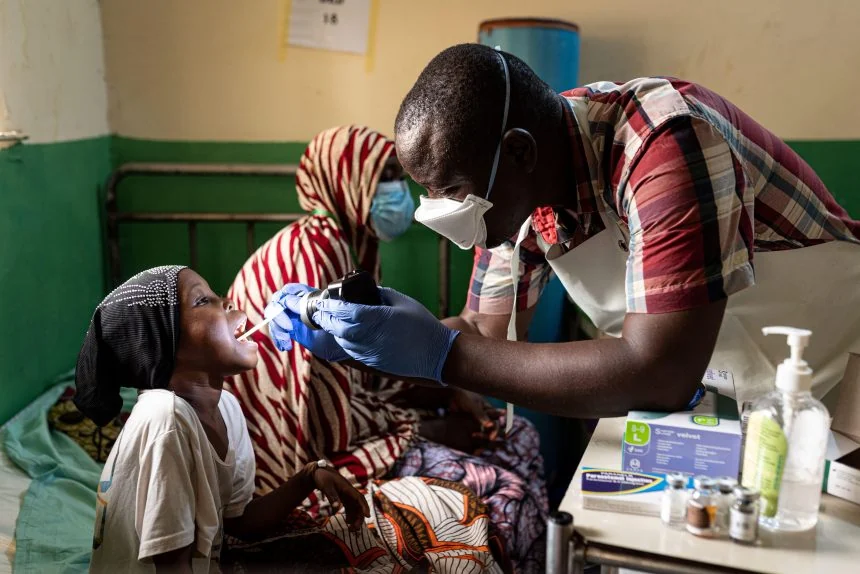
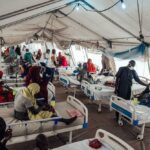
A Nigeria diphtheria antitoxin shortage is putting thousands of children in the country’s north at risk of severe illness and death, Médecins Sans Frontières (MSF) warned in a statement issued on Friday, 13 November, as Kano State vaccinated more than 760 students at a school hit by the disease, Tribune Online and Daily Trust reported.
“The global shortage of diphtheria antitoxin is becoming a matter of life and death,” said Dr David Kizito, MSF Medical Coordinator in Nigeria.
The scale of the Nigeria diphtheria antitoxin shortage
Since late 2022, Nigeria has recorded more than 41,000 suspected diphtheria cases, over 24,000 confirmed infections and more than 1,260 deaths, according to the figures cited by MSF. Between January and 9 August 2026 alone, there were 12,977 suspected cases, 10,476 confirmed infections and 406 deaths.
The most affected states are Bauchi, Borno, Kaduna, Katsina, Kano, Plateau, Sokoto and Zamfara, MSF said.
Diphtheria antitoxin is the only specific treatment that neutralises the toxin produced by the bacteria, and it works best when given within 48 hours of symptoms starting. Because global supply has been inconsistent, MSF teams have been forced to ration stocks, the organisation said. MSF has treated more than 9,000 patients this year.
The Nigeria diphtheria antitoxin shortage reflects a global problem. As general background, only a small number of manufacturers produce diphtheria antitoxin, which is made from horse serum, and global stocks have been limited for years because demand in high-income countries fell after vaccination nearly eliminated the disease there.
MSF called on the federal and state governments, donors and international partners to secure antitoxin, vaccines and other essential medicines, and to speed up customs clearance at ports and distribution to affected communities. It also urged manufacturers and global health partners to increase antitoxin production and build reliable supply systems.
Vaccination gaps in Zamfara and beyond
In Zamfara, facilities supported by MSF in Gusau recorded more than 671 admissions in one month from 6 October, after the state declared an outbreak in September. Four in five admitted patients were unvaccinated, MSF said. Only 25,000 of the 90,000 doses needed for a reactive campaign were supplied, leaving about three in four targeted children unreached.
In Kano, two vaccination rounds in April and June delivered more than 835,000 doses with the state Ministry of Health, while in Sokoto vaccination between February and April reached 49,018 children under 15, according to MSF. In Bauchi, MSF said its intervention cut the case fatality rate from 8.7 per cent to 1 per cent after it treated at least 1,890 suspected patients between August 2025 and May 2026.
Kano school outbreak
In Kano, the State Centre for Disease Control (KNCDC) said no new clinically confirmed cases had been recorded at First Lady’s College, Mariri, in Kumbotso Local Government Area, Daily Trust reported on 16 November. Director-General Prof. Muhammad Adamu said 12 cases had been clinically confirmed out of 313 suspected cases screened at the school, which has more than 2,000 students.
“All patients are being taken care of and are responding to treatment,” Adamu said. Two students with severe symptoms are in intensive care at the Infectious Diseases Hospital isolation centre in Kano, while ten with mild symptoms are in an isolation facility on the school grounds. No deaths have been recorded.
More than 760 students have received the tetanus-diphtheria vaccine, and over 700 have received preventive antibiotics. The NCDC, the National Primary Health Care Development Agency and the Federal Ministry of Health and Social Welfare are supplying diphtheria antitoxin and intravenous azithromycin, Daily Trust reported. Students were given face masks, and handwashing stations were installed.
KNCDC officials are monitoring the school daily, and a dedicated ambulance is stationed at the Infectious Diseases Hospital for prompt referrals, the newspaper reported.
Why vaccination is the lasting answer
As general background, diphtheria is a vaccine-preventable bacterial infection that spreads through respiratory droplets. It can cause a thick grey coating in the throat that blocks breathing, and its toxin can damage the heart and nerves. Children receive protection through the pentavalent vaccine in routine immunisation, but booster doses are needed to maintain immunity into adolescence.
The Nigeria diphtheria antitoxin shortage makes prevention even more important. MSF stressed the need to expand routine immunisation, especially in rural areas where coverage is lowest. Parents are advised to check that children have completed their vaccine schedule and to seek care immediately for sore throat with fever, a swollen neck or difficulty breathing.
Why it matters: Without antitoxin, children with diphtheria can die from a vaccine-preventable disease, and gaps in routine immunisation keep the outbreak alive.
Diphtheria Outbreak Escalates in Nigeria: Over 6,000… An alarming diphtheria outbreak is relentlessly sweeping through Nigeria, leaving thousands infected and hundreds of lives lost, according to Médecins Sans Frontières (MSF), commonly known as Doctors Without Borders. The international medical humanitarian organization issued…
Nigeria's Struggle to Contain Severe Diphtheria Outbreak Northern Nigeria grapples with a harrowing diphtheria outbreak, the most devastating in the nation's history, as hundreds of lives succumb to this perilous disease since the year began. Among the afflicted, a 10-year-old girl lies…
Diphtheria Symptoms and Vaccination: Lessons From… Diphtheria was once a leading cause of death among children worldwide. Vaccination made it rare in many countries. However, Nigeria has faced large diphtheria outbreaks since 2022, mainly in northern states, with thousands of confirmed…
Diabetes in Nigeria: Why Blood Sugar Control Fails Diabetes in Nigeria does not usually fail in the clinic. Among people who reach a specialist and stay in care, control is often reasonable. It fails in the years before anyone tests you, and it…