Losing a pregnancy is painful. Losing several can feel devastating. Many women blame themselves, while families sometimes look for spiritual explanations. In reality, recurrent miscarriage has a range of medical causes, and in many cases tests can find a reason. Even when no cause is found, most women go on to have a successful pregnancy. This guide explains the causes of recurrent miscarriage, the tests that help and the treatments available.
What is recurrent miscarriage?
A miscarriage is the loss of a pregnancy before 24 weeks. Most happen in the first 12 weeks. Miscarriage is common, affecting a significant proportion of known pregnancies.
Recurrent miscarriage usually means losing three or more pregnancies in a row. Some doctors start investigations after two losses, especially for older women. Recurrent miscarriage affects about one in a hundred couples trying to have a baby.
Chromosome problems
Most single miscarriages happen because the embryo has a chromosome abnormality. These usually occur by chance and are not likely to repeat.
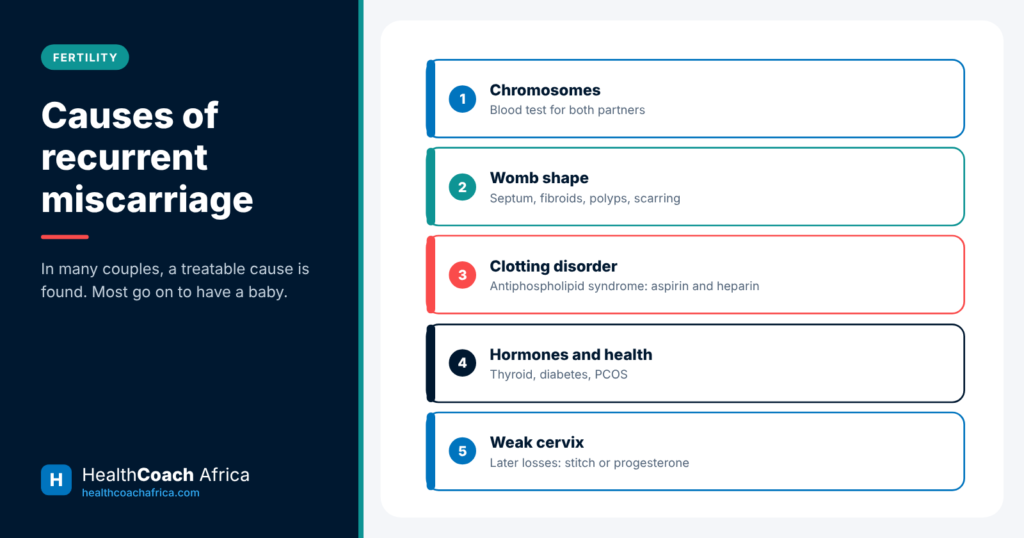
In a small number of couples, one partner carries a rearrangement of their chromosomes, called a balanced translocation. They are healthy, but their embryos may have missing or extra genetic material. A blood test for both partners, called karyotyping, can identify this.
Problems with the womb
The shape of the womb can be one of the causes of recurrent miscarriage. Examples include:
A septum, a wall of tissue dividing the womb
Submucosal fibroids, growing into the womb cavity
Polyps in the womb lining
Scar tissue inside the womb, sometimes after surgery or infection
An ultrasound scan, saline sonography or hysteroscopy can detect these. Many can be corrected with minor surgery.
Weak cervix
In some women, the cervix opens too early in pregnancy, without contractions. This usually causes losses in the second trimester, between about 14 and 24 weeks. Treatment may include a stitch in the cervix, called a cervical cerclage, or progesterone.
Blood clotting disorders
Antiphospholipid syndrome is an important, treatable cause. The immune system makes antibodies that make blood more likely to clot, including in the placenta. It is diagnosed with blood tests, repeated at least 12 weeks apart.
Women with antiphospholipid syndrome are usually treated with low-dose aspirin and heparin injections1 during pregnancy, which greatly improve the chance of a live birth.
Hormone and health conditions
Several conditions are linked to a higher risk of miscarriage:
Thyroid problems, both underactive and overactive
Poorly controlled diabetes
Polycystic ovary syndrome (PCOS)
High prolactin levels
Bringing these conditions under control before pregnancy improves outcomes.
Age and lifestyle
The risk of miscarriage rises with the woman’s age, especially after 35, mainly because of chromosome problems in eggs. The father’s age also plays a smaller role. Lifestyle factors linked to miscarriage include:
Smoking
Heavy alcohol use
High caffeine intake
Being significantly overweight
Some medicines and recreational drugs
Causes of recurrent miscarriage linked to sickle cell
Women with sickle cell disease have a higher risk of pregnancy complications, including miscarriage. Close care from a specialist team, folic acid, malaria prevention and good hydration help. Couples who both carry the sickle cell gene can discuss options with a genetic counsellor, including prenatal testing.
Infections
Severe infections, including malaria in pregnancy, can cause miscarriage. Untreated syphilis can cause late miscarriage and stillbirth. Sleeping under a treated net, attending antenatal care and being tested for infections protect pregnancies.
Preparing for your next pregnancy
Before trying again, consider these steps:
Take folic acid2 daily for at least three months before conception
Reach a healthy weight
Stop smoking and limit alcohol and caffeine
Treat thyroid problems, diabetes or other conditions
Complete recommended tests and treatments
Book an early pregnancy scan once you are pregnant
These steps address several causes of recurrent miscarriage and support a healthy pregnancy.
Tests for causes of recurrent miscarriage
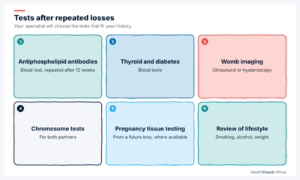
Tests used to find causes of recurrent miscarriage, from blood tests to womb imaging
In about half of couples, a cause is found. Many are treatable.
After repeated losses, a specialist may recommend:
Blood tests for antiphospholipid antibodies
Thyroid function and diabetes tests
Pelvic ultrasound or hysteroscopy to check the womb
Chromosome tests for both partners
Chromosome testing of pregnancy tissue from a future loss, where available
Not every test is needed for everyone. Your doctor will choose based on your history.
HUBPHARM PHARMACIST’S NOTE
Women treated for antiphospholipid syndrome often need daily heparin injections through pregnancy, and many feel anxious about injecting themselves. Send your prescription to a HubPharm pharmacist. We will deliver your aspirin and heparin with sharps containers, show you how to inject on a short video call and set daily reminders. We also supply folic acid and progesterone if prescribed, and we will check any new medicine you are given for safety in pregnancy.
Treatment options
Treatment depends on the cause:
Aspirin and heparin for antiphospholipid syndrome
Surgery for a septum, polyps or fibroids
Cervical stitch or progesterone for a weak cervix
Treatment of thyroid problems or diabetes
Progesterone in early pregnancy3 for some women with previous losses and bleeding
Genetic counselling for chromosome problems
When no cause is found
In about half of couples, no clear cause is found. This can be frustrating. However, the chance of a successful next pregnancy is still good for many couples. Early pregnancy care, with reassurance scans and a named contact, has been shown to help.
Causes of recurrent miscarriage in men
Men contribute to some cases of recurrent miscarriage. A father may carry a chromosome rearrangement, which is why both partners are tested. Some research suggests that damage to sperm DNA, linked to smoking, heat, infection or older age, may play a role. Men can help by stopping smoking, limiting alcohol, keeping a healthy weight and having recommended tests.
Early pregnancy care
Women with a history of recurrent miscarriage benefit from early, supportive care in the next pregnancy. This may include early scans, a direct contact number and regular reassurance visits. Ask your doctor about an early pregnancy clinic.
Remembering your babies
Many parents find comfort in remembering their lost pregnancies, through prayer, naming, planting a tree or keeping a memory box. There is no right or wrong way to grieve.
Emotional support
Recurrent miscarriage brings grief, anxiety and sometimes strain on relationships. Partners grieve too. Speak openly with each other. Avoid blame. Counselling and support groups can help. Ask your doctor about local support services.
Myths about miscarriage
“Miscarriage is caused by stress or hard work.” Normal work and everyday stress do not cause miscarriage.
“Sex causes miscarriage.” Sex in a healthy pregnancy does not cause miscarriage.
“Recurrent miscarriage means you can never have a baby.” Many couples go on to have healthy babies.
“It is caused by spiritual attack.” There are medical causes of recurrent miscarriage that can be tested and treated.
Questions to ask your specialist
Which tests do you recommend for us, and why?
Have any causes of recurrent miscarriage been found?
What treatment do you suggest for the next pregnancy?
When should we start trying again?
How will my next pregnancy be monitored?
Who should I contact if I have bleeding or pain?
Write the answers down and keep them with your antenatal records. A clear plan can make the next pregnancy feel less frightening. Many couples say that knowing exactly who to call brings great comfort.
Looking after your mental health
Anxiety and low mood are common after repeated losses, and they can continue into the next pregnancy. Tell your doctor or midwife how you feel. Counselling, support groups and talking with other couples who have been through the same experience can help you cope.
Treatment for antiphospholipid syndrome in pregnancy.
2
Folic acid
Over the counter
Daily for at least three months before conception.
3
Progesterone
Prescription only
Used in early pregnancy for some women with previous losses and bleeding.
To order any of these, or to ask a pharmacist a question first, message HubPharm on WhatsApp or visit hubpharmafrica.com. Prescription medicines are supplied against a valid prescription.
National Institute for Health and Care Excellence. Ectopic pregnancy and miscarriage: diagnosis and initial management (NG126). https://www.nice.org.uk/guidance/ng126
ESHRE Early Pregnancy Guideline Development Group. ESHRE guideline: recurrent pregnancy loss: an update in 2022. Hum Reprod Open. 2023;2023(1):hoad002. https://doi.org/10.1093/hropen/hoad002
Coomarasamy A, et al. A randomized trial of progesterone in women with bleeding in early pregnancy. N Engl J Med. 2019;380(19):1815-1824. https://doi.org/10.1056/NEJMoa1813730
Please follow and like us:
Views:53
Related Posts:
Recurrent Malaria: Understanding the Cycle of a… Malaria, a mosquito-borne infectious disease caused by the Plasmodium parasite, continues to be a major global health concern especially in Africa. While significant progress has been made in reducing malaria-related deaths and cases over the…
Period Pain Relief Tips for Every Woman and Girl Most women and girls experience some pain during their periods. For many, it is a mild ache. For others, it is severe enough to cause vomiting, fainting or days off school and work. Too often,…
Endometriosis and Getting Pregnant: What Women Need to Know Endometriosis is a common condition that causes painful periods, pelvic pain and, for some women, difficulty conceiving. Many women in Nigeria live with symptoms for years before diagnosis, because severe period pain is often dismissed…
Blocked Fallopian Tubes Treatment: Your Options Explained Blocked fallopian tubes are one of the most common causes of female infertility in Nigeria and across sub-Saharan Africa. Many women do not know their tubes are damaged until they struggle to conceive. The tubes…