A thin, grey discharge with a fishy smell, especially after sex, is a common reason women visit a pharmacy. The cause is often bacterial vaginosis, or BV. It is the most common cause of unusual vaginal discharge in women of childbearing age. Many women feel embarrassed and try douches or herbal washes, which can make it worse. This guide explains what BV is, the best bacterial vaginosis treatment options and how to prevent it from coming back.
What is bacterial vaginosis?
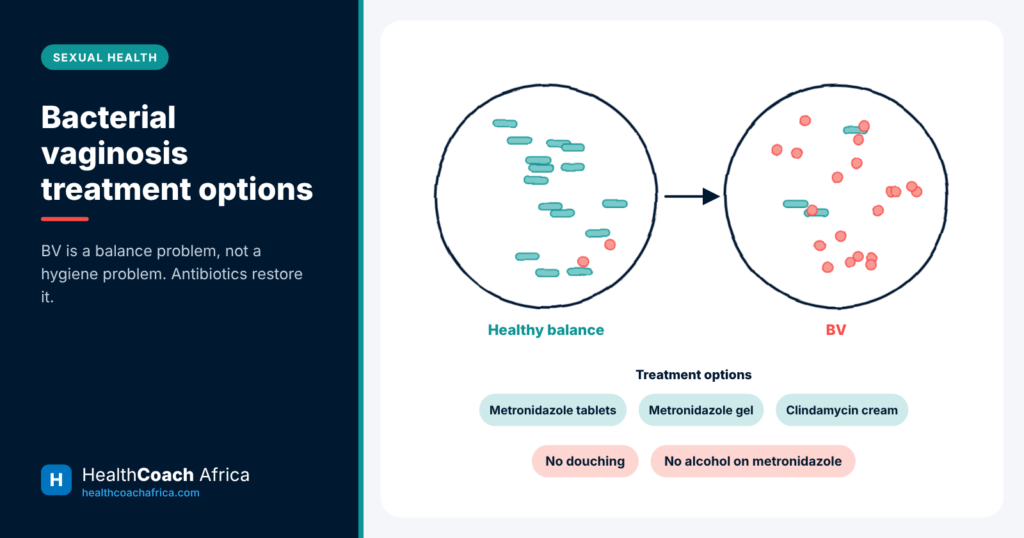
The vagina naturally contains a balance of bacteria. Healthy “good” bacteria, called lactobacilli, keep the vagina slightly acidic. This protects it from infections. In BV, the number of lactobacilli falls and other bacteria grow too much. The vagina becomes less acidic.
BV is not considered a sexually transmitted infection, but it is more common in women who are sexually active and is linked to new or multiple partners.
Symptoms
About half of women with BV have no symptoms. When symptoms occur, they include:
Thin, white or grey discharge
A strong, fishy smell, often stronger after sex or during periods
Mild irritation
BV does not usually cause itching or soreness. These are more typical of thrush.
What increases the risk?
Douching or washing inside the vagina
Using perfumed soaps, bubble baths or vaginal deodorants
A new sexual partner or multiple partners
Having an IUD, or coil
Smoking
Hormonal changes, such as during periods
BV, thrush or an STI?
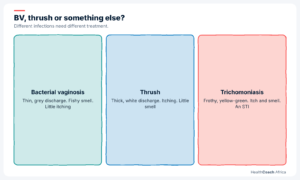
Comparison of discharge types to guide bacterial vaginosis treatment options and testing
If you are unsure, or it keeps coming back, get tested.
Several conditions cause vaginal discharge:
Bacterial vaginosis: thin, grey discharge with a fishy smell, little itching
Thrush: thick, white discharge like cottage cheese, with itching and soreness, little smell
Trichomoniasis: frothy, yellow-green discharge, itching and smell
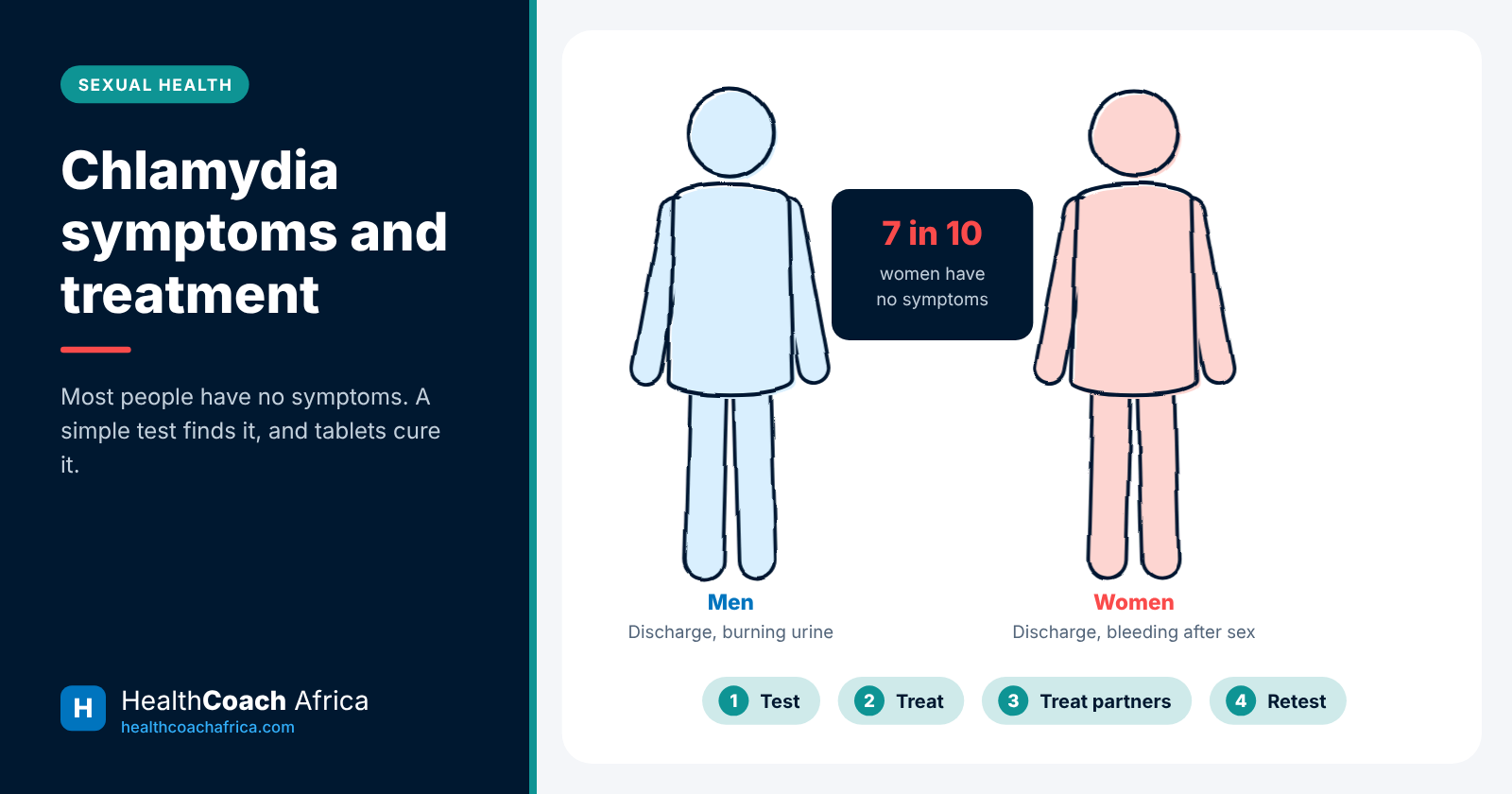
Chlamydia or gonorrhoea: often no symptoms, sometimes discharge, bleeding or pelvic pain
Because symptoms overlap, testing helps you get the right bacterial vaginosis treatment options rather than the wrong medicine.
How BV is diagnosed
A health worker may ask about your symptoms and examine you. Simple tests include checking the pH, or acidity, of the discharge and looking at a sample under a microscope. Testing is useful because BV, thrush and some STIs can look similar. Women with new symptoms, pregnancy or repeated episodes should be tested.
Bacterial vaginosis treatment options
BV is treated with antibiotics. The main bacterial vaginosis treatment options are:
Metronidazole tablets1, usually taken twice a day for seven days
Metronidazole gel2, applied inside the vagina once a day for five days
Clindamycin cream3, applied inside the vagina once a day for seven days
All are effective. Your health worker will help you choose based on your preferences, pregnancy and any allergies.
Tips for taking treatment
Complete the full course, even if symptoms improve quickly
Avoid alcohol while taking metronidazole and for at least 48 hours afterwards, as it can cause nausea, vomiting and flushing
Clindamycin cream can weaken latex condoms, so use another method of contraception during treatment and for a few days afterwards
Avoid sex, or use condoms, until treatment is finished
HUBPHARM PHARMACIST’S NOTE
Metronidazole reacts badly with alcohol, and many women do not know this until they feel very sick after a drink. Clindamycin cream can also weaken latex condoms. Message a HubPharm pharmacist with your symptoms and any other medicines you take. We will help you decide whether a test is needed first, explain each of the treatment choices if a prescriber recommends one and deliver it discreetly. If BV keeps coming back, we will help you plan a conversation with your doctor about longer treatment.
Do partners need treatment?
Male partners do not usually need treatment. Female partners of women with BV may also have it and should be checked if they have symptoms.
Bacterial vaginosis treatment options for repeat episodes
If BV returns more than three times a year, your doctor may suggest a longer plan. This could include a seven-day course followed by metronidazole gel twice weekly for four to six months. Some women are advised to try lactic acid gels that help restore vaginal acidity. Evidence for probiotics is limited, but some women find them helpful. Discuss bacterial vaginosis treatment options with your health worker before trying anything new.
Why BV keeps coming back
BV often returns, sometimes within three months of treatment. If you have frequent episodes, your health worker may suggest:
A longer course of treatment
Metronidazole gel twice a week for several months
Checking for triggers, such as douching or perfumed products
Some women find that stopping douching alone reduces repeat episodes.
BV in pregnancy
BV in pregnancy is linked to a higher risk of premature birth and late miscarriage. Pregnant women with symptoms should see a health worker. Metronidazole is commonly used in pregnancy when needed, but the doctor will choose the safest option. Do not self-treat in pregnancy.
Questions to ask your pharmacist
Are my symptoms typical of BV?
Which treatment is best for me: tablets, gel or cream?
Is it safe with my other medicines?
Can I use it during pregnancy or breastfeeding?
What should I do if it keeps coming back?
BV after periods and sex
Some women notice that the smell is stronger after their period or after sex, because blood and semen make the vagina less acidic. This is a common pattern in BV. Using condoms can reduce episodes. Changing pads and tampons regularly also helps.
Feeling confident again
BV is common and nothing to be ashamed of. With the right bacterial vaginosis treatment options and simple prevention habits, most women regain their comfort and confidence.
BV and other infections
BV can increase the risk of catching STIs, including HIV, and of developing pelvic inflammatory disease after some procedures. If you have BV and a new partner, consider testing for STIs too.
Prevention
Wash the outer genital area gently with water and plain, unperfumed soap
Avoid douching and washing inside the vagina
Avoid perfumed products in the genital area
Use condoms
Wear cotton underwear and avoid very tight clothing
Stop smoking
Myths about BV
“BV is caused by poor hygiene.” Over-washing and douching are more likely to cause it.
“Vaginal steaming cures BV.” Steaming can irritate tissue and disturb the natural balance.
“BV is an STI, so my partner gave it to me.” BV is not classed as an STI, though sex can trigger it.
“Garlic and herbs inside the vagina cure BV.” These can irritate the vagina and delay effective treatment.
Living with repeat BV
Repeat BV can be frustrating and affect confidence and relationships. Keep a simple diary of episodes, periods, new partners and products used. Patterns often point to triggers. Share the diary with your doctor. Many women find that a combination of stopping douching, using condoms and a longer treatment plan finally breaks the cycle.
BV and contraception
Some women find that BV is more frequent with a copper coil. Hormonal contraception may reduce episodes in some women. If BV keeps returning, discuss your contraception choices with a health worker. Choosing among bacterial vaginosis treatment options and contraception together can improve comfort.
BV and your partner
Although male partners do not usually need treatment, using condoms during and after treatment may lower the chance of BV returning. Open conversations help both partners understand the condition.
Is BV dangerous?
For most women, BV is uncomfortable rather than dangerous. However, it matters in pregnancy and before gynaecological procedures, and it raises the risk of some STIs. Getting effective treatment protects your health as well as your comfort.
Usually twice a day for seven days. Avoid alcohol.
2
Metronidazole gel
Prescription only
Applied inside the vagina for five days.
3
Clindamycin cream
Prescription only
Vaginal cream for seven days. May weaken latex condoms.
To order any of these, or to ask a pharmacist a question first, message HubPharm on WhatsApp or visit hubpharmafrica.com. Prescription medicines are supplied against a valid prescription.
Vaginal Yeast Infection Treatment: A Practical Guide… Vaginal yeast infection, often called thrush or candidiasis, is very common. Many women experience it at least once in their lives. It causes itching, soreness and discharge, and it can be very uncomfortable. It is…
Trichomoniasis Symptoms and Treatment: A Common, Curable STI Trichomoniasis is one of the most common curable sexually transmitted infections in the world. Yet many people have never heard of it. It is caused by a tiny parasite and can cause irritating symptoms, though…
Low Libido in Women: 7 Common Causes and Real Solutions Few topics are harder to raise with a partner, a friend or a doctor. Yet low libido in women is one of the most common sexual health concerns worldwide. It affects women of every age,…
Chlamydia Symptoms and Treatment: The Silent… Chlamydia is one of the most common sexually transmitted infections in the world. Most people who have it feel completely well. Without testing, it can quietly damage the reproductive organs and cause infertility, especially in…