Trichomoniasis is one of the most common curable sexually transmitted infections in the world. Yet many people have never heard of it. It is caused by a tiny parasite and can cause irritating symptoms, though many people have none. Left untreated, it raises the risk of HIV and pregnancy complications. This guide explains trichomoniasis symptoms and treatment, testing, partner care and prevention.
What is trichomoniasis?
Trichomoniasis, often called “trich”, is caused by a tiny parasite called Trichomonas vaginalis.It infects the vagina and urethra in women, and the urethra in men. It spreads through vaginal sex without a condom and through sharing sex toys.
It does not spread through kissing, hugging, sharing cups or toilet seats.
Trichomoniasis symptoms in women
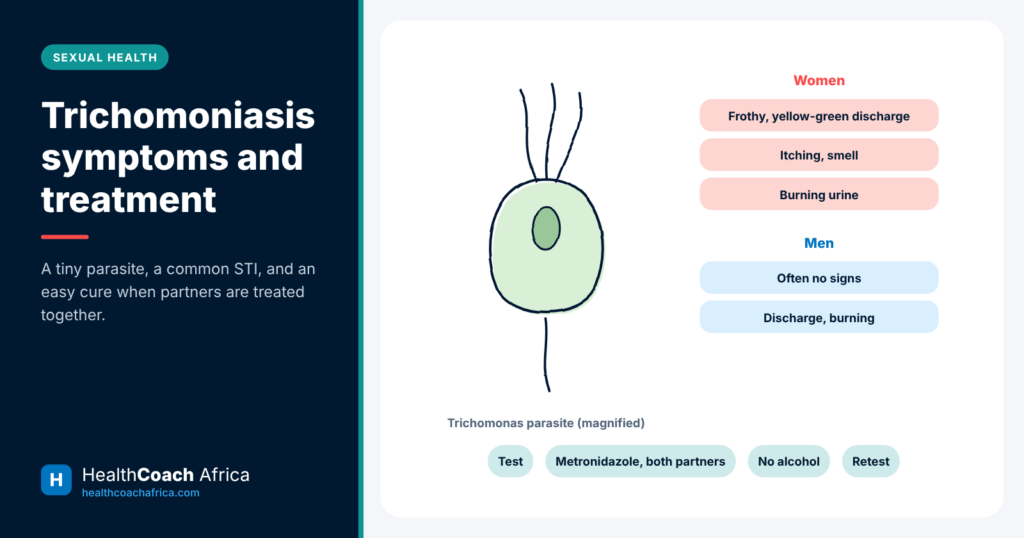
Up to half of women have no symptoms. When symptoms appear, usually within a month of infection, they include:
Frothy, yellow or green vaginal discharge
A strong, unpleasant smell
Itching, soreness and redness around the vagina
Pain or discomfort during sex
Pain or burning when passing urine
Trichomoniasis symptoms in men
Most men have no symptoms. Some notice:
Discharge from the penis
Pain or burning when passing urine or after ejaculating
Needing to pass urine more often
Soreness or redness around the head of the penis
Because men often have no symptoms, they may pass the infection on without knowing.
Who is at higher risk?
Anyone who is sexually active can get trichomoniasis. The risk is higher for people who:
Have new or multiple sexual partners
Do not use condoms
Have had another STI in the past
Have had trichomoniasis before
Older women are affected more often than many other STIs, so trichomoniasis symptoms and treatment are relevant at every age.
Why it matters
Untreated trichomoniasis can:
Increase the risk of catching and passing on HIV
Cause premature birth and low birth weight in pregnancy
Cause ongoing discomfort and repeat infections
Increase the risk of other STIs
Trichomoniasis or something else?
Several conditions cause similar symptoms. Bacterial vaginosis causes a thin, grey discharge with a fishy smell. Thrush causes thick, white discharge with itching. Chlamydia and gonorrhoea may cause discharge or burning when passing urine. Because the right treatment depends on the cause, a test is always better than guessing.
Testing
A health worker will ask about your symptoms and may examine you. Tests include:
A vaginal swab for women, which you may be able to take yourself
A urine sample or swab for men
Microscope examination or a more sensitive laboratory test
Trichomoniasis can look like bacterial vaginosis or thrush, so testing is important. Many people are tested for other STIs, such as chlamydia, gonorrhoea, syphilis and HIV, at the same time.
Trichomoniasis symptoms and treatment: the medicines
Trichomoniasis is cured with antibiotics:
Metronidazole tablets, usually taken twice a day1 for seven days, is the preferred treatment for women.
A single larger dose of metronidazole may be used for men or in some situations.
Tinidazole is an alternative in some cases.
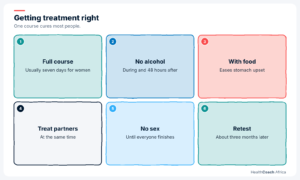
Take the full course as prescribed. Most people are cured with one course.
Important tips during treatment
Treatment tips for trichomoniasis symptoms and treatment, from metronidazole to partner care
Most repeat infections come from an untreated partner.
Avoid alcohol while taking metronidazole and for at least 48 hours afterwards, as the combination can cause severe nausea, vomiting and flushing
Avoid sex until you and your partners have finished treatment and symptoms have cleared
Take tablets with food to reduce stomach upset
Expect a metallic taste in the mouth, which is a common side effect
Trichomoniasis symptoms and treatment in men
Men are often treated because a partner tested positive, even if they have no symptoms. Men who do have symptoms usually notice burning when passing urine or a small discharge. Taking the full course of treatment and avoiding sex until treatment is complete protects partners.
HUBPHARM PHARMACIST’S NOTE
Trichomoniasis is easy to cure, but only if both partners are treated together and nobody drinks alcohol on metronidazole. Send your prescription to a HubPharm pharmacist. We will deliver treatment for you and, with a prescription, for your partner in separate, unmarked parcels, send reminders for every dose and remind you when a retest is due. If symptoms do not clear, message us and we will help you arrange a review. Everything stays confidential.
Partner treatment
All current sexual partners should be tested and treated at the same time, even if they have no symptoms. If not, you are likely to be reinfected. Clinics can help notify partners confidentially.
If symptoms do not clear
If symptoms continue after treatment, return to your health worker. Possible reasons include reinfection from an untreated partner, not completing the course or, rarely, resistance to metronidazole. A repeat test and a longer or different course of treatment may be needed.
Talking to a partner
Explain that trichomoniasis is common, often has no symptoms and is easily cured. Encourage your partner to get treated at the same time. Focus on health, not blame. Understanding trichomoniasis symptoms and treatment together makes this conversation easier.
Protecting your sexual health
Regular STI testing is part of good health care, like a blood pressure check. If you have a new partner, consider getting tested together. Keep condoms available and use them correctly every time.
Retesting
Women are often advised to retest about three months after treatment, because reinfection is common. Retest sooner if symptoms do not clear or return.
Trichomoniasis in pregnancy
Trichomoniasis in pregnancy should be treated, because it is linked to premature birth and low birth weight. Metronidazole is commonly used in pregnancy. Tell your antenatal team about any symptoms. Do not use vaginal washes or herbal treatments.
Prevention
Use condoms correctly every time2 you have sex
Limit the number of sexual partners
Do not share sex toys, or cover them with a new condom each time
Get tested if you have a new partner or symptoms
Make sure partners are treated before resuming sex
Myths about trichomoniasis
“Only women get trichomoniasis.” Men can be infected but often have no symptoms.
“It goes away on its own.” It usually needs antibiotic treatment.
“Vaginal washes cure it.” Washes do not kill the parasite and can make symptoms worse.
“If my symptoms stopped, my partner does not need treatment.” Partners must be treated to prevent reinfection.
Trichomoniasis symptoms and treatment in older women
Trichomoniasis is common in women over 40, including after menopause. Older women may mistake symptoms for menopause dryness or a urine infection. If you have new discharge, itching or burning, ask for an STI test whatever your age.
Questions to ask your health worker
Which test do I need?
Should I be tested for other STIs?
How long is the course of treatment?
When can I have sex again?
When should I retest?
Looking after yourself during treatment
Wear loose cotton underwear and avoid perfumed soaps or washes, which can irritate sore skin. Drink plenty of water. If the metallic taste from metronidazole is unpleasant, sugar-free sweets can help. Rest if you feel unwell, and complete every dose. Knowing what to expect from trichomoniasis symptoms and treatment makes the course easier to finish.
Repeat infections
If trichomoniasis keeps returning, the most likely reason is an untreated partner. Make sure every partner is treated, and avoid sex until everyone has finished treatment.
Trichomoniasis and HIV
Trichomoniasis causes inflammation that makes it easier to catch and pass on HIV. People diagnosed with trichomoniasis should be offered an HIV test. People living with HIV should be checked for trichomoniasis if they have symptoms, and treated promptly. Treating both conditions protects partners too.
Twice a day for seven days for women. Avoid alcohol.
2
Condoms
Over the counter
Reduce the risk of trichomoniasis and other STIs.
To order any of these, or to ask a pharmacist a question first, message HubPharm on WhatsApp or visit hubpharmafrica.com. Prescription medicines are supplied against a valid prescription.
Kissinger PJ, et al. Metronidazole 7-day versus single-dose treatment for women with Trichomonas vaginalis. Lancet Infect Dis. 2018;18(11):1251-1259. https://doi.org/10.1016/S1473-3099(18)30423-7
Please follow and like us:
Views:45
Related Posts:
STI Testing in Nigeria: A Confidential Guide to… Sexually transmitted infections, or STIs, are very common, and many cause no symptoms at all. That means you can have an infection, pass it on and develop complications without knowing. Testing is the only way…
Vaginal Yeast Infection Treatment: A Practical Guide… Vaginal yeast infection, often called thrush or candidiasis, is very common. Many women experience it at least once in their lives. It causes itching, soreness and discharge, and it can be very uncomfortable. It is…
Bacterial Vaginosis Treatment Options: Restoring the Balance A thin, grey discharge with a fishy smell, especially after sex, is a common reason women visit a pharmacy. The cause is often bacterial vaginosis, or BV. It is the most common cause of unusual…
Chlamydia Symptoms and Treatment: The Silent… Chlamydia is one of the most common sexually transmitted infections in the world. Most people who have it feel completely well. Without testing, it can quietly damage the reproductive organs and cause infertility, especially in…