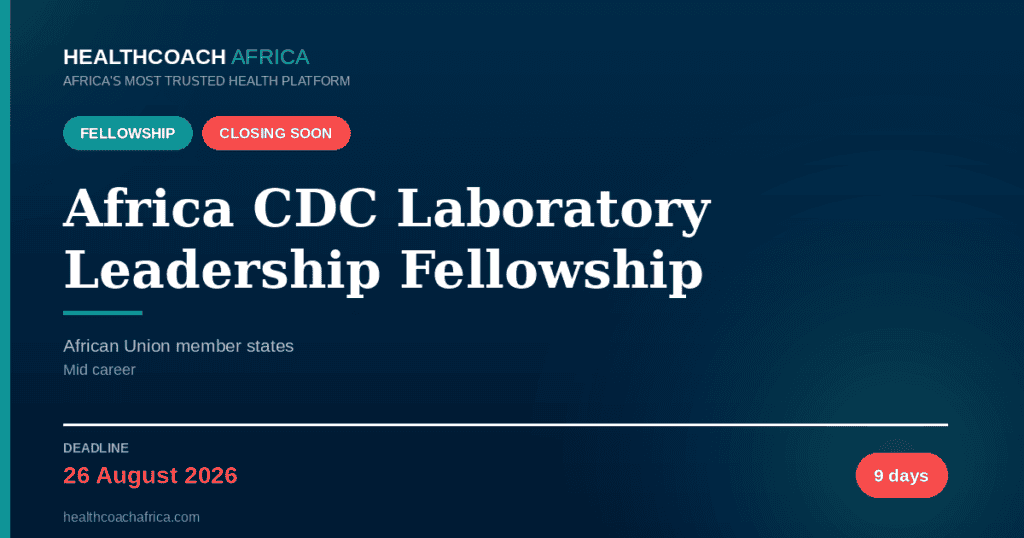
Alongside the epidemiology track, Africa CDC is recruiting for the laboratory leadership track of the African Epidemic Service. The call is open to applicants across the Central, Eastern, Northern, Southern and Western Africa regions and closes on 26 August 2026. Laboratory scientists are chronically under-served by continental leadership programmes, so this one deserves attention.
Why the laboratory track exists separately
Outbreak response fails at the bench as often as it fails in the field. If a sample cannot be processed, confirmed and reported quickly, everything downstream is guesswork. Africa CDC has separated laboratory leadership into its own track precisely because the skill set is distinct: biosafety, quality management systems, specimen referral networks, genomic surveillance and the management of laboratory staff under pressure.
Who should apply
The African Epidemic Service is designed for professionals who are already employed in an African country and who will return to that post after training. Across the AES tracks Africa CDC requires citizenship of an African Union member state, an age under 35 as defined by the African Union, a relevant graduate degree, several years of recent postgraduate experience in Africa, employer permission with a guarantee of return, and proficiency in at least one African Union official language. Confirm the exact requirements for the laboratory track on the call page before you build your file, because the technical prerequisites differ from the epidemiology track.
What it covers
As with the other AES tracks, Africa CDC funds the programme in full, covering training materials, travel, stipends, equipment and health insurance. Fellows are not expected to fund any part of their participation.
How to apply well
Applications go through the Africa CDC and African Union portal, and incomplete files are not considered. Expect to supply your passport, an official permission and return letter from your employing institution, two professional references, degree certificates and transcripts, a two page CV on the African Union template and a short motivation statement.
For a laboratory application, the motivation statement should name the specific diagnostic gap you intend to close when you return. Selection panels for technical tracks respond to precision. A candidate who writes that they want to strengthen molecular diagnostic turnaround time for viral haemorrhagic fevers at a named referral laboratory reads very differently from one who writes that they are passionate about laboratory science.
Why this matters
For pharmacists, biomedical scientists and medical laboratory scientists in West Africa, continental fellowships are one of the few paths that build a regional profile without leaving the continent. The two year structure, with 21 months at a host site in a member state, means you gain cross-border experience while remaining in African health systems.
Diabetes in Nigeria: Why Blood Sugar Control Fails Diabetes in Nigeria does not usually fail in the clinic. Among people who reach a specialist and stay in care, control is often reasonable. It fails in the years before anyone tests you, and it…
Breast Cancer Screening in Nigeria: Where to Go and Costs Breast cancer screening in Nigeria confuses people for a simple reason: nobody tells you which test you need. A woman of 32 asks for a mammogram and is told she does not need one. A…
Newly Diagnosed With Breast Cancer? Your First 30 Days Guide If you have just been newly diagnosed with breast cancer, start here. You do not need to understand everything today. You need to know what to do next, and in what order. This guide breaks…
Nutrition During Cancer Treatment: What to Eat and Why Cancer and its treatment place heavy demands on the body. Chemotherapy, radiotherapy and surgery all increase your need for energy and protein, while side effects such as nausea and mouth sores make eating harder. Good…