LONDON, UNITED KINGDOM — A British national has tested positive for Ebola in the Democratic Republic of Congo (DRC), the UK government confirmed. It is the first British national Ebola case linked to the current outbreak, Premium Times reported on 5 November, citing the BBC and Reuters.
Reuters reported that the man would be medically evacuated to the United Kingdom for specialist treatment. The exact timing of the evacuation was not immediately known.
“The UK has well-established procedures for dealing with cases like this, and those processes have been activated,” a UK government spokesperson said. “Further information will be shared in due course as appropriate. The risk to the UK public from Ebola remains low.”
The British national Ebola case in context
The British national Ebola case comes as the outbreak caused by the Bundibugyo virus, first declared in the DRC in May 2026, continues to grow. According to US Centers for Disease Control and Prevention (CDC) figures as of 1 November, cited by Premium Times, there have been 10,563 confirmed cases and 5,130 deaths across five countries.
The DRC accounts for 10,532 confirmed cases and 5,126 deaths across eight provinces. Kenya has recorded nine confirmed cases and two deaths, and Uganda 20 confirmed cases and two deaths, plus one probable case and one probable death.
Nigeria confirmed its first case on 20 October in a traveller who had been to Uganda; she was later medically evacuated to Switzerland. According to the European Centre for Disease Prevention and Control (ECDC), 62 contacts linked to the Nigerian case were identified and under follow-up as of 29 October.
Premium Times did not report how the British national was infected or whether he was a health or aid worker.
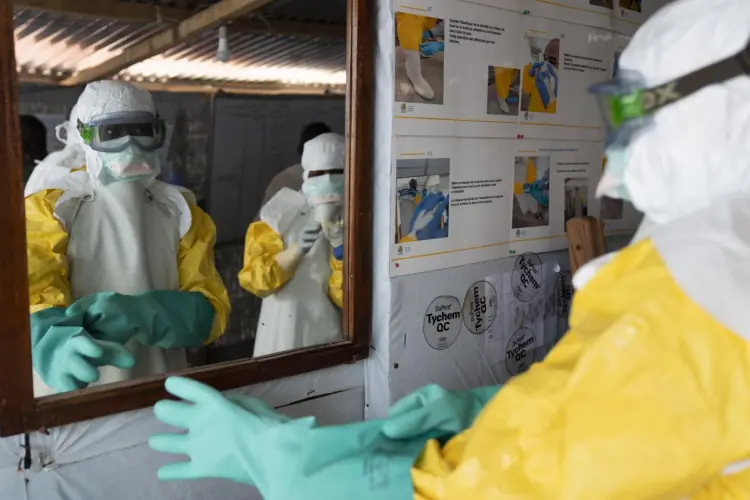
The British national Ebola case is also a reminder that international responders, researchers and travellers can be exposed in outbreak areas, and that strict infection prevention, protective equipment and rapid testing are needed for everyone working in affected zones.
How medical evacuation works
Medical evacuation of patients with high-consequence infectious diseases uses specially equipped aircraft and isolation units to protect crews and the public. In the UK, such patients are usually treated in high-level isolation units with specialist staff and strict infection control.
Evacuations of foreign nationals have occurred in previous Ebola outbreaks, including during the 2014 to 2016 West African epidemic, when health workers infected while treating patients were flown home. Those cases raised questions about unequal access to advanced care, since most African patients are treated in local treatment centres with fewer resources.
Experts have since called for treatment centres in affected countries to be equipped to provide the same intensive supportive care, including fluids, oxygen and monitoring, that evacuated patients receive.
How Ebola spreads
Ebola spreads mainly through direct contact with the blood or other body fluids of an infected person, or with contaminated objects. Symptoms include fever, headache, vomiting, muscle pain, weakness and diarrhoea, and some patients develop bleeding.
WHO says survivors may transmit the virus through sexual intercourse if it persists in their semen after recovery. Survivors who meet discharge criteria are not expected to transmit the virus through sweat or saliva, because the virus has been cleared from their blood.
There are no licensed vaccines or specific treatments for the Bundibugyo strain. The vaccines and antibody treatments used in recent DRC outbreaks were developed against the Zaire strain. Supportive care, including fluids, treatment of complications and careful monitoring, improves survival.
What the case means for Africa
Infections among international workers often draw global attention, but the burden of the outbreak falls overwhelmingly on Congolese communities and health workers. Health workers in Bunia and other affected areas have been infected while caring for patients, and Africa CDC has warned that the continent is not yet winning against the outbreak.
The British national Ebola case may increase attention and funding for the response. Africa CDC and WHO have called for more support for contact tracing, infection prevention, safe burials and treatment centres, as well as research into vaccines and treatments for Bundibugyo.
Travel-related cases also test preparedness in other countries. Nigeria, Ghana, Kenya and others have stepped up screening and monitoring of travellers from affected countries, while Africa CDC has opposed blanket travel bans.
Clear communication about low public risk matters too, so that the case does not fuel stigma against travellers from Central and East Africa.
The UK government said more information would be shared in due course. The patient’s evacuation and treatment will be closely watched as the outbreak enters its seventh month.
Why it matters: International cases bring attention, but the Bundibugyo outbreak still needs vaccines, treatments and frontline funding in Africa.
Pilot and Wife Test Negative in Adamawa Ebola Scare,… YOLA, NIGERIA — The Adamawa suspected Ebola cases, a 34-year-old pilot and his wife, a medical doctor, have tested negative for the virus after two rounds of testing, Nigeria’s disease control agency said, leaving the…
WHO Says Ebola Survivors Can Spread Virus Through… BRAZZAVILLE, CONGO — People who survive Ebola can pass the virus on through sex if it persists in semen after recovery, but are not expected to spread it through sweat or saliva once discharged, the…
Africa CDC Warns Continent Is Not Winning as Ebola… ADDIS ABABA, ETHIOPIA — The head of the Africa Centres for Disease Control and Prevention has issued a stark Africa CDC Ebola warning, telling more than 40 African health ministers that the continent is “not…
Nigeria’s Ebola Patient Evacuated to Switzerland ABUJA, NIGERIA — As nigeria’s ebola patient evacuated to Switzerland following significant clinical improvement, public health authorities and the World Health Organization (WHO) confirmed on Monday that the country currently has zero active Ebola cases.…