ABUJA, NIGERIA — Nigeria’s House of Representatives has opened an Ebola emergency fund probe to examine how the N10 billion released for containment was managed, how federal agencies coordinated and how prepared the 36 states are, ThisDay reported on 4 November.
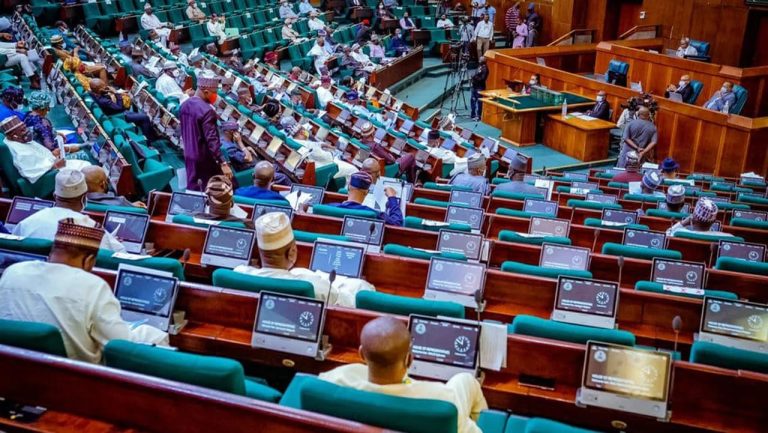
Speaker Tajudeen Abbas announced the inquiry on Tuesday, 3 November, at a one-day public hearing in Abuja organised by the joint House Committees on Infectious Diseases, Healthcare Services, Aviation and Interior. He was represented by Billy Adesuwa Osawaru, who represents the Orhionmwon/Uhunmwode Federal Constituency.
The hearing followed Nigeria’s first confirmed Ebola case in more than a decade, an imported Bundibugyo virus infection in a woman who arrived in Abuja from Uganda. The patient and her husband were medically evacuated to Switzerland on 26 October, and the World Health Organization (WHO) then said Nigeria had no active confirmed case.
What the Ebola emergency fund probe will examine
According to ThisDay, the hearing will examine whether emergency funds were released promptly and spent transparently. The Ebola emergency fund probe will also look at coordination between agencies and at the readiness of state governments, which run most of the hospitals and primary health centres where a suspected case would first appear.
Abbas said there were no active Ebola cases in the country at the time of the hearing, and that the imported case had been evacuated with no onward transmission established. He warned against complacency. The absence of a local outbreak “should strengthen our resolve to prevent a recurrence, rather than diminish our sense of urgency,” he said.
“Disease containment cannot be the responsibility of the federal government alone,” Abbas added. The Authority News quoted him as saying: “Our main purpose is to strengthen public confidence through preparedness, transparency and institutional accountability.”
President Bola Tinubu set up a Presidential Task Force and released N10 billion for containment. The Nigeria Centre for Disease Control and Prevention (NCDC) has said the money was released to the agency rather than the task force, and that it covers Ebola, Lassa fever and other emerging diseases, including surveillance, laboratory diagnosis, protective equipment and the rehabilitation of isolation facilities.
Lawmakers recall the 2014 outbreak
Amobi Godwin Ogah, chairman of the joint committee, commended Tinubu for setting up the task force and praised NCDC for coordinating the national response. He said reports of the outbreak in October had caused widespread anxiety and recalled that the 2014 epidemic caused serious physical, psychological and economic harm.
The 2014 outbreak, which began when an infected traveller arrived in Lagos, recorded 20 cases and eight deaths before it was contained, according to figures cited by Premium Times. Nigeria’s response then is often cited as a model of rapid contact tracing, but it also exposed how quickly one imported case can strain hospitals and frighten health workers.
Ogah said the hearing aimed to “bring critical stakeholders to the forefront of containment measures.” The House also passed a resolution urging the executive to intensify preventive and emergency medical measures.
Prisons ask to be included in emergency plans
Sylvester Nwakuche, Controller-General of the Nigerian Correctional Service (NCoS), told lawmakers that custodial centres need special attention. He said congestion, shared facilities and frequent contact between inmates and staff could make containment difficult if Ebola entered a prison.
Nwakuche said the service is strengthening surveillance, health screening, infection prevention and emergency response. He urged the federal government to include custodial centres in national and sub-national public health emergency plans, with dedicated funding, regular training and better referral arrangements. He listed needs including protective equipment, disinfectants, screening devices, ambulances and improved medical facilities.
Prisons are a known weak point in outbreak control worldwide. Crowding makes isolation hard, health services inside are usually limited, and staff move daily between the facility and the community, so an infection inside can spread outward quickly.
States remain the test of readiness
The questions about state readiness follow a Premium Times review of 2026 state budgets, which found wide variation in allocations for emergency preparedness. Delta set aside N37.28 billion for emergency operations centres and Zamfara N20 billion for a health emergency response fund, while Plateau budgeted N25.7 million for disease surveillance and Benue N19.38 million for infection control. The review noted that budget lines do not show whether money was released.
Public health experts say budgets matter only if they translate into trained staff, isolation space and protective equipment. Funding for routine surveillance, laboratory networks and the health workforce helps a country upgrade health security over years, rather than reacting only when a case is confirmed.
NCDC has said monitoring of all contacts linked to the Abuja case should be completed by mid-November. The findings of the Ebola emergency fund probe are expected to shape how future emergency money is released, tracked and reported, and whether states are required to show what their own preparedness budgets have bought.
Why it matters: Emergency money only protects Nigerians if it is released quickly, spent openly and reaches states, prisons and frontline hospitals.
Ghana ENT Nurses Seek Inclusion in Free Primary… KOFORIDUA, GHANA — Ear, nose and throat (ENT) nurses in Ghana have called on the government to include them in its free primary healthcare policy, saying millions of people lack timely ear and hearing care…
NCDC Says Nigeria Needs N104bn a Year for Health… ABUJA, NIGERIA — The Nigeria health security plan for 2025 to 2029 will cost about N522 billion, or an average of N104.4 billion a year, the Nigeria Centre for Disease Control and Prevention (NCDC) told…
Atiku Demands Accounts of ₦10 Billion Ebola Fund ABUJA, NIGERIA — Demanding complete fiscal transparency over national health security allocations, former Vice President Atiku Abubakar has called on the Federal Government to account for the ₦10 billion approved for Ebola emergency preparedness. The…
Kenya Discharges Five Ebola Patients, Africa CDC… NAIROBI, KENYA — Kenya Ebola patients discharged on Tuesday included five people who had recorded repeated negative tests, while 46 contacts completed their 21-day quarantine, the Africa Centres for Disease Control and Prevention (Africa…