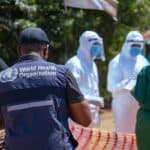
BUNIA, DR CONGO — Threatening regional epidemic containment, an ebola transit centre burns down at Kigonze displacement camp in eastern Democratic Republic of the Congo, forcing thousands of residents to flee and severely setting back outbreak response efforts. The United Nations reported on October 1 that the facility near Bunia in Ituri province was destroyed by fire on the evening of September 29. Kigonze camp previously provided shelter to roughly 19,000 people displaced by regional conflict.
“When we lose a centre, that means we lose capacity, we lose investment and we have to start again,” warned Julien Harneis, the senior United Nations official coordinating the Ebola emergency response.
The operational consequences for epidemic control were immediate and severe. Approximately 1,000 individuals identified as high-risk contacts of Ebola patients were residing at Kigonze prior to the fire. Following the panic and displacement, health officials have successfully traced only 20 percent of those contacts.
Escalating Crisis as Ebola Transit Centre Burns in Ituri
Understanding the health impact when an ebola transit centre burns during an active epidemic highlights severe operational disruptions across displacement sites in eastern Congo:
Outbreak Metric & Operational Impact
Kigonze Emergency Baseline
Broader DR Congo Context
Outbreak Severity
Largest recorded in DR Congo history
>8,000 confirmed cases; ~4,000 deaths across 7 provinces.
>3,000 people also fled nearby Rhoe displacement camp.
Regional Displaced Population
Kigonze housed high-risk contacts
Ituri, North Kivu, and South Kivu hold >5 million displaced people.
Security Clashes Displace High-Risk Contacts
The sudden exodus occurred after security forces entered Kigonze camp to search for weapons, triggering heavy clashes. Similar military operations and intensified fighting near Rhoe camp forced thousands more to flee into surrounding communities.
The destruction of transit facilities dismantles two foundational pillars of Ebola control:
Isolation and Testing Interruption: Transit centres isolate and test suspected Ebola patients before transferring confirmed cases to treatment units. Without local transit facilities, suspected cases remain in home settings or general clinics, exposing families and health staff to infection.
Broken Contact Tracing: Tracking every exposed individual daily for 21 days is essential to stopping transmission. When an ebola transit centre burns and residents scatter, untraced contacts can carry the virus to unmonitored regions.
Labor Shortages and Logistics: The World Health Organization (WHO) reports that fighting continues to disrupt sample transport and patient transfers, estimating that the response urgently requires over 1,400 additional healthcare professionals.
Nigeria Healthcare Readiness as Ebola Transit Centre Burns
Although Nigeria has recorded zero Ebola cases during this outbreak, public health authorities remain vigilant. As an ebola transit centre burns and untraced contacts disperse across Central Africa, the Nigeria Centre for Disease Control and Prevention (NCDC) has maintained high-alert protocols across all international ports of entry.
Port Health Surveillance: Travelers arriving from regions with active Ebola transmission must complete mandatory health declarations and undergo 21-day state surveillance tracking.
Preparedness Funding: Nigeria is utilizing a $300 million World Bank health security loan secured in 2025 to reinforce disease surveillance, emergency response teams, and laboratory networks.
Why It Matters: With four out of five high-risk contacts currently untraced, Ebola risks spreading undetected through eastern DR Congo and toward neighboring African nations.
DRC Ebola outbreak becomes deadliest on record as… Kinshasa, Democratic Republic of Congo The Ebola outbreak in eastern Democratic Republic of Congo has become the deadliest ever recorded, with 4,566 confirmed cases and 2,128 related deaths as of 11 August, according to surveillance…
Nigeria Screens Travellers for Ebola as DR Congo… ABUJA, NIGERIA — Implementing strict nigeria ebola screening travel directives, health authorities now require passengers arriving from four countries with active virus transmission to complete an online health declaration and undergo 21 days of post-arrival…
Nigeria Activates Ebola Incident Plan as Uganda… ABUJA, NIGERIA — The Nigeria Centre for Disease Control and Prevention (NCDC) has officially activated an Incident Management System (IMS) and convened its first Incident Management Meeting after nigeria activates ebola incident plan protocols to…
Lower Back Pain Relief: What Works and When to Worry Low back pain is the leading cause of disability worldwide. The World Health Organization estimates that it affected 619 million people in 2020, and almost everyone experiences it at least once. Market traders, drivers, office…