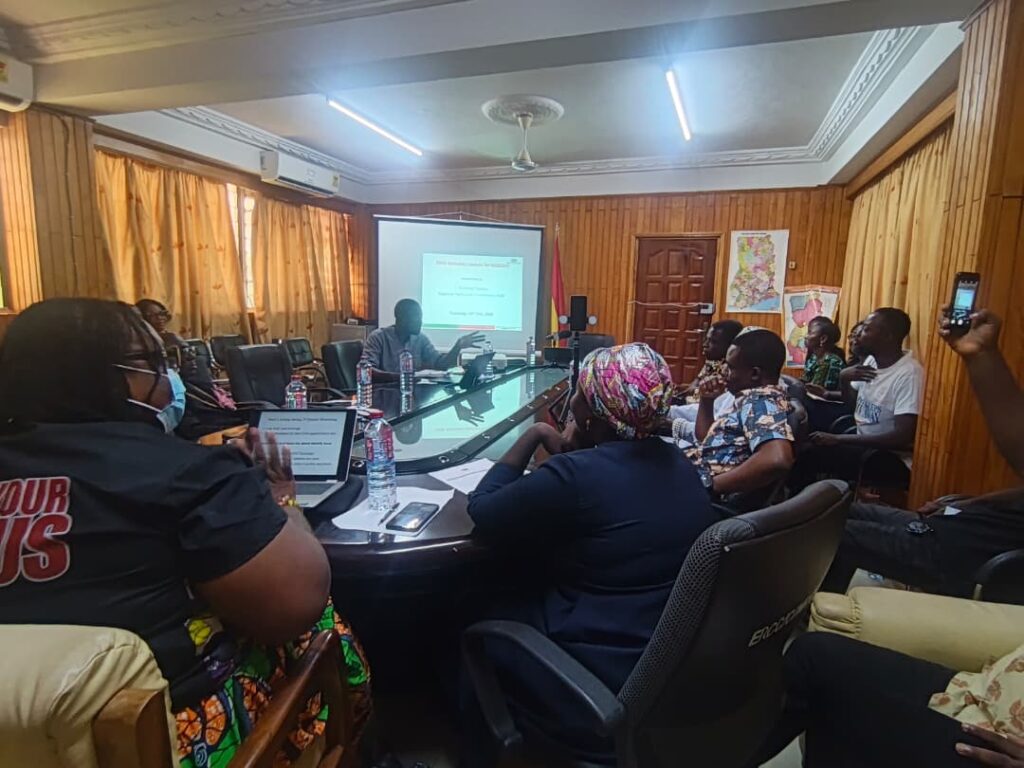
KOFORIDUA, GHANA — Public health officials in Ghana’s Eastern Region have issued an urgent warning regarding viral social media claims, cautioning that fake hiv cures on tiktok in ghana are inducing patients to abandon lifesaving antiretroviral therapy (ART). Speaking at a regional stakeholder review meeting organized by the Ghana AIDS Commission in Koforidua, Gifty Addo Tetebo, Eastern Regional HIV/AIDS/STI Coordinator of the Ghana Health Service (GHS), revealed that individuals who default on clinical regimens in favor of unproven online remedies suffer rapid immunological decline, often resulting in death within months.
Regional data indicates that while national HIV infection rates are stabilizing, the Eastern Region maintains an HIV prevalence of 1.83 percent—the second highest in Ghana after the Bono Region—with an estimated 42,704 people living with HIV.
Regional Benchmarks and Fake HIV Cures on TikTok in Ghana
Epidemiological and operational metrics released by the Ghana AIDS Commission highlight the scale of the regional response:
Response Category
Regional Public Health Benchmarks
Regional HIV Prevalence
1.83% prevalence rate (42,704 people living with HIV in Eastern Region)
Demographic Vulnerability
Women and girls account for ~64% of recent infections in key age groups
Clinical Treatment Infrastructure
53 operational ART sites functioning across the Eastern Region
Primary Target Geographic Hubs
Kwahu, Mpraeso, and major municipal transit and nightlife hubs
Technical Mechanics of Viral Suppression and Default Risks
Understanding why fake hiv cures on tiktok in ghana pose fatal risks underscores key virological principles:
Indestructible Viral Reservoirs: Antiretroviral therapy suppresses viral replication to undetectable levels ($<50\text{ copies/mL}$), protecting CD4 T-cell counts and preventing sexual transmission ($U=U$). However, ART does not eradicate latent viral reservoirs in tissue sanctuaries.
Viral Rebound and Resistance: Halting ART allows HIV replication to surge immediately, destroying immune cells, accelerating clinical progression to AIDS, and promoting drug-resistant viral mutations.
Social Misinformation Dynamics: Videos on TikTok promoting herbal tonics, special dietary regimens, or faith cures exploit treatment fatigue and social stigma, targeting vulnerable demographics including adolescents and young adults aged 15 to 24.
Transient Migration, Behavioral Shifts, and Regional Epidemic Drivers
Dramani Yakubu, Eastern Regional Technical Coordinator for the Ghana AIDS Commission, noted that transmission patterns are heavily driven by weekend migration, recreational tourism, and nightlife corridors. High-mobility destinations such as Kwahu and Mpraeso experience population inflows that heighten risky sexual behaviors.
Furthermore, health promotion officers highlighted a dangerous post-pandemic behavioral shift: many young people abandoned routine protective practices, erroneously believing that HIV had been eradicated. Ebenezer Amoah, Chief Director of the Eastern Regional Coordinating Council, called for reinforced community education to counter rumors and restore protective social norms.
Differentiated Care, Social Media Regulation, and Retention Strategies
To counter social media misinformation and improve retention across the region’s 53 ART centers, health authorities are expanding differentiated service delivery (DSD) models. Multi-month prescription refills, community-based ART distribution, and confidential peer counseling significantly reduce clinic travel costs and waiting times for stable patients.
The Ghana Health Service urges individuals living with HIV to consult qualified clinical pharmacists or trained peer educators before altering medication schedules based on unverified internet videos. Maintaining daily adherence to antiretroviral therapy remains the only proven method to ensure long-term health, viral suppression, and life expectancy.
Why It Matters: Unverified TikTok remedies lead patients to stop daily medication, causing rapid immune failure and death; adherence to antiretroviral therapy is the only medical intervention that keeps people living with HIV healthy.
Beating HIV in Africa: The Power of Adherence HIV continues to be a significant public health challenge in Africa, where the continent carries more than two-thirds of the global HIV burden. Despite these numbers, remarkable progress has been made in expanding access to…
STI Testing in Nigeria: A Confidential Guide to… Sexually transmitted infections, or STIs, are very common, and many cause no symptoms at all. That means you can have an infection, pass it on and develop complications without knowing. Testing is the only way…
World AIDS Day 2023: What You Need to Know World AIDS Day, observed annually on December 1st, is a significant event that raises awareness about HIV/AIDS and commemorates the progress made in the ongoing fight against this global health crisis. As we approach World…
Delayed HIV Test Results Threaten Response ACCRA, GHANA — As delayed hiv test results and persistent public misconceptions undermine national epidemic control, health managers and community advocates in Ghana have launched a new accountability initiative to streamline HIV, tuberculosis, and malaria…