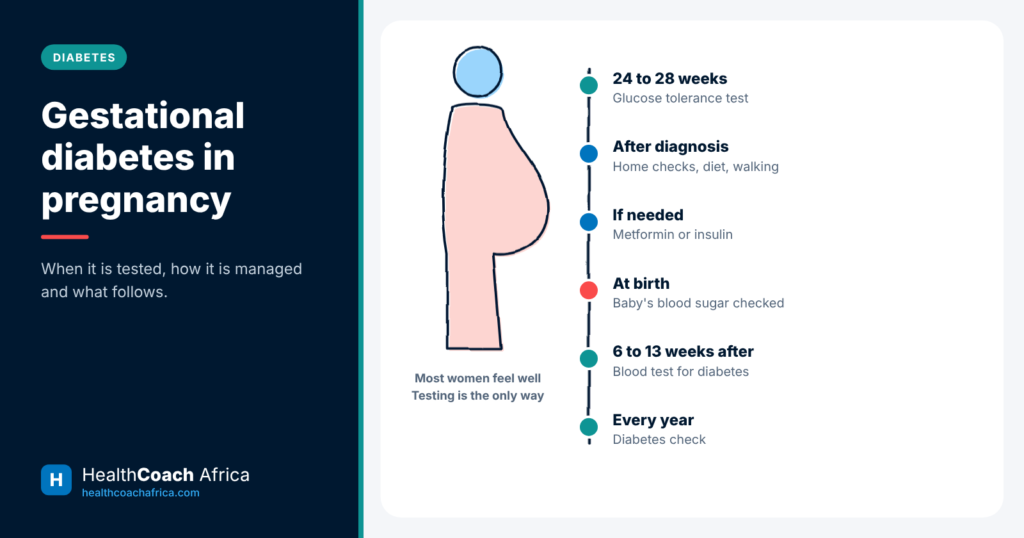
Gestational diabetes is high blood sugar that develops during pregnancy in a woman who did not have diabetes before. It is becoming more common in Nigeria as more women enter pregnancy overweight or at an older age. The good news is that it can be managed well. This guide explains gestational diabetes in pregnancy, how it is diagnosed and what you can do to protect yourself and your baby.
Why it happens
During pregnancy, the placenta produces hormones that help the baby grow. These hormones also make the mother’s body less sensitive to insulin, the hormone that moves sugar from the blood into cells. Most women make extra insulin to cope. When the body cannot make enough, blood sugar rises and gestational diabetes develops.
It usually appears in the second half of pregnancy, from around 24 weeks. In most women it disappears soon after the baby is born.
Who is at higher risk?
Any pregnant woman can develop gestational diabetes. However, the risk is higher if you:
Are overweight, especially with a body mass index above 30
Had gestational diabetes in a previous pregnancy
Have previously had a baby weighing more than 4 kg
Have a parent, brother or sister with diabetes
Have polycystic ovary syndrome (PCOS)
Are over 35 years old
Have had a previous stillbirth without a clear cause
Many antenatal clinics test all pregnant women. If you have any of these risk factors, ask your midwife or doctor to make sure you are tested.
Symptoms are often absent
Most women with gestational diabetes in pregnancy feel completely well. Some notice extra thirst, passing urine more often, tiredness or a dry mouth. However, these are also common in normal pregnancy, so they are easy to miss. That is why testing is so important.
The glucose tolerance test
The main test is the oral glucose tolerance test, usually done between 24 and 28 weeks. Women at high risk, especially those who had it before, may be tested earlier.
You fast overnight for about eight to ten hours. Water is allowed.
A blood sample is taken to measure your fasting blood sugar.
You drink a measured sugary drink containing 75 g of glucose.
Further blood samples are taken, usually after one hour and two hours.
Under the criteria used by the World Health Organization, gestational diabetes is diagnosed if any one of these is met: fasting 5.1 mmol/L or more, one hour 10.0 mmol/L or more, or two hours 8.5 mmol/L or more. Sit quietly during the test, because walking around can affect the results.
Why it matters for your baby
If gestational diabetes is not controlled, extra sugar crosses the placenta. The baby makes more insulin and grows larger than normal. This can lead to:
A difficult birth, including the baby’s shoulder becoming stuck
A higher chance of caesarean section
Low blood sugar in the baby after birth
Breathing problems and jaundice in the newborn
A small increase in the risk of stillbirth
In the long term, children born to mothers with poorly controlled diabetes have a higher risk of obesity and diabetes later in life.
Why it matters for you
Gestational diabetes in pregnancy also raises the mother’s risk of high blood pressure and pre-eclampsia. After the pregnancy, women who had it are much more likely to develop type 2 diabetes later in life. Many will develop it within ten years unless they take steps to prevent it.
Managing it with food and activity
Most women can control their blood sugar through diet and activity alone. Helpful steps include:
Eat three moderate meals and two or three small snacks a day, rather than large meals
Keep portions of swallows, rice, yam and bread small, and choose beans, oats and unripe plantain more often
Fill half your plate with vegetables and include protein at every meal
Avoid soft drinks, malt, juice and added sugar
Walk for 20 to 30 minutes most days, or for 10 to 15 minutes after each meal
Do not try to lose weight during pregnancy. The goal is to keep blood sugar in range while giving your baby the nutrients it needs.
Checking your blood sugar at home
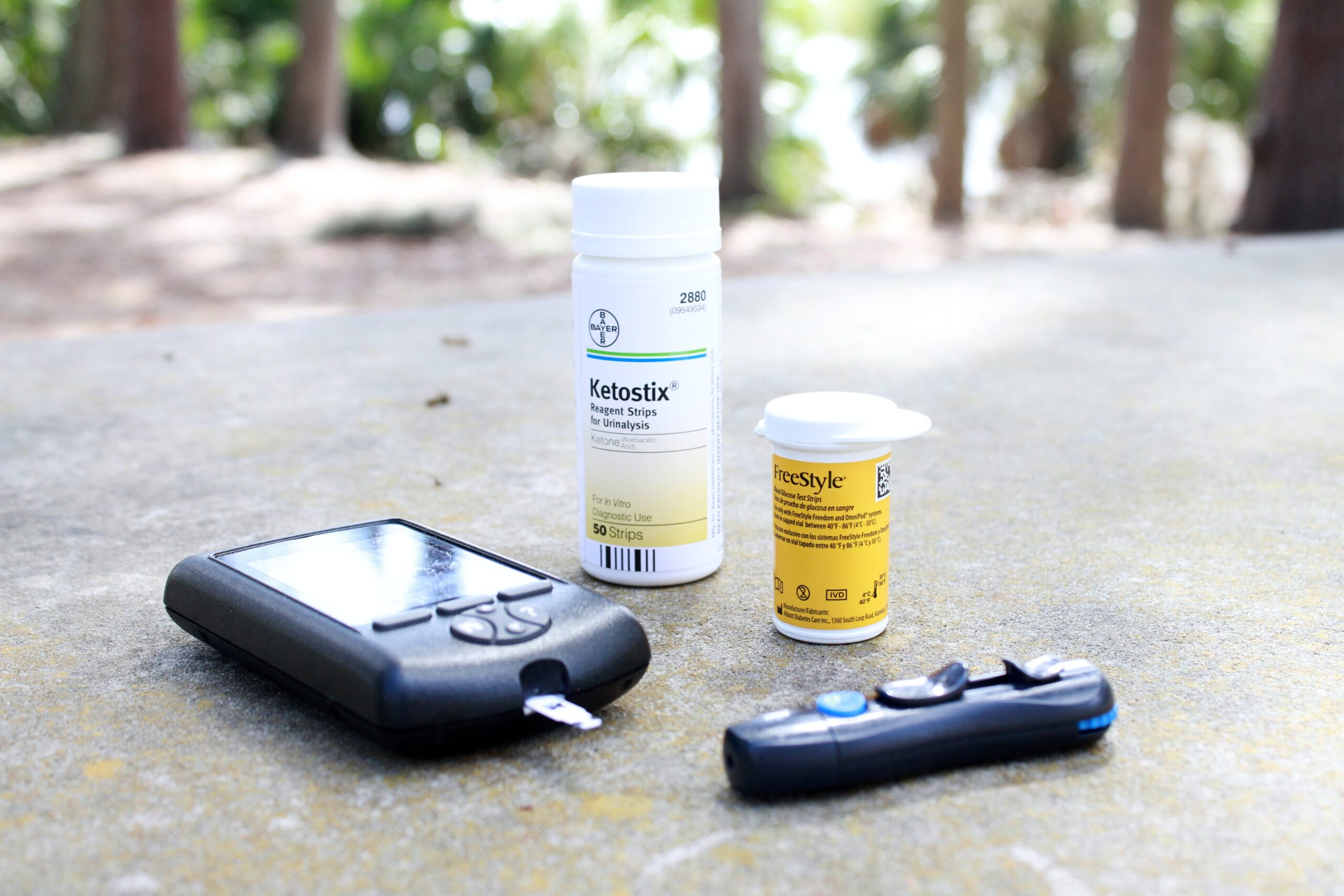
You will usually be asked to check your blood sugar several times a day with a glucose meter 1 .Typical targets, used by the UK National Institute for Health and Care Excellence, are:
Fasting: below 5.3 mmol/L
One hour after a meal: below 7.8 mmol/L
Two hours after a meal: below 6.4 mmol/L
Your team may set different targets. Write down every reading and bring the record to each visit.
HUBPHARM PHARMACIST’S NOTE Insulin pens need careful storage. Keep unopened pens in the fridge, never in the freezer. The pen you are using can stay at room temperature for the time printed on the leaflet. Ask a HubPharm pharmacist to show you how to use and store your pen, especially in a hot house or during power cuts.
Three target cards for home blood sugar checks with gestational diabetes in pregnancy
Write down every reading and bring the record to each antenatal visit.
When medicine is needed
If diet and activity do not keep your blood sugar in range within one to two weeks, your doctor will add medicine. Metformin tablets 2 are often used first.Insulin injections 3 are needed by some women, and they are safe for the baby. Needing medicine does not mean you have failed. It simply means your body needs extra help during pregnancy.
Birth and the first days
Women with gestational diabetes in pregnancy are often advised to give birth at a hospital with good newborn care. If you need medicine, your doctor may suggest delivery by about 39 to 40 weeks. After birth, the baby’s blood sugar is checked, and early, frequent breastfeeding helps to keep it stable.
Support from your partner and family
Managing gestational diabetes in pregnancy is easier with support at home. Family members can share balanced meals rather than cooking separately, walk with you after dinner, help you remember blood sugar checks and come with you to clinic visits. Reducing stress at home matters too, because stress hormones can raise blood sugar. Partners can also learn the signs of low blood sugar if you are using insulin, such as shaking, sweating and confusion, and how to help with a sugary drink.
After the baby is born
Your blood sugar usually returns to normal soon after delivery, and diabetes medicine is generally stopped. However, you should have a blood test about 6 to 13 weeks after the birth to check that the diabetes has gone. After that, have a test every year, because your risk of type 2 diabetes stays high. Breastfeeding, a healthy weight and regular activity all lower this risk. Learn more in our guide to understanding diabetes.
Will gestational diabetes in pregnancy return?
Women who had gestational diabetes in pregnancy have a high chance of developing it again in later pregnancies. Before trying for another baby, ask your doctor for a blood sugar check. Reaching a healthy weight before conception lowers the risk. In your next pregnancy, ask to be tested early, often at the first antenatal visit and again at 24 to 28 weeks.
If a blood test between pregnancies shows that your blood sugar has stayed high, you may already have type 2 diabetes. In that case, it needs to be well controlled before conception, because high blood sugar in early pregnancy affects how the baby develops.
Getting help
Gestational diabetes in pregnancy is common and manageable with good support. Attend every antenatal visit, and read the NHS guidance on gestational diabetes for more detail. If you need a glucose meter, test strips, metformin or insulin, or want help with your readings, message a HubPharm pharmacist or chat with Afiya on WhatsApp.
Medicines and products in this article
#
Medicine or product
What to know
1
Glucose meter and test strips
Over the counter
Used several times a day to check blood sugar against your pregnancy targets.
2
Metformin
Prescription only
Tablet often used first when diet and activity are not enough in pregnancy.
3
Insulin
Prescription only, keep refrigerated
Safe in pregnancy. Unopened pens are stored in the fridge; the pen in use is kept at room temperature.
To order any of these, or to ask a pharmacist a question first, message HubPharm on WhatsApp or visit hubpharmafrica.com. Prescription medicines are supplied against a valid prescription.
Understanding Diabetes: Causes, Symptoms,… Diabetes, often referred to as diabetes mellitus, is a chronic medical condition that affects millions of people worldwide. It is characterized by high levels of blood glucose (blood sugar) resulting from defects in insulin production,…
Lifestyle Changes to Prevent Diabetes According to the International Diabetes Federation (IDF), in 2021, 24 million adults (20–79 years old) will be living with diabetes in the IDF Africa region, which is estimated to increase to 33 million by 2030…
Signs of Postpartum Depression Every New Mother Should Know A new baby is expected to bring joy, so many mothers hide how they really feel. Yet studies in Nigeria have found depression in anywhere from about 15% to 45% of women after childbirth, depending…
Malaria Prevention in Pregnancy: Protecting Mother and Baby Pregnancy changes the body's defences, and malaria takes advantage of this. In Nigeria, where malaria is present all year round, pregnant women face a higher risk of infection and of serious complications. Fortunately, simple and…