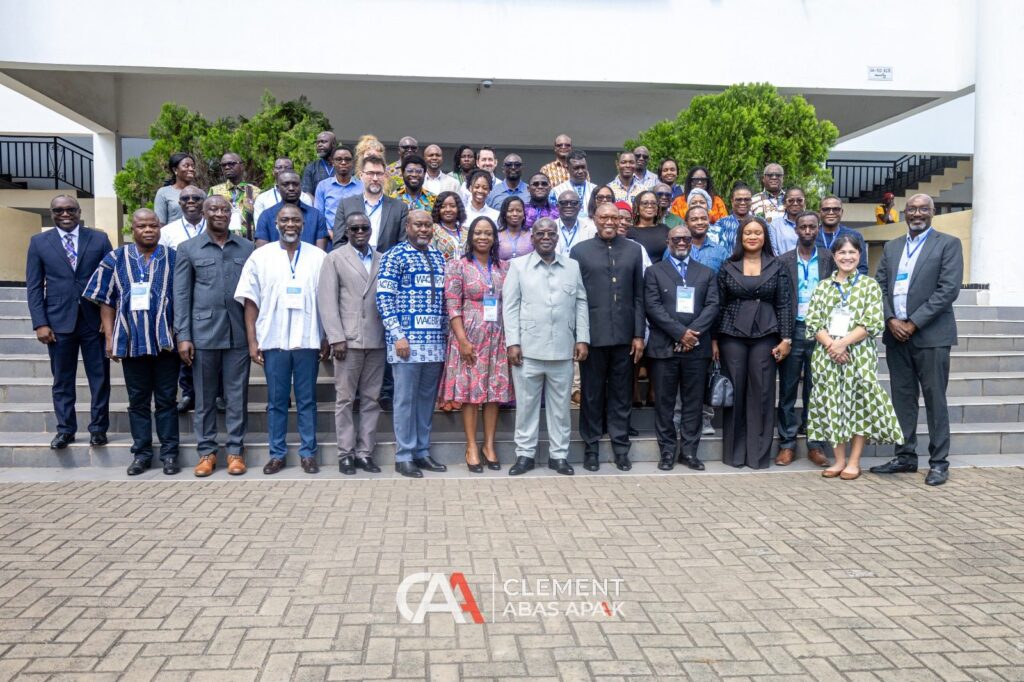
ACCRA, GHANA — Ghana will lead West Africa in assessing Ghana malaria-free mosquito technology, including gene-drive and genetically modified mosquitoes, so that any future tools are tested against local evidence and needs, Dr Clement Abas Apaak said, Rainbow Radio Online reported on 5 November.
Apaak spoke at the National Co-Creation Workshop on Malaria-Free Mosquito Technology, held at the West African Centre for Cell Biology of Infectious Pathogens (WACCBIP) at the University of Ghana in Accra. The report identifies him as speaking for the Ministry of Education.
“Ghana will not borrow answers from elsewhere. We will examine the evidence ourselves, ask hard questions openly,” he said.
Why Ghana malaria-free mosquito technology is on the agenda
Ghana recorded more than 5.3 million malaria cases last year, according to the report, and insecticide resistance among mosquitoes is a growing challenge. Resistance weakens bed nets and indoor spraying, the two main tools of malaria vector control, which is why scientists are looking at new approaches.
Supporters of Ghana malaria-free mosquito technology say it could complement existing tools in areas where transmission remains high despite years of net distribution and spraying. Critics and some civil society groups have called for caution, pointing to uncertainties about long-term effects on ecosystems.
The two-day workshop was convened by the Ghana National Research Fund with WACCBIP and the Gates Foundation. It aims to create a nationally led, evidence-based framework for engaging with advanced biotechnology, and Ghana’s approach could serve as a benchmark for the ECOWAS region, the report said.
Research institutions involved include the University of Ghana, the Noguchi Memorial Institute for Medical Research, Kwame Nkrumah University of Science and Technology, the Kumasi Centre for Collaborative Research and the Council for Scientific and Industrial Research (CSIR).
“Our universities and research institutions are the engine room of this effort,” Apaak said.
How gene-drive mosquitoes work
Gene drive is a genetic technique that makes a particular gene more likely to be passed on to offspring than normal inheritance would allow. In malaria research, scientists are working on two main approaches: suppressing populations of the mosquito species that spread malaria, for example by reducing female fertility, and modifying mosquitoes so they cannot carry the malaria parasite.
Because a gene drive is designed to spread through wild populations, it could in theory reach large areas from a small number of releases and work in places that are hard to reach with nets and spraying. The same feature raises questions about ecological effects, reversibility and decisions that cross national borders, since mosquitoes do not respect boundaries.
Gene-drive mosquitoes are still being tested in laboratories and studied through modelling around the world, according to the report. No gene-drive mosquito has yet been released in the wild in Africa, and any release would require regulatory approval, community consent and long-term monitoring.
Boldness and caution
Apaak said the approach should combine ambition with care. “Boldness and caution belong together: ambition guided by evidence, and delivered with communities, not to them,” he said.
He cited the global fight against Guinea worm as an example of a public health milestone achieved through sustained effort. The ministry committed to supporting domestic research bodies and regulatory agencies as they develop a national roadmap for vector control and malaria eradication.
Community engagement is a central issue for gene-drive research. People living in areas where releases might happen need clear information about risks and benefits, and a voice in decisions. Regulators also need the skills to assess applications for technologies that have not been used before.
Ghana already has a biosafety law and a National Biosafety Authority, which would be expected to play a role in reviewing any proposal involving genetically modified organisms.
Existing tools still matter
New technologies are years away from routine use. In the meantime, Ghana relies on proven tools to prevent and treat malaria, including insecticide-treated nets, indoor residual spraying, seasonal malaria chemoprevention for young children in high-transmission areas, prompt testing and treatment with artemisinin-based combination therapies, and malaria vaccines for young children.
Households can reduce risk by sleeping under treated nets every night, clearing standing water around homes and seeking a test quickly when fever develops. Testing before treatment helps ensure that people receive the right medicine and that other causes of fever are not missed.
The workshop is expected to feed into a national framework for Ghana malaria-free mosquito technology. Its outcome could shape how Ghana and its neighbours decide on research, regulation and possible future trials.
Why it matters: Insecticide resistance is eroding current tools, so Ghana wants its own evidence before deciding whether gene-drive mosquitoes should be used.
Sickle Cell Pain Crisis: Triggers, Home Care and Red Flags Nigeria has more people living with sickle cell disease than any other country, and about 150,000 babies are born with the condition here every year. For most of them, the defining experience is pain. A…
Innovations in Malaria Prevention – Beyond Nets and Sprays For decades, the backbone of malaria prevention in Africa has been insecticide-treated nets (ITNs) and indoor residual spraying (IRS). While these tools have saved millions of lives, they face growing challenges such as mosquito resistance…
Nigeria Grapples with 30% of Global Malaria cases,… In a striking revelation, Nigeria's Health Minister has disclosed that the nation shoulders a staggering 30% of the global malaria burden. This dire situation underscores the pressing need for comprehensive measures to address health issues…
Rhodes University Probes Campus Water After Gastro… MAKHANDA, SOUTH AFRICA — Rhodes University has launched a water probe with the Department of Water and Sanitation to establish whether its internal water system caused a gastrointestinal outbreak that sent more than 100 students…