Nigeria has more people living with sickle cell disease than any other country, and about 150,000 babies are born with the condition here every year. For most of them, the defining experience is pain. A sickle cell pain crisis can begin without warning and can range from a dull ache to pain severe enough to need hospital admission. Knowing how to respond in the first hour, and when to stop managing at home, makes a real difference.
What happens during a crisis
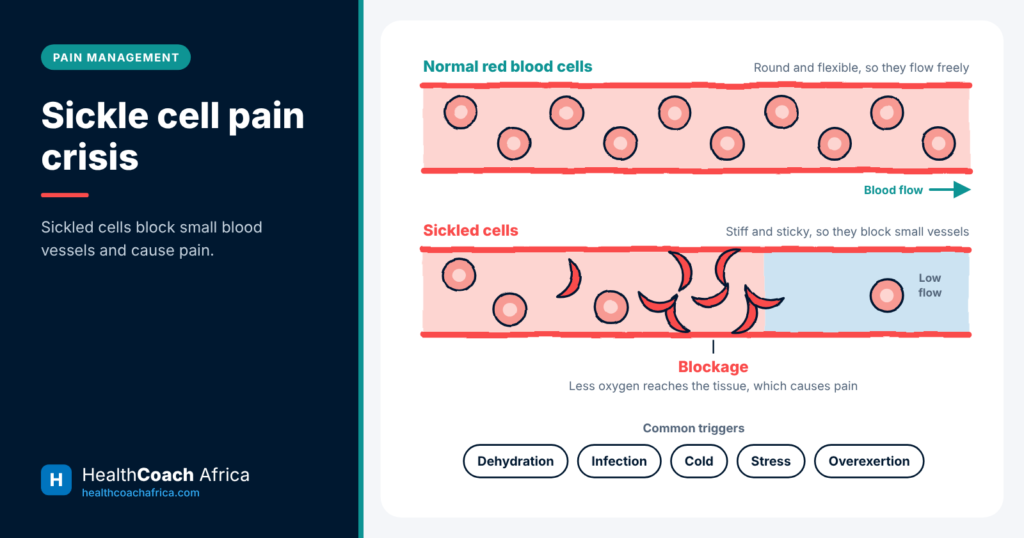
In sickle cell disease, red blood cells become stiff and curved, like a sickle. They stick together and block small blood vessels. As a result, the tissue beyond the blockage is starved of oxygen, which causes pain. It is most often felt in the chest, back, abdomen, arms and legs, and it can last from a few hours to several days.
What a crisis feels like
People describe the pain in different ways. It may be throbbing, sharp, stabbing or like a deep ache inside the bone. It can stay in one place or move from one part of the body to another. Many adults learn to recognise warning signs, such as unusual tiredness, yellow eyes or a dull ache, a day before the pain peaks.
In babies and toddlers, the first sickle cell pain crisis often shows as painful swelling of the hands and feet. A child who cries when picked up, refuses to walk or guards a limb may be in pain.
Doctors use a simple score from 0 to 10 to measure pain. Learning to rate your own pain helps you to explain it quickly at the hospital. In addition, some adults live with a background of daily pain between crises, which needs its own treatment plan.
Common triggers
Dehydration
Infections, especially malaria
Sudden cold, such as harmattan weather, rain or a cold bath
Extreme heat
Physical overexertion
Emotional stress and lack of sleep
Alcohol and smoking
However, some crises occur with no obvious trigger at all.
Managing a sickle cell pain crisis at home
Mild to moderate pain can often be managed at home with these steps:
Start pain relief early. Take paracetamol at the correct dose. Ibuprofen may be added only if your doctor has said it is safe for your kidneys and stomach.
Drink fluids. Take small, frequent sips of water.
Apply warmth. Use a warm towel, a warm bath or gentle massage. Never use ice or cold packs, because cold makes sickling worse.
Rest in a calm space. Music, slow breathing and other distractions also help.
Check your temperature. Fever changes the plan.
Keep a record. Note when the pain started and the time of each dose.
Stronger painkillers, such as tramadol and morphine, should come only from a prescriber. Medicines bought on the street are often counterfeit, and unsupervised use leads to dependence.
What to expect at the hospital
Good hospital care for a sickle cell pain crisis follows a clear pattern. On arrival, staff should check your pain score, temperature, pulse and oxygen level. Strong pain relief should be given quickly, ideally within the first half hour, and then repeated until the pain is controlled.
You may also receive fluids by mouth or by drip, and oxygen if your level is low. Blood tests, a malaria test and sometimes a chest X-ray look for the trigger and for complications. Antibiotics are started if infection is suspected. A blood transfusion is not needed for every crisis, but it is used for certain serious complications.
If your pain is not being taken seriously, say so calmly and show your clinic card. A relative who can speak up for you is a real help.
Red flags: go to hospital immediately
Pain that your usual medicines cannot control
Chest pain, fast breathing or shortness of breath
A temperature of 38°C or above
Severe headache, weakness on one side, slurred speech or a seizure
Sudden paleness, extreme tiredness or a swollen, painful abdomen, especially in a child
A painful erection lasting more than two hours
Sudden loss of vision
These signs may point to serious complications, including infection, stroke and a lung problem called acute chest syndrome. Therefore, do not wait for them to pass. Carry a card that lists your diagnosis, your usual medicines and your clinic’s contact details.
Using pain medicines safely
Pain relief works best when it follows a plan.
Start low and step up. Begin with paracetamol. If that is not enough, an anti-inflammatory may be added, provided your doctor has approved it. Stronger medicines come next, on prescription.
Take doses regularly during a crisis. Waiting until the pain is unbearable makes it harder to control.
Protect your kidneys and stomach. Anti-inflammatory painkillers should be used for short periods only, and always with food.
Expect constipation with strong painkillers. Drink more and ask about a laxative.
Never inject yourself. Self-injection of pentazocine is a serious problem in Nigeria. It leads to dependence, skin ulcers and permanent muscle damage.
Do not mix painkillers with alcohol.
Keep a written record of what works for you, and share it with any new doctor.
Living well between crises
Daily habits reduce how often a sickle cell pain crisis occurs.
Drink water steadily. Carry a bottle, and drink more in hot weather and during exercise.
Eat a balanced diet, with plenty of fruit, vegetables and protein.
Sleep enough, because tiredness is a common trigger.
Stay active. Moderate exercise is good, as long as you rest and drink during it.
Plan for school and work. Teachers and employers should allow water, toilet breaks and warm clothing.
Prepare for travel. On long journeys, move around and stay hydrated.
Look after your mind. Living with unpredictable pain is stressful, and support groups help.
Regular check-ups also matter. These include eye, kidney and heart checks for adults. Children should have a special ultrasound scan of the head, which identifies those at risk of stroke.
How to prevent crises
Ask about hydroxyurea. This daily capsule reduces the number of crises and hospital admissions. It requires regular blood tests, so discuss it with your haematologist.
Take your routine medicines. These usually include folic acid and malaria prevention.
Stay up to date with vaccines. Young children also need daily penicillin.
Drink water throughout the day.
Dress warmly in cold weather and avoid sudden temperature changes.
Pace yourself. Exercise is healthy, but rest before you are exhausted.
Attend clinic even when you feel well.
Treatments that are changing the outlook
Hydroxyurea remains the most important medicine, and it is safe for children when monitored. Several newer medicines that reduce crises are available in some countries.
A bone marrow transplant can cure sickle cell disease in selected patients who have a matching donor. A small number of Nigerian centres now offer it, although it is expensive. Gene therapy has been approved abroad, but for now its cost puts it beyond the reach of most families. Ask your haematologist which options are realistic for you.
Supporting someone in a crisis
First, believe them. The pain of a sickle cell pain crisis is real, and it is frequently underestimated by relatives, teachers, employers and even health workers. Help with fluids, warmth and transport to hospital when needed. In addition, avoid labels that stigmatise. People with sickle cell disease study, work, marry and lead full lives.
Know your genotype
Sickle cell disease is inherited. Therefore, a simple genotype test before marriage or pregnancy helps couples make informed choices. Newborn screening also allows treatment to begin before the first crisis.
Frequently asked questions
Can a person with sickle cell disease live a long life?
Yes. With early diagnosis, preventive medicines and regular care, many people now live into their fifties, sixties and beyond.
Do people with AS genotype have crises?
No. AS is sickle cell trait, not the disease. People with the trait are generally healthy.
Can pregnancy trigger a crisis?
Yes, crises are more frequent in pregnancy. Women with sickle cell disease should register early for antenatal care with a specialist team.
Is hydroxyurea safe to take for years?
Yes. It has been used for decades. Regular blood tests keep the dose safe.
Should a child with sickle cell disease play sports?
Yes, at their own pace. They should drink often, rest when tired and avoid extremes of heat and cold.
Have a plan before the pain starts
Write down your personal plan for a sickle cell pain crisis today. Include your medicines and doses, your warning signs, the hospital you would go to and the person you would call. A plan made on a calm day works far better than a decision made at 2 a.m.
Getting help
Nobody should face a sickle cell pain crisis without a plan. HubPharm pharmacists help families keep hydroxyurea, folic acid and pain relief in steady supply, with advice on correct dosing.To understand pain better, read about acute and chronic pain, or visit the NHS guide to sickle cell disease.
Please follow and like us:
Views:64
Related Posts:
Diabetes in Nigeria: Why Blood Sugar Control Fails Diabetes in Nigeria does not usually fail in the clinic. Among people who reach a specialist and stay in care, control is often reasonable. It fails in the years before anyone tests you, and it…
Lower Back Pain Relief: What Works and When to Worry Low back pain is the leading cause of disability worldwide. The World Health Organization estimates that it affected 619 million people in 2020, and almost everyone experiences it at least once. Market traders, drivers, office…
Nutrition During Cancer Treatment: What to Eat and Why Cancer and its treatment place heavy demands on the body. Chemotherapy, radiotherapy and surgery all increase your need for energy and protein, while side effects such as nausea and mouth sores make eating harder. Good…
Cholera Symptoms and Prevention: A Practical Guide… ARTICLE TEXT Cholera outbreaks occur in Nigeria almost every year, often during the rainy season when floods contaminate wells and boreholes. Cholera can kill within hours if dehydration is not treated. Yet it is easy…