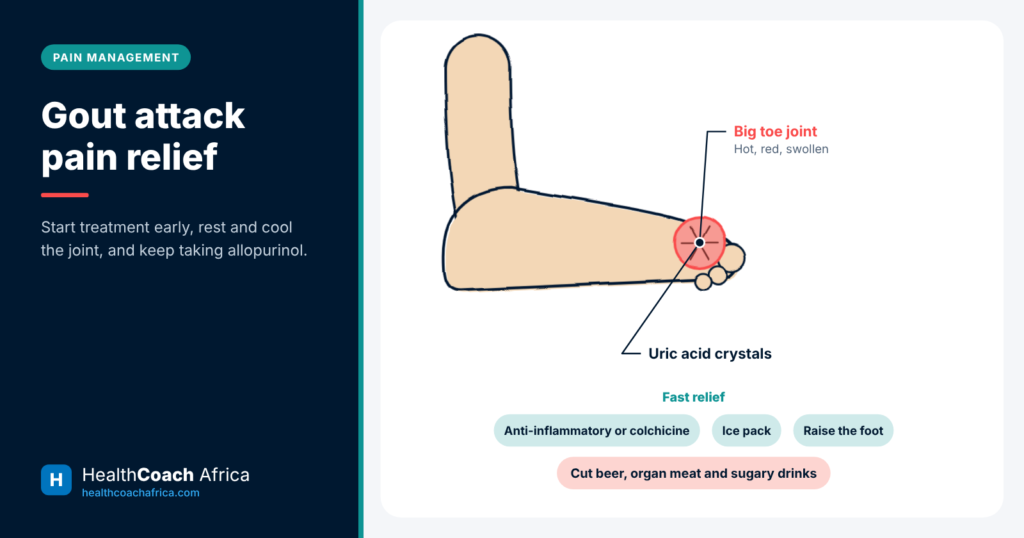
A gout attack often starts suddenly in the night. The big toe becomes hot, red, swollen and so painful that even a bedsheet feels unbearable. Gout is becoming more common in Nigeria, especially among men over 40 and people with high blood pressure, kidney disease or obesity. The good news is that fast gout attack pain relief is possible, and the right long-term treatment can prevent future attacks. This guide explains what causes gout, how to ease a flare and how to keep it from coming back.
What is gout?
Gout is a type of arthritis caused by uric acid. Uric acid is a waste product formed when the body breaks down substances called purines, found in our cells and in some foods. Normally, the kidneys remove uric acid in urine. When levels in the blood become too high, sharp crystals can form in and around joints. These crystals trigger sudden, severe inflammation.
Symptoms of a gout attack
Sudden, severe pain in a joint, often starting at night
Swelling
Redness and shiny skin over the joint
Heat
Extreme tenderness to touch
The big toe is the most common site. Gout can also affect the ankle, foot, knee, wrist, fingers and elbow. Attacks usually peak within 24 hours and settle within one to two weeks, even without treatment.
Who is at risk?
Men, especially after 40
Women after menopause
People who are overweight
People with high blood pressure, diabetes or kidney disease
People who drink beer and spirits regularly
People who drink a lot of sugary drinks
People taking water tablets (diuretics) or low-dose aspirin
People with a family history of gout
Gout attack pain relief: medicines
Start treatment as soon as possible after an attack begins. The main options are:
Anti-inflammatory painkillers (NSAIDs), such as naproxen, ibuprofen or diclofenac1. They are usually taken at full dose for a few days, with food. They may not be suitable for people with kidney disease, stomach ulcers, heart failure or those taking blood thinners.
Colchicine, taken at a low dose2. It works best when started early. Higher doses cause diarrhoea and should be avoided.
Steroids, as tablets or an injection into the joint, for people who cannot take NSAIDs or colchicine.
Paracetamol alone is often not strong enough for a gout attack, but it may be used alongside other treatments. Avoid aspirin, which can raise uric acid levels.
Gout attack pain relief: keep a flare kit
People who have had gout before can prepare for the next attack. With your doctor’s agreement, keep a supply of your usual flare medicine at home, such as an anti-inflammatory or colchicine, so you can start it at the first twinge. An ice pack in the freezer, a pillow for raising the foot and a large water bottle complete the kit. Starting treatment within the first few hours gives the fastest gout attack pain relief.
Self-care during an attack
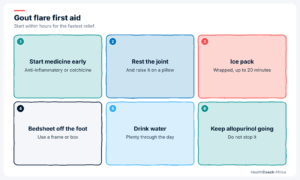
First aid steps for gout attack pain relief at home
See a doctor the same day if you have a fever with a swollen joint.
Rest the joint and raise it on a pillow
Apply an ice pack wrapped in a cloth for up to 20 minutes at a time
Keep bedsheets off the foot, using a frame or a box at the end of the bed
Drink plenty of water
Avoid alcohol and sugary drinks
Gout or something else?
Several conditions can look like gout:
An infected joint, which is an emergency
Pseudogout, caused by a different type of crystal, often in the knee
Injury, such as a sprain or fracture
Cellulitis, a skin infection
Rheumatoid arthritis or other inflammatory arthritis
A doctor can tell these apart with an examination and tests. Getting the right diagnosis ensures the right gout attack pain relief and long-term plan.
When to see a doctor urgently
See a doctor the same day if:
This is your first attack
You have a fever with a swollen joint
The pain is getting worse despite treatment
More than one joint is affected
A hot, swollen joint with fever may be an infected joint, which is an emergency. Doctors may take fluid from the joint to check for crystals or infection.
Diagnosing gout
Gout is diagnosed from your symptoms, an examination and tests:
Blood test for uric acid, best done two to four weeks after an attack, because levels can be lower during a flare
Joint fluid test, which shows crystals under a microscope
Kidney function and blood sugar tests
X-ray or ultrasound in some cases
HUBPHARM PHARMACIST’S NOTE
Many people stop allopurinol during a flare, or take high-dose colchicine until they have diarrhoea. Both make gout harder to control. Send your gout medicines to a HubPharm pharmacist. We will check whether your painkiller is safe for your kidneys and blood pressure, explain the low-dose colchicine plan and set up allopurinol refills with reminders. We can also review any water tablets or aspirin you take, and help you prepare questions about them for your doctor.
Long-term treatment to prevent attacks
If you have repeated attacks, joint damage, kidney stones or lumps of uric acid under the skin, called tophi, your doctor may recommend urate-lowering treatment:
Allopurinol is the most common3. It lowers uric acid production.
Febuxostat is an alternative for some people.
These medicines are taken every day, usually for life. The dose is increased slowly until uric acid falls below a target level. In the first months, they can trigger flares, so doctors often add low-dose colchicine or an NSAID for protection.
If you already take allopurinol, do not stop it during an attack. Keep taking it and treat the flare as well.
Gout, the heart and the kidneys
Gout often occurs alongside high blood pressure, diabetes, high cholesterol and kidney disease. High uric acid levels may also raise the risk of heart disease and kidney stones. People with gout should have their blood pressure, blood sugar, cholesterol and kidney function checked regularly. Treating these conditions protects your heart and kidneys as well as your joints.
Diet and lifestyle
Food is only part of the picture, but changes help:
Limit red meat and organ meats, such as liver, kidney and tripe
Limit some seafood, such as sardines, anchovies, shrimps and crayfish
Cut down on alcohol, especially beer and spirits
Avoid sugary drinks and fruit juices high in fructose
Drink plenty of water
Choose low-fat dairy, vegetables, whole grains and beans
Lose weight gradually if you are overweight, avoiding crash diets
Check your other medicines
Some medicines raise uric acid, including some water tablets used for high blood pressure. Do not stop them yourself. Ask your doctor whether an alternative is possible. Losartan, a blood pressure medicine, may slightly lower uric acid and is sometimes preferred for people with gout.
Gout attack pain relief at work and while travelling
A gout attack can make walking almost impossible. If you have a desk job, raise your foot on a stool and wear loose footwear or sandals. Avoid driving if you cannot press the pedals safely. When travelling, carry your flare medicine, drink plenty of water and limit alcohol. Planning ahead makes gout attack pain relief easier wherever you are.
Living well with gout
With long-term treatment, most people become free of attacks. Keep taking urate-lowering medicine, check uric acid levels as advised and keep a healthy weight. Over time, crystals dissolve, joints recover and tophi shrink.
Myths about gout
“Gout is caused only by eating too much meat.” Genes, kidneys, weight and alcohol all play a part.
“Gout pain will go away, so treatment does not matter.” Repeated attacks damage joints and kidneys.
“Stop allopurinol when you have an attack.” Keep taking it and treat the flare separately.
“Gout is a rich man’s disease.” Anyone can get gout.
Low dose, started early. Higher doses cause diarrhoea.
3
Allopurinol
Prescription only
Daily, long term, to lower uric acid. Do not stop during a flare.
To order any of these, or to ask a pharmacist a question first, message HubPharm on WhatsApp or visit hubpharmafrica.com. Prescription medicines are supplied against a valid prescription.
FitzGerald JD, et al. 2020 American College of Rheumatology guideline for the management of gout. Arthritis Care Res. 2020;72(6):744-760. https://doi.org/10.1002/acr.24180
Gout Diet and Treatment: How to Stop the Attacks Gout causes some of the most intense pain a person can experience. An attack can turn a big toe hot, red and so tender that even a bed sheet feels unbearable. Gout is becoming more…
Rheumatoid Arthritis Early Signs: Act Early to… Rheumatoid arthritis is a long-term condition in which the immune system attacks the joints. It causes pain, swelling and stiffness, and without treatment it can permanently damage joints within the first few years. It often…
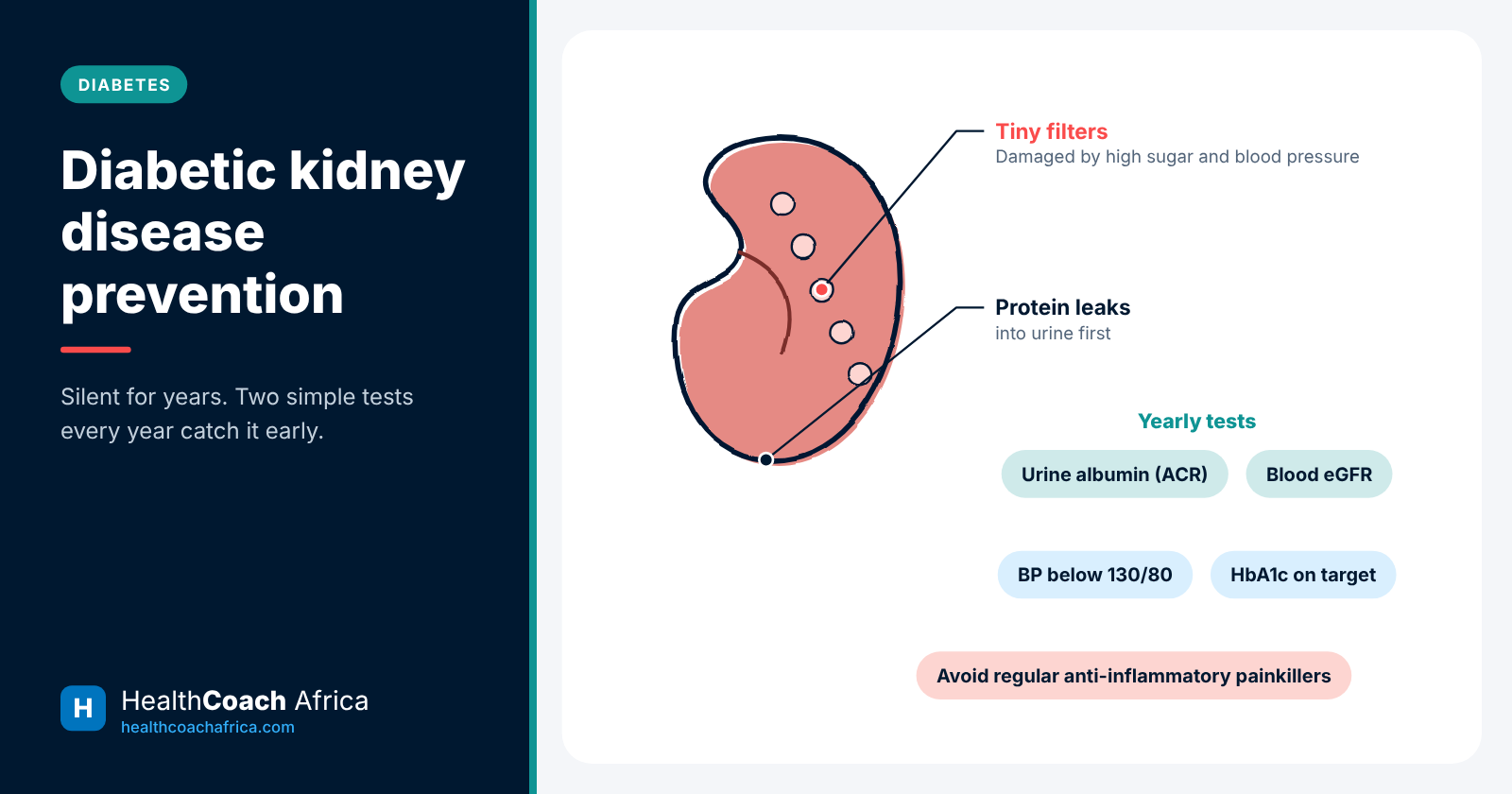
Diabetic Kidney Disease Prevention: Keeping Your… Diabetes is one of the leading causes of kidney failure worldwide. In Nigeria, many people with kidney failure first learn they have kidney disease when they are told they need dialysis. Dialysis is expensive and…
Kidney Disease Diet Tips: Eating to Protect Your Kidneys Chronic kidney disease is common in Nigeria, often caused by high blood pressure, diabetes and kidney infections. When the kidneys are damaged, they cannot remove waste, salt and fluid from the body as well as…