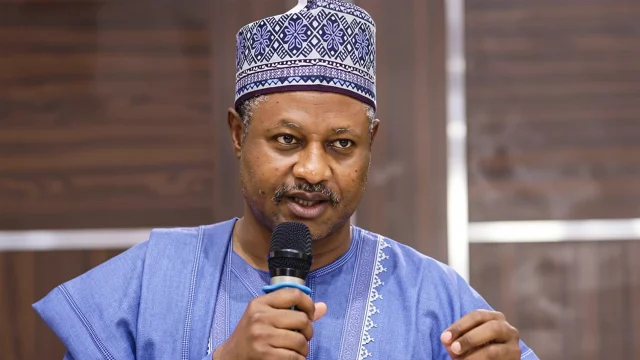
KADUNA, NIGERIA — Expanding medical infrastructure across rural communities, kaduna upgrades primary health facilities by rehabilitating 17 primary healthcare centres into Centres of Excellence and distributing tricycle ambulances to remote rural clinics. Speaking at a groundbreaking ceremony in Kaduna, Secretary to the State Government Dr. Abdulkadir Mu’azu Mayere explained that the state initiative covers facility construction, modern medical equipment, essential drug supplies, and emergency referral support.
“Our vision is not simply to build more facilities. Our vision is to build a health system that people can trust,” Mayere stated, emphasizing that Governor Uba Sani’s administration aims to deliver dignified healthcare services across all local government areas.
While tricycle ambulances are designed to speed up patient transport through narrow, unpaved rural roads—particularly for maternal emergencies, severe trauma, and acute infections—state officials acknowledged that long-term success will require trained paramedics, steady fuel allocations, regular maintenance, and functional communications systems.
Benchmark Health Budgets and Infrastructure Goals
Because kaduna upgrades primary health networks using a record state healthcare budget, the administration’s funding commitment sits significantly above national averages:
Health Budget & Infrastructure Benchmark
Baseline State Figures
Comparative & National Context
2026 Kaduna Health Budget
₦147.9 billion allocated
~15% of the total ₦985.9 billion state budget.
Abuja Declaration Benchmark
15% target for health spending
Kaduna meets the target; Nigerian states average 5.2%.
Primary Healthcare Facilities
255 Level 2 PHC clinics
Includes 23 designated primary Centres of Excellence.
New Upgrades Underway
17 PHC facilities retrofitted
Upgraded into fully equipped rural Centres of Excellence.
Rural Referral Networks and Staffing Constraints
The decision to deploy three-wheeled tricycle ambulances addresses severe geographical barriers in remote rural communities. Adapted to hold a patient and a medical attendant, tricycle ambulances offer a cost-effective transport option capable of navigating unpaved roads where conventional vehicles stall—a crucial factor in lowering maternal mortality during obstructed labor.
However, health experts note that severe systemic challenges remain across the region:
Nationwide PHC Staffing Shortages: A September 2026 national survey revealed that 97 percent of primary health centres across 16 states failed national minimum staffing benchmarks.
Federal Policy Alignment: The state intervention aligns with Federal Government maternal health initiatives offering free emergency obstetric services.
Transparency Gaps: Civil society groups noted that specific clinic locations, project costs, and total procurement values have not yet been disclosed, making value-for-money tracking difficult.
Evaluating Public Health
Evaluating Public Health Impact and Execution
As kaduna upgrades primary health services, performance will be measured by key health metrics: access to antenatal care, childhood immunization rates, emergency response times, drug availability, and patient satisfaction. While actual budget releases will determine the completion timelines, the model offers a viable blueprint for rural health delivery if supported by qualified staff and reliable operating funds.
Why It Matters: Allocating 15 percent of its budget to health puts Kaduna ahead of most Nigerian states, but real impact will depend on whether funds translate into fully staffed, well-supplied rural clinics.
Plateau Revitalises 105 Primary Health Centres,… JOS, NIGERIA — Executive health authorities in Plateau State have launched a comprehensive health system expansion, confirming that plateau revitalises 105 primary health centres alongside approving the immediate recruitment of 1,300 clinical and administrative health…
Limpopo Residents Without Phone Signal Struggle to… MUSINA, SOUTH AFRICA — Severe mobile network coverage dead zones in the Campbell community of Musina, Limpopo Province, are forcing residents to trek to dangerous, elevated railway tracks at night to find cell service to…
Mental Health Challenges in Nigeria: Funding,… The World Health Organization (WHO) has consistently emphasized the critical importance of mental health, making it a global concern for the past three years through their World Mental Health Day themes. In 2021, the WHO…
$300M World Bank loan to upgrade health security Abuja, Nigeria – In a significant move to strengthen Nigeria’s healthcare system, the World Bank has approved a $300 million loan to boost health security and resilience across the country. The funding comes at a…