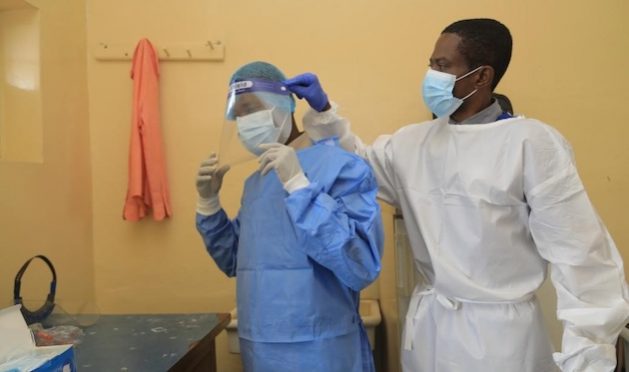
NAIROBI, KENYA — Kenya’s success in containing Ebola shows that African countries should invest in Ebola preparedness virtual training and other digital learning networks that strengthen local expertise, Dr Caroline Kisia, Africa Director of Project ECHO, argued in an opinion article distributed by Inter Press Service and published on 19 November.
“Africa needs more investment in these kinds of networks,” Kisia wrote.
How Ebola preparedness virtual training helped Kenya
Kenya discharged its last Ebola patient on 11 November, 37 days after recording its first case on 6 October, according to the article. If no new cases emerge, Kenya will be declared Ebola-free on 23 December, and there has been no community transmission so far.
In June, before Kenya’s first case, the Kenya National Public Health Institute had a Ugandan epidemiologist train about 200 health workers on investigating alerts and unexplained deaths, Kisia wrote. After the first case, the institute ran twice-weekly virtual training sessions for frontline health workers and surveillance officers, drawing on Uganda’s experience with contact tracing.
“Using simple digital tools to both support and elevate local expertise is a quick, cost effective way” to build capacity, she wrote.
Examples from across Africa
Kisia pointed to other examples of virtual learning networks. In Senegal, the Institut Pasteur has trained health workers across francophone West Africa. Zambia has run regional and local information hubs for more than a decade. In Sudan, health workers have been trained since 2023 on treating survivors of sexual violence, with sessions held on the messaging app Telegram.
Project ECHO, which Kisia leads in Africa, is a model that links specialists with health workers in remote areas through regular virtual sessions built around real cases. As general background, the model began in the United States and has been adopted in many countries for conditions ranging from hepatitis C to HIV and mental health.
“Investing in virtual networks permanently strengthens local health capacity,” she wrote.
The article also cited recent funding cuts to WHO and other global health programmes, which make low-cost approaches to training more important. Kisia warned that outbreak responses can fail when they show “a failure to respect local traditions regarding burial practices,” underlining the importance of local knowledge.
Why preparedness pays
As general background, the Ebola outbreak in the Democratic Republic of Congo, caused by the Bundibugyo strain, has caused more than 11,000 cases and is the largest in the country’s history. Imported cases reached Kenya and Nigeria, both of which contained them through rapid detection, isolation and contact tracing.
Kenya traced 100 per cent of its 135 contacts, according to the Ministry of Health, and Nigeria completed monitoring of all 62 contacts of its imported case without secondary transmission.
Ebola preparedness virtual training allows health workers in remote areas to learn from specialists without travelling, ask questions about real cases and share their own experience. The same model can be used for other outbreaks, chronic disease management and maternal care.
As general background, Ebola preparedness virtual training also helps maintain skills between outbreaks. Health workers trained once may forget procedures if they rarely use them, while regular sessions keep knowledge fresh and allow updates as guidance changes.
Virtual sessions can also connect health workers across borders, as Kenya’s use of Ugandan expertise showed.
Such cross-border learning matters because outbreaks do not respect national boundaries.
Low connectivity in some rural areas remains a challenge, but tools such as messaging apps and recorded sessions can help reach workers with limited internet access, as the Sudan example shows.
Investment in health security, such as the World Bank support for health security that HealthCoach Africa has covered, helps countries build laboratories, surveillance and trained workforces before emergencies strike.
Lessons for the continent
The article argues that the cheapest time to prepare for an outbreak is before it begins. Trained health workers who can recognise an unusual illness, isolate a patient and alert authorities are the first line of defence for every country.
With global health funding at its lowest level since 2012, according to new IHME estimates, African governments face pressure to protect preparedness gains with their own resources. Low-cost digital learning networks could be one way to sustain skills across the health workforce.
Kenya’s 42-day countdown is due to end on 23 December. If it passes without new cases, the country’s experience will add to evidence that Ebola preparedness virtual training and early investment in local expertise can stop outbreaks before they spread.
Why it matters: Kenya stopped Ebola spreading with trained local health workers, a low-cost model other African countries can copy before outbreaks strike.
Tinubu Says Nigeria Must Build Healthcare Economy,… ABUJA, NIGERIA — President Bola Tinubu has said Nigeria must build a domestic healthcare economy that manufactures medicines and medical equipment, creates jobs and competes internationally, setting out his government’s plans for the Nigeria healthcare value…
Kenya Discharges Five Ebola Patients, Africa CDC… NAIROBI, KENYA — Kenya Ebola patients discharged on Tuesday included five people who had recorded repeated negative tests, while 46 contacts completed their 21-day quarantine, the Africa Centres for Disease Control and Prevention (Africa…
Kenya Calls Saudi Ebola Travel Ban Punitive, Asks… NAIROBI, KENYA — Kenya has asked Saudi Arabia to lift a Saudi Ebola travel ban that suspends travel to and from the East African country, describing the measures as “disproportionate and not supported by scientific…
Kenya Records Sixth Ebola Recovery as 42-Day Countdown Nears NAIROBI, KENYA — Kenya has recorded its sixth Ebola recovery and gone 18 days without a new infection, moving closer to the Kenya Ebola recovery countdown that must be completed before the outbreak can be…