NAIROBI, KENYA — Kenya has recorded significant Kenya child health gains, with under-five deaths falling and stunting dropping sharply, but newborn mortality remains well above the national target, KBC reported on 12 November, citing the Ministry of Health.
Under-five mortality fell from 41 to 37 deaths per 1,000 live births, skilled birth attendance rose to 90 per cent, stunting dropped from 26 to 18 per cent and exclusive breastfeeding increased to 72 per cent, according to the report by Margaret Kalekye.
Behind the Kenya child health gains
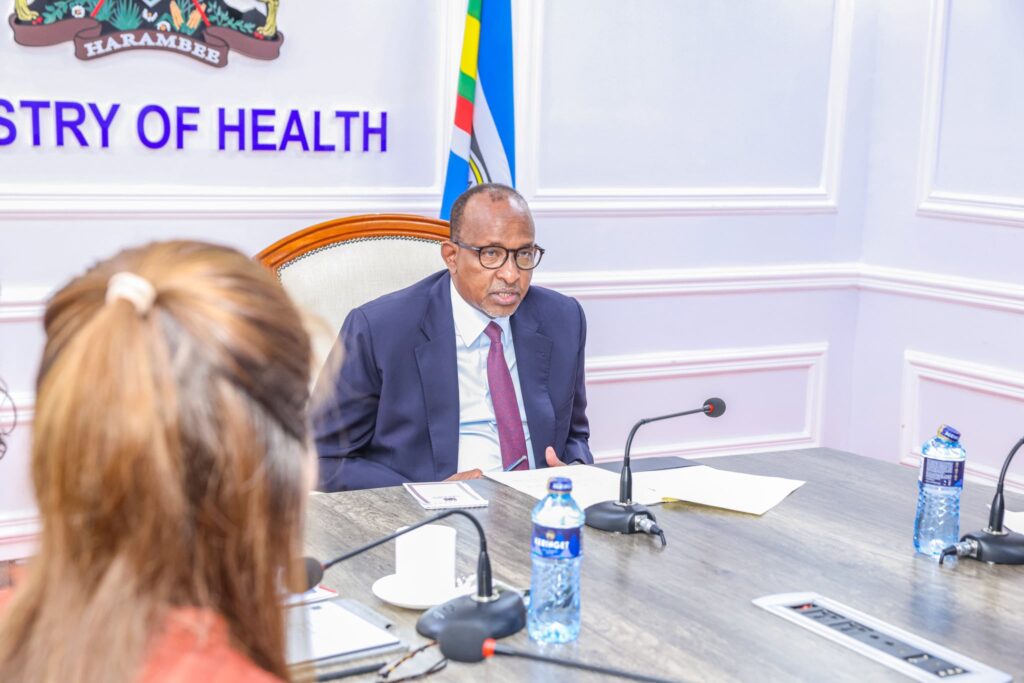
Health Cabinet Secretary Aden Duale led talks on Thursday with a Save the Children delegation led by Janti Soeripto, the organisation’s President and Chief Executive Officer in the United States. Officials attending included Mary Muthoni, Principal Secretary for Public Health and Professional Standards, Dr Joel Gondi, Director of Primary Health Care, and Dr Rose Jalang’o, Head of the National Vaccines and Immunisation Programme.
More than 107,000 community health promoters are now deployed across all 47 counties, according to the ministry. Community health promoters visit households to encourage antenatal care and facility births, support breastfeeding, check on newborns, track immunisation and refer sick children.
Kenya’s first Mini Demographic and Health Survey, launched this month, also found that 91 per cent of births in 2025 took place in health facilities and that most young children are developmentally on track, although with wide variation between counties.
Immunisation has also been central to the progress. Kenya’s National Vaccines and Immunisation Programme, represented at the meeting, oversees routine vaccines that protect children against measles, pneumonia, diarrhoeal disease and other killers.
Newborn deaths remain high
“Neonatal mortality remains high at 19 deaths per 1,000 live births, above the national target of 12,” the report said. Newborn deaths, those in the first 28 days of life, now make up a large share of all deaths among children under five.
The main causes of newborn deaths include complications of preterm birth, birth asphyxia (lack of oxygen during birth) and infections such as neonatal sepsis. Kenya’s Ministry of Health launched policy briefs on neonatal sepsis and hypertensive disorders of pregnancy this week to guide action.
Priority areas agreed with Save the Children include care for small and sick newborns, health workforce mentorship, community nutrition and data-driven decision-making. Functional newborn units, neonatal resuscitation and Kangaroo Mother Care, in which small babies are held skin-to-skin with their mothers, were highlighted.
Drought and nutrition risks
Officials flagged arid and semi-arid counties as vulnerable to drought and food insecurity, which can quickly reverse progress on child nutrition. Stunting, which reflects long-term undernutrition, affects children’s growth and brain development, and malnourished children are more likely to die from common infections.
The fall in stunting from 26 to 18 per cent is one of the most notable Kenya child health gains, but drought and rising food prices in northern counties can push more children into acute malnutrition.
Exclusive breastfeeding for the first six months, now practised by 72 per cent of mothers, protects babies against diarrhoea and pneumonia and supports healthy growth. Community health promoters and health workers play an important role in counselling mothers, particularly those who return to work early.
Kenya’s Mini Demographic and Health Survey found that 72 per cent of women had at least four antenatal visits in their most recent pregnancy, up from 66 per cent, and that under-five mortality had fallen in line with the ministry’s figures. However, the on-track development share among young children ranged from 52 per cent in West Pokot to 97 per cent in Kakamega, showing deep regional inequalities.
Health experts say closing these gaps will require targeted investment in counties with the poorest outcomes, including more midwives, newborn units and nutrition support.
Financing and partnerships
Discussions also covered the Every Woman, Every Newborn, Everywhere (EWENE) Acceleration Plan and the Social Health Authority (SHA) Primary Healthcare Fund, which finances services at primary care level under Kenya’s universal health coverage agenda.
Duale proposed a memorandum of understanding with Save the Children to guide future collaboration. Both sides “reaffirmed their shared commitment to ensuring every child survives, thrives, learns and is protected,” KBC reported.
Health experts say sustaining the Kenya child health gains will depend on keeping community health promoters paid and supplied, equipping newborn units in county hospitals and protecting nutrition programmes during droughts. With World Prematurity Day on 17 November, attention is likely to focus on care for preterm babies, who account for many newborn deaths.
Save the Children has worked in Kenya on child health, nutrition and emergency response for decades, and the proposed agreement would formalise priorities for the coming years.
Why it matters: Kenya has cut child deaths and stunting, but newborns still die at rates far above target, so newborn care must be the next priority.
Kenya and WHO Review Ebola Response After Three… NAIROBI, KENYA — Kenya and the World Health Organization (WHO) have held a Kenya WHO Ebola review after the country recorded three consecutive weeks without a new confirmed case, and agreed to develop a joint…
Nigeria’s Under-Five Deaths Fall 17 Per Cent but… ABUJA, NIGERIA — Nigeria’s under-five mortality rate fell by about 17 per cent between 2018 and 2024, but neonatal deaths in Nigeria rose over the same period, the federal health ministry said at the 2026…
Alarming Study Reveals 13.4 Million Premature Births… A groundbreaking study published in The Lancet has unveiled a deeply concerning global health issue: an estimated 13.4 million babies were born prematurely in the year 2020, equating to one in ten infants worldwide being…
Duale Urges Faster Delivery of Ksh43.5 Billion World… NAIROBI, KENYA — Kenya’s Health Cabinet Secretary Aden Duale has called for faster implementation of two World Bank health projects worth about Ksh43.5 billion, to strengthen emergency response and the country’s Universal Health Coverage agenda,…