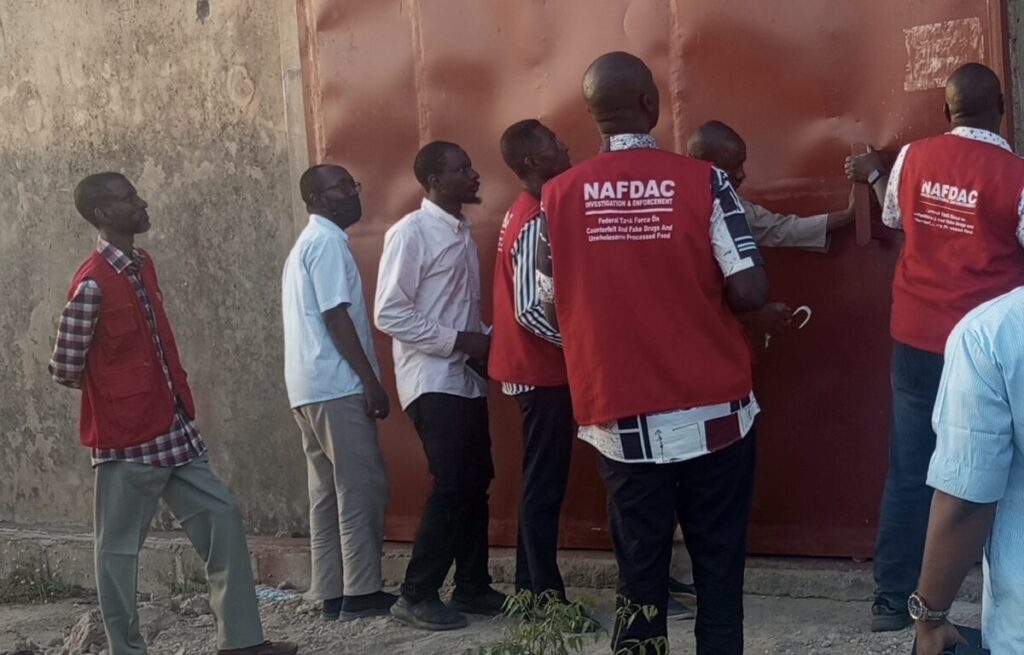
KANO, NIGERIA — The National Agency for Food and Drug Administration and Control (NAFDAC) has sealed four warehouses and seized banned chemicals worth N560 million in a NAFDAC Kano paraquat seizure, arresting two people over the alleged illegal storage, distribution and sale of the products, Peoples Gazette reported on 13 November, citing the News Agency of Nigeria.
The operation in the Panisau, Jaba and Sharada areas of Kano metropolis enforced a 2022 ban on paraquat-based herbicides, which NAFDAC began enforcing in January 2024. Inspectors visited more than 10 warehouses, according to Emmanuel Andrew, the NAFDAC director leading the investigations.
What the NAFDAC Kano paraquat seizure found
One warehouse held 2,983 cartons of Paraeforce, a paraquat-based product, worth more than N200 million, and its owner was among those arrested. Another held more than 8,000 cartons of Crownquat, also paraquat-based, worth over N360 million, as well as chlorpyrifos, another banned pesticide.
“In another warehouse, the team discovered over 8,000 cartons of Crownquat,” Andrew said.
A warehouse in Panisau was sealed for holding controlled chemicals suspected of use in illicit drug production. In Jaba, a building was sealed over alleged illegal manufacturing and repackaging of chemicals, with operators reportedly using cartons from a Lagos company and from Niger Republic; a sealing machine and packaging materials were recovered.
In Sharada, inspectors found 183 cartons of unregistered Dynewell syrup, imported from Ghana, in an unfinished building.
“The warehouses have been sealed. The agency will invite the owners for further investigation,” Andrew said. NAFDAC said enforcement would continue until all illegal stock is removed.
The NAFDAC Kano paraquat seizure is one of the largest reported operations against banned agrochemicals this year. Kano is a major commercial hub for northern Nigeria and neighbouring countries, which makes its warehouses important points in regional supply chains for both legal and illegal goods.
Why paraquat is banned
Paraquat is a highly toxic herbicide widely used to clear weeds. NAFDAC cites risks including respiratory and cardiac failure and Parkinson’s disease, and says the chemical persists in soil and affects water.
Swallowing even a small amount of paraquat can be fatal, and there is no specific antidote. It damages the lungs, kidneys and liver, and survivors can suffer lasting lung scarring. Paraquat has been linked to deliberate and accidental poisonings in many countries, and dozens of countries have banned or restricted it.
Anyone who swallows or is heavily exposed to paraquat needs emergency medical care immediately. Health workers should be informed of the product involved, and the container or label should be taken to the hospital if possible.
Chlorpyrifos is an organophosphate insecticide linked to harm to children’s brain development, and has also been banned or restricted in many countries.
Health risks for farmers and communities
Farmers who spray paraquat without protective equipment can absorb it through damaged skin or inhale spray droplets. Storage of pesticides in homes and unlabelled containers increases the risk of accidental poisoning, especially among children.
Unregistered syrups pose separate dangers. Unregulated medicines may be contaminated, wrongly dosed or contain undeclared ingredients. Contaminated cough syrups have caused deaths among children in several countries in recent years, and NAFDAC has issued repeated warnings about unregistered syrups.
The discovery of controlled chemicals suspected of use in illicit drug production also links the operation to concerns about drug abuse in northern Nigeria, where tramadol, codeine syrups and other substances have been widely misused.
Banned agrochemicals often enter Nigeria through porous borders and are repackaged under new names, making enforcement difficult. Regulators rely on intelligence, market surveillance and reports from farmers and dealers to track them.
Safer alternatives and enforcement
Agricultural experts recommend integrated weed management, approved herbicides and protective equipment to reduce reliance on hazardous chemicals. Farmers should buy agrochemicals only from registered dealers and check NAFDAC registration numbers.
Agricultural extension workers and farmer cooperatives can help spread information about banned products and safer alternatives, and health workers in farming communities can learn to recognise and report pesticide poisoning.
Consumers who come across banned chemicals or unregistered syrups can report them to NAFDAC offices or through the agency’s reporting channels, which helps inspectors trace where illegal products are being stored and sold.
NAFDAC has carried out several enforcement operations in recent months, including against fake and expired medicines in Imo State. The NAFDAC Kano paraquat seizure shows that banned products continue to circulate through informal supply chains, and the agency said owners of the sealed warehouses will be invited for further investigation.
Why it matters: Paraquat can kill in small doses and has no antidote, so stopping its illegal sale protects farmers, children and water supplies.
Epilepsy Seizure First Aid: How to Help Safely Epilepsy is one of the most common long-term brain conditions in the world. Around the world, tens of millions of people live with it, and most could live seizure-free with the right treatment. Yet in…
Pharmacy Council Seals 722 Pharmacies and Medicine… BAUCHI, NIGERIA — The Pharmacy Council of Nigeria (PCN) has sealed 722 medicine retail premises across Bauchi State following an intensive four-day regulatory enforcement drive aimed at curbing illegal drug distribution networks. Briefing news men…
Diabetes in Nigeria: Why Blood Sugar Control Fails Diabetes in Nigeria does not usually fail in the clinic. Among people who reach a specialist and stay in care, control is often reasonable. It fails in the years before anyone tests you, and it…
NAFDAC Finds Unsafe Pesticide Residues in Beans and… LAGOS, NIGERIA — Nigeria’s food and drug regulator has detected pesticide residues above permitted international safety limits in bean samples taken from local markets, while seizing over ₦800 million worth of banned agrochemicals across the…